Español
 عربى
 русский
Content
- 1 Product Role in a Structured Cabling System
- 2 Main Product Advantages
- 3 Why Connector Quality Matters More Than Its Size Suggests
- 4 Advanced Manufacturing Capabilities
- 5 Quality Control from Design to Finished Product
- 6 Advantages Compared with Less-Controlled Alternatives
- 7 Application Areas
- 8 Product Selection and Project Planning
- 9 Production Efficiency and Supply Reliability
- 10 Support for OEM and ODM Customers
- 11 Installation and Maintenance Recommendations
- 12 Customer Value and Total Cost of Ownership
- 13 Company Manufacturing Strengths
- 14 Frequently Asked Questions
- 14.1 What is the SMT-3020T8C8?
- 14.2 Is the SMT-3020T8C8 a fiber connector?
- 14.3 What types of projects may use this connector?
- 14.4 Can the product be customized?
- 14.5 What manufacturing equipment supports production?
- 14.6 How does the manufacturer control product quality?
- 14.7 What information should be provided when requesting a quotation?
- 14.8 Can the connector be supplied for international projects?
- 14.9 What should installers do to achieve reliable performance?
- 14.10 Why should buyers evaluate the manufacturer as well as the product?
- 15 Conclusion
- 16 References
- 17 Product: SMT-3020T8C8
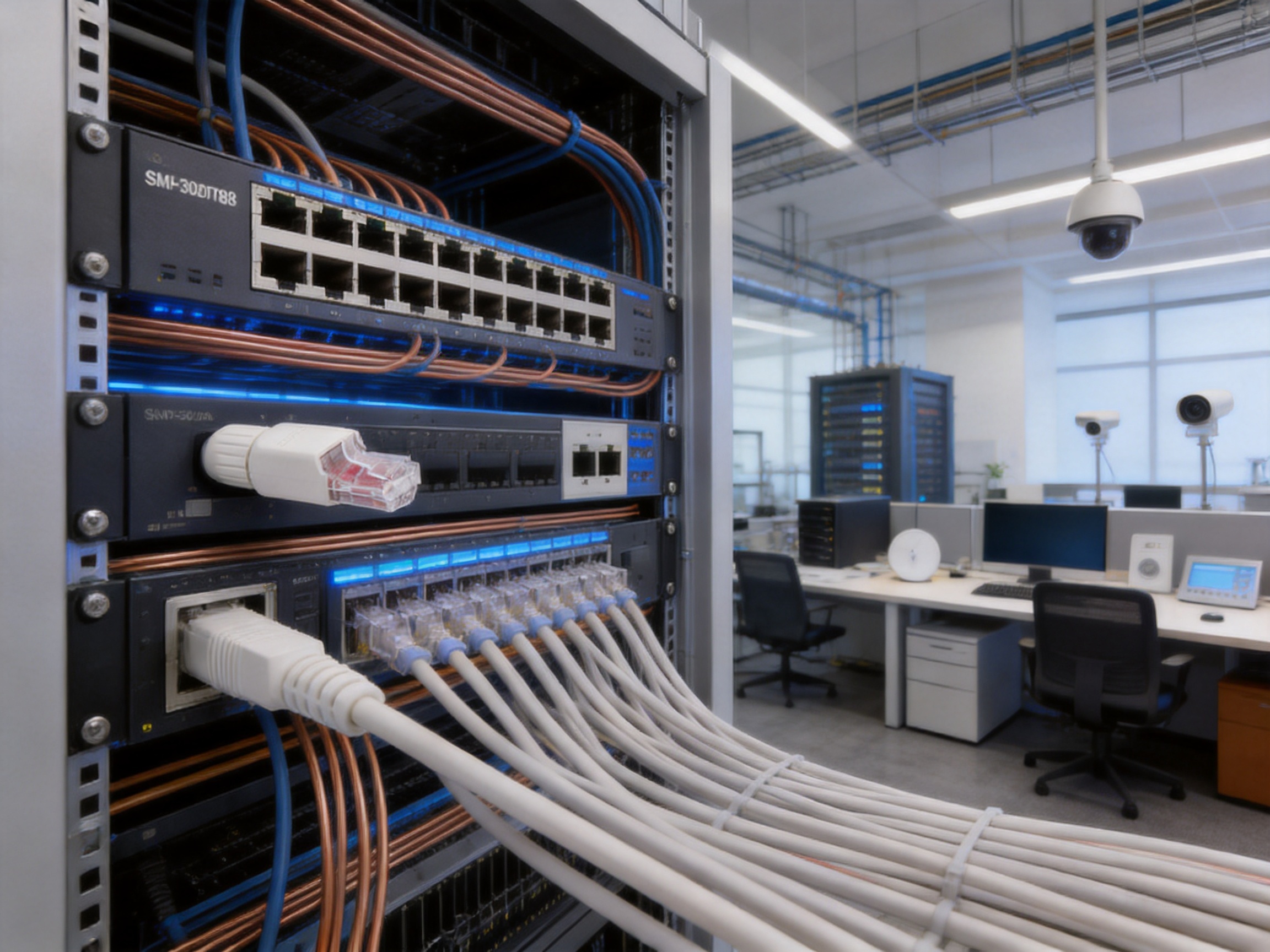
Reliable connectivity is the foundation of every modern communication network. Whether a system supports business data, voice services, security equipment, automation controls, or smart-home applications, the quality of each connection directly affects network performance. A structured cabling installation may contain high-performance cables, carefully designed patch panels, and advanced active equipment, but the network can still experience instability if its connectors are poorly designed or inconsistently manufactured.
The SMT-3020T8C8 male connector is designed for professional structured cabling applications where secure mating, stable signal transmission, consistent installation quality, and long-term serviceability are important. As a component within a copper cabling system, it supports organized network construction and helps installers create dependable connections between compatible communication equipment and cabling accessories. It can also be incorporated into broader projects that combine copper and fiber systems, enabling a complete network infrastructure to be assembled from coordinated components.
For distributors, system integrators, contractors, and original equipment customers, selecting a connector is not simply a matter of choosing a small accessory. The connector must match the application, fit the surrounding system, maintain reliable contact, and withstand repeated handling. It must also be produced with stable dimensions and controlled materials so that large installations can be completed efficiently. These requirements make manufacturing capability just as important as the visible appearance of the finished product.
The SMT-3020T8C8 is manufactured by Yuyao Simante Network Communication Equipment Co., Ltd., a professional supplier of network cabling solutions and optical fiber products. The company combines product design, development, sales, service, injection molding, assembly, testing, and customization support. Its experience in structured cabling components provides a strong foundation for supplying connectors to projects with different installation environments and purchasing requirements.
Product Role in a Structured Cabling System
A structured cabling system is made up of many coordinated parts. These may include horizontal and backbone cables, keystone jacks, patch panels, face plates, data sockets, connectors, cabinets, management accessories, and active networking equipment. Each component has a specific role, but the overall quality of the system depends on how well the parts work together.
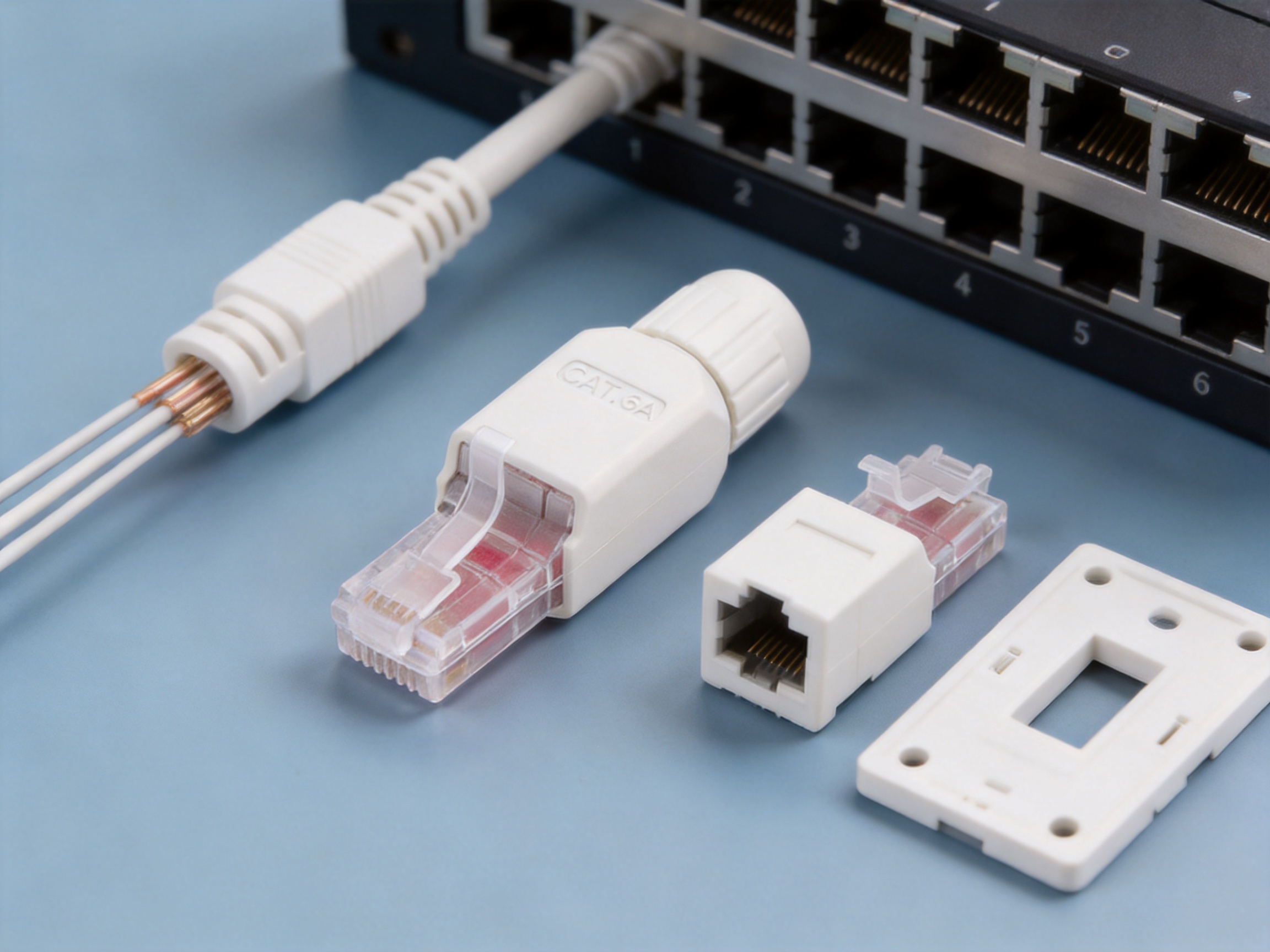
A male connector provides a defined interface for joining a cable or communication component to a compatible female port or socket. In practical installations, this interface must be easy to engage, secure after mating, and stable during normal movement or equipment maintenance. A connector that is difficult to install can slow down a project. A connector with inconsistent dimensions can create fitting problems. A connector with weak contact stability can contribute to intermittent network faults that are difficult to identify.
The SMT-3020T8C8 is positioned as a male connector for the copper system product range. It can be used as part of an organized cabling solution in commercial buildings, residential projects, equipment rooms, communication cabinets, automation installations, and other network environments. Its compact format makes it suitable for applications in which space, routing, and installation efficiency are important considerations.
Although the connector belongs to the copper system, it can be specified alongside fiber system products in projects that use both transmission media. Copper cabling is commonly used for equipment connections and shorter distribution paths, while optical fiber is frequently used for high-bandwidth backbone links or longer distances. A supplier capable of supporting both categories can simplify sourcing and help customers maintain a more consistent approach across an entire infrastructure project.
Main Product Advantages
Stable Mechanical Mating
A connector must remain mechanically secure after installation. The housing, contact structure, locking features, and overall dimensions must work together to create dependable mating with the corresponding interface. Stable mechanical mating helps prevent accidental disconnection caused by routine handling, cable movement, or maintenance activities.
The SMT-3020T8C8 is developed for consistent assembly and practical field use. Its form is intended to support controlled installation, helping technicians position the connector correctly and connect it with less unnecessary force. A predictable mating experience is especially valuable in projects involving many connection points, because small installation difficulties can become significant when repeated hundreds or thousands of times.
Consistent Contact Performance
Electrical signal quality depends on the continuity and stability of the conductive path. Contact elements must be accurately positioned and retained within the connector body. They should also maintain appropriate pressure at the mating interface so that the connection remains dependable over time.
Consistent contact performance reduces the likelihood of unstable links, unexplained disconnections, and troubleshooting work caused by poor termination or unreliable mating. While the final performance of a network also depends on cable quality, installation technique, equipment compatibility, and environmental conditions, the connector provides an essential part of the signal path. A professionally manufactured connector gives system designers and installers a more dependable starting point.
Compact and Installation-Friendly Construction
Network spaces are becoming increasingly dense. Equipment rooms may contain patch panels, switches, power distribution systems, cable management components, and monitoring equipment in a limited area. In office and residential installations, wall boxes and face plates may also offer limited space for cable routing and connector access.
A compact connector can help installers manage these constraints more effectively. It can support cleaner routing, easier access, and better organization around connection points. Its practical size is also useful when several ports are positioned beside each other. A connector that fits consistently within the expected system layout contributes to a neater installation and can make future inspection easier.
Suitable for Repeated Professional Installation
Products used in structured cabling are often installed in large quantities. A contractor may need to prepare connectors for multiple rooms, floors, buildings, or production areas. Therefore, the connector must be suitable not only for a single connection but also for repeatable installation processes.
The SMT-3020T8C8 is manufactured with attention to repeatability. Stable molding and assembly processes help maintain consistent product dimensions from batch to batch. This supports efficient work by installers, reduces adjustment time, and helps distributors provide more predictable products to their customers.
Compatibility with Customized Project Requirements
Different customers may have different packaging, labeling, color, documentation, quantity, and delivery requirements. Some buyers need standard products for routine distribution, while others require components adapted to a particular project or equipment configuration.
The manufacturer supports OEM and ODM projects, which creates opportunities for customers to discuss product customization and application-specific requirements. Customization may involve product appearance, packaging, identification, assembly details, or coordinated supply of related components. Any proposed modification should be reviewed technically before production so that performance, fit, and quality remain properly controlled.
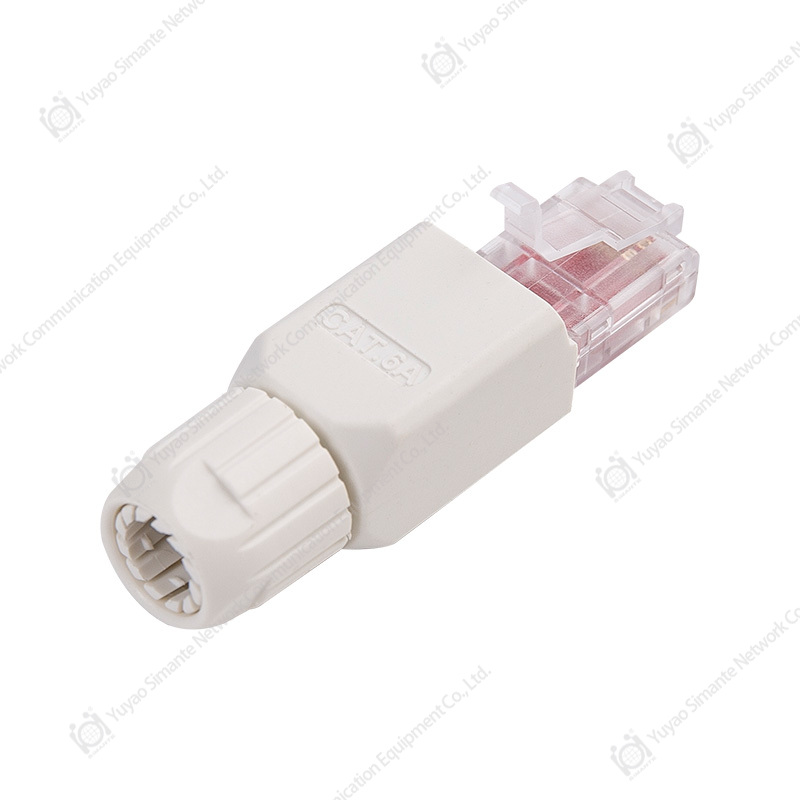
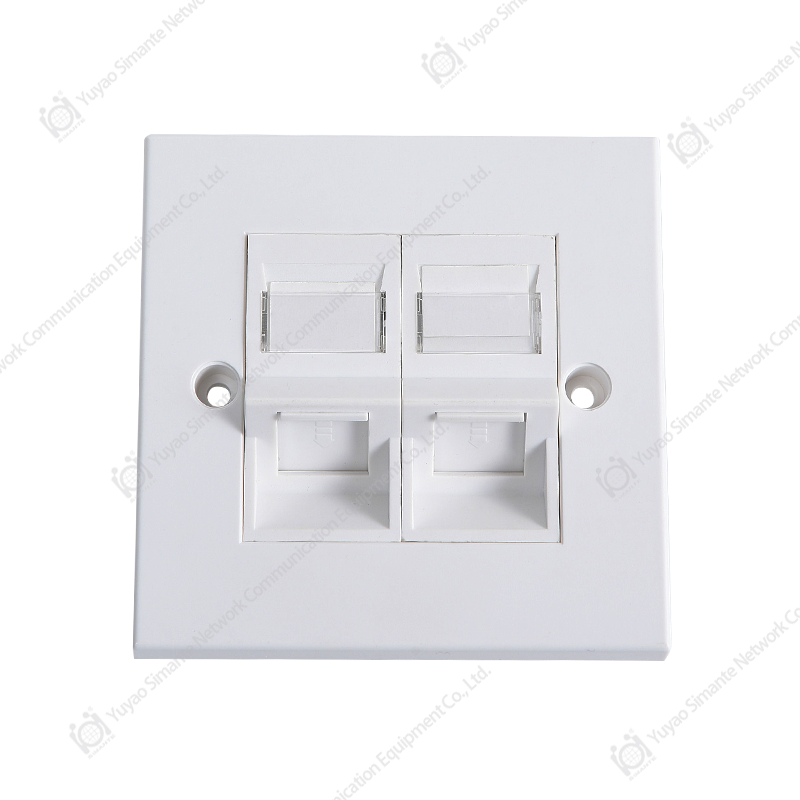
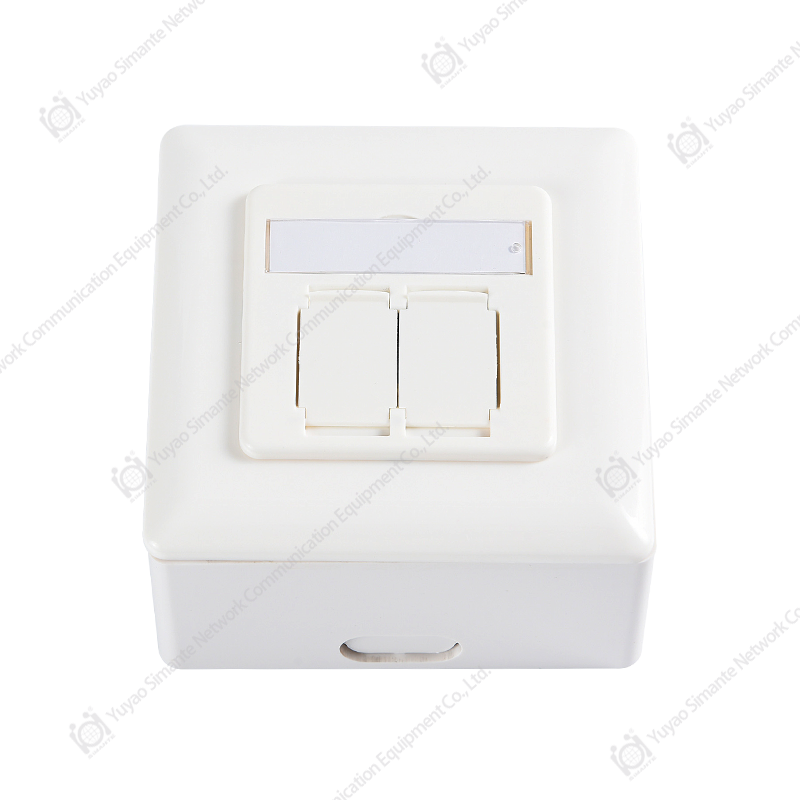
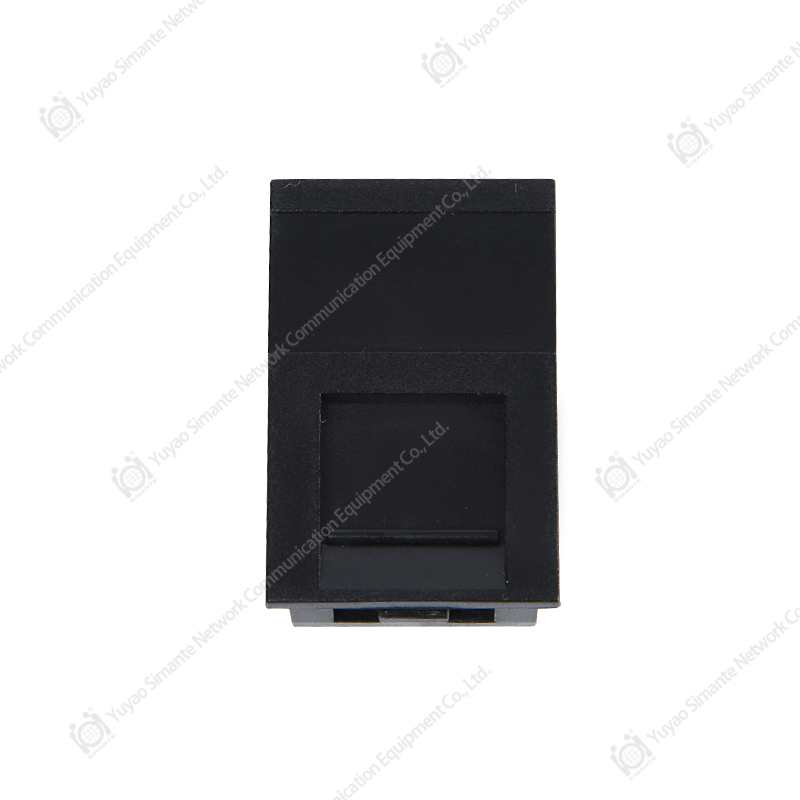
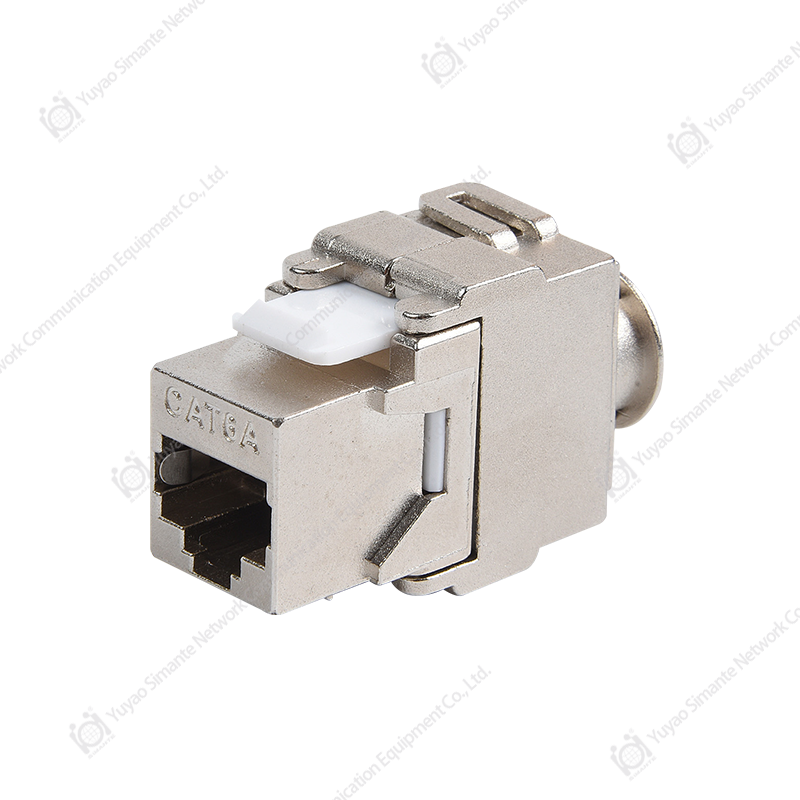
SMT-3020T8C8
Why Connector Quality Matters More Than Its Size Suggests
Connectors are physically small, but their influence on network reliability is substantial. A connector is located at the point where mechanical structure and electrical transmission meet. This makes it sensitive to dimensional accuracy, material selection, assembly quality, and installation technique.
If the housing is not molded accurately, the contact components may not be positioned correctly. If contact retention is weak, movement may affect continuity. If the mating interface is inconsistent, installation may require excessive force or may not produce a secure connection. If the external structure does not fit properly with surrounding accessories, the finished installation may be difficult to maintain.
For this reason, purchasing decisions should consider more than unit price. A low initial cost may not represent good value if the product generates higher installation labor, increased failure rates, difficult troubleshooting, or replacement work. A well-controlled connector can contribute to lower total project cost by improving installation efficiency and reducing avoidable maintenance.
The SMT-3020T8C8 is intended to support this broader value proposition. Its usefulness comes from the combination of a practical product design, controlled production, application knowledge, and the ability to support customers before and after delivery.
Advanced Manufacturing Capabilities
Integrated Design and Development
The manufacturer operates as a professional network communication equipment company integrating design, development, sales, and service. This integrated structure allows product decisions to be connected with real customer requirements. Instead of treating manufacturing as an isolated step, the company can consider the complete product lifecycle, including design feasibility, material selection, molding, assembly, inspection, packaging, delivery, and customer feedback.
The company has more than ten engineers and over thirty full-time technical personnel. This technical team supports product improvement, production coordination, quality development, and customization projects. A dedicated engineering structure is important for connector production because small design changes can influence mold performance, assembly efficiency, product fit, and final reliability.
Injection Molding Resources
Plastic housing quality is a major factor in connector consistency. Injection molding must produce accurate cavities, stable dimensions, clean surfaces, and reliable structural features. Variations in molding conditions can affect fit, retention, appearance, and assembly performance.
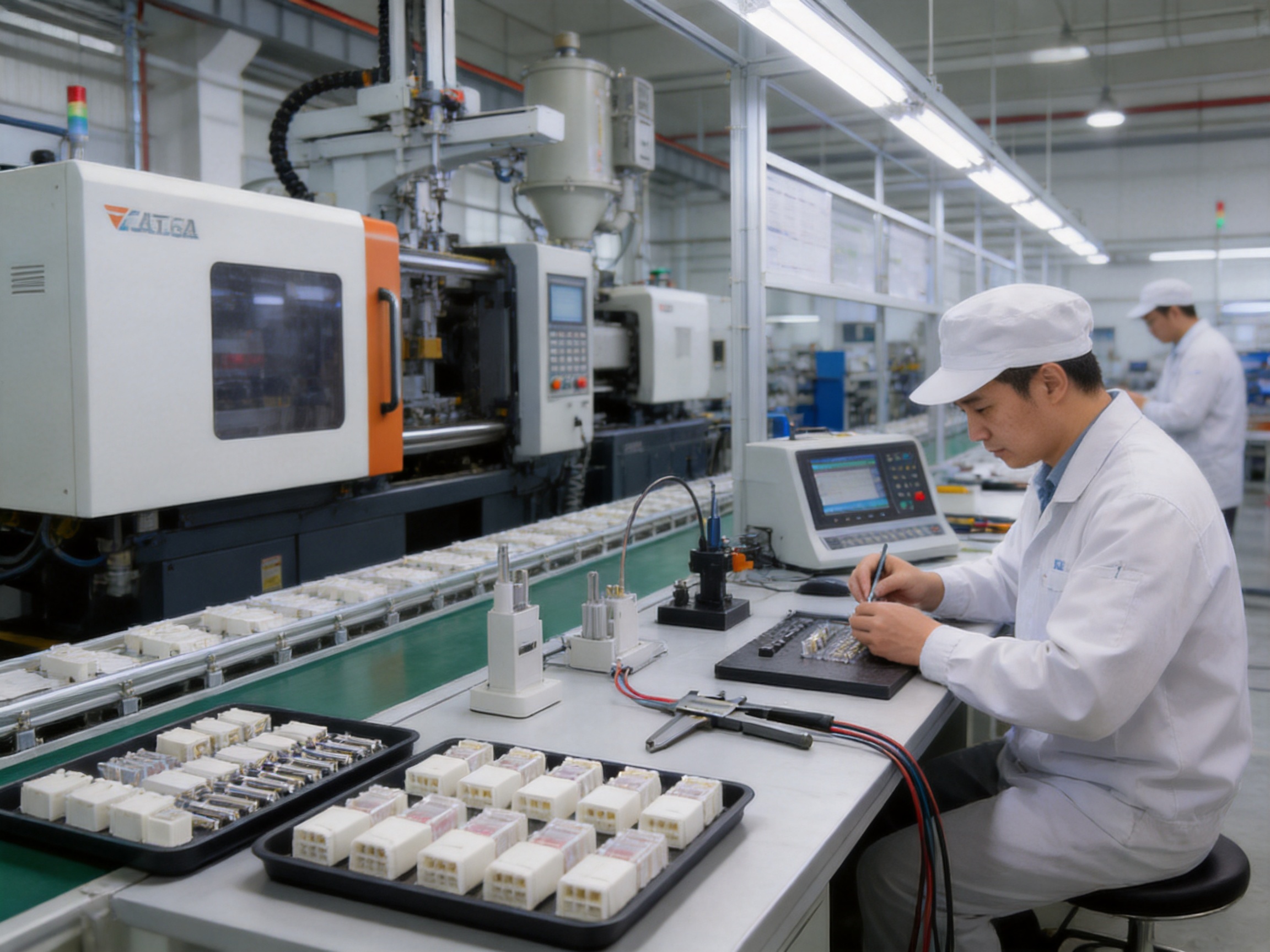
The factory operates ten fully automatic injection molding machines and twenty semi-automatic injection molding machines. This equipment base provides the capacity to support regular production as well as different product configurations. Automatic equipment can improve process repeatability and reduce unnecessary variation, while semi-automatic equipment can provide flexibility for selected product types, production quantities, or customized requirements.
Injection molding performance depends on more than machine quantity. Mold design, material drying, temperature control, injection pressure, cooling time, cycle management, and operator supervision all influence the finished housing. A mature production system brings these factors together through documented procedures and ongoing process monitoring.
Automated Assembly Equipment
The factory also has eight kinds of automatic installation machines. Automated assembly equipment can help position components accurately, reduce manual handling, and improve production efficiency. In connector manufacturing, this can be especially useful for repetitive operations involving contact elements, housings, strain-relief parts, or other small components.
Automation does not eliminate the need for technical personnel. Instead, it allows skilled employees to focus on process control, equipment adjustment, quality inspection, production planning, and continuous improvement. The combination of automation and experienced staff can provide a stronger balance between productivity and flexibility than either approach alone.
Multiple Production Lines
The factory has ten regular and customization production lines. This production structure supports stable output while also providing room for special orders. A supplier with multiple lines can organize production according to product category, customer requirement, batch size, and delivery schedule.
For distributors and project customers, production capacity is an important consideration. A connector may be technically suitable, but the supplier must also be able to deliver sufficient quantities within the required timeframe. The factory maintains a stable annual output of more than nine million units across its products. This indicates experience with organized, volume-based production and provides a useful foundation for large structured cabling orders.
Quality Control from Design to Finished Product
Product quality should be built into the manufacturing process rather than checked only at the end. For a connector, quality control may include design review, incoming material inspection, mold condition monitoring, dimensional checks, assembly inspection, appearance checks, contact verification, packaging control, and final shipment review.
The manufacturer emphasizes quality stability from the design source. This approach is important because problems that originate in product geometry or mold design can be difficult and expensive to correct after mass production begins. Early engineering review can identify potential issues involving wall thickness, shrinkage, component retention, assembly access, and compatibility with related products.
During production, process controls help maintain consistency. Injection molding parameters should be managed within defined ranges. Assembly operations should follow repeatable work instructions. Operators and technicians should identify abnormalities before they affect a large batch. Finished products should be inspected according to appropriate internal and customer requirements.
Performance testing is another important part of the manufacturing system. The company provides product performance testing to meet comprehensive customer requirements. Testing procedures should be selected according to the product design and intended application. Depending on project needs, evaluation may involve visual quality, dimensions, fit, mechanical retention, continuity, contact behavior, environmental resistance, or other relevant characteristics.
Customers requiring specific tests or inspection documentation should communicate those requirements before order confirmation. This allows the manufacturer to determine the appropriate methods, sampling plan, records, and acceptance criteria. Clear technical communication helps avoid misunderstandings and ensures that the delivered product is evaluated according to the actual application.
Advantages Compared with Less-Controlled Alternatives
More Predictable Dimensions
One of the main advantages of a professionally manufactured connector is dimensional predictability. Inconsistent low-cost alternatives may vary in housing size, locking geometry, internal positioning, or contact alignment. Such differences can create assembly difficulties, poor mating, or inconsistent performance across a project.
A mature molding and assembly system helps reduce these variations. Consistent dimensions make installation more straightforward and improve the likelihood that products from different production batches will work in the same system as expected.
Better Production Traceability
Professional suppliers are more likely to maintain organized production records, quality procedures, and technical communication channels. Traceability helps customers identify the production batch, review inspection information, and respond more efficiently if a technical question arises.
For a large network project, traceability can be valuable long after the original shipment. Contractors and distributors may need to reorder the same product, confirm a specification, or investigate a field issue. A supplier with structured internal processes can provide more useful support than an anonymous source focused only on the lowest purchase price.
Lower Installation Risk
A connector that is easy to handle and mates consistently can reduce installation risk. Technicians spend less time correcting poor fits, replacing damaged parts, or investigating connections that do not behave as expected. Lower installation risk can improve project schedules and reduce labor costs.
The benefit is multiplied in large installations. If a small time saving is achieved at every connection point, the total effect may be substantial. Similarly, a small reduction in failure probability can prevent many service calls over the life of a network.
More Responsive Customization Support
Large standard manufacturers may offer limited flexibility for smaller or specialized projects, while informal suppliers may lack the engineering resources needed to manage customization accurately. A manufacturer with both technical staff and multiple production lines can offer a more balanced solution.
Yuyao Simante Network Communication Equipment Co., Ltd. supports OEM and ODM projects. This means customers can discuss project-specific needs with a supplier that understands network cabling components and has the equipment to develop and produce them. Customization remains subject to technical feasibility, tooling considerations, minimum order quantities, and quality approval, but the capability provides valuable options for system builders and brand owners.
Application Areas
Commercial Office Networks
Office networks require dependable connections for computers, telephones, wireless access points, printers, meeting-room equipment, and security systems. Connectors used in these networks may be installed in wall outlets, patch panels, work areas, or communication cabinets. A stable male connector can support organized connections and simplify future equipment changes.
Residential and Smart-Home Systems
Residential structured cabling is increasingly used for internet access, home offices, video distribution, surveillance, access control, and automation. Smart-home systems often combine communication equipment with sensors, controllers, and centralized gateways. Compact and reliable connectors are useful in wall boxes, distribution cabinets, and equipment locations where space is limited.
Data Communication Equipment
Communication cabinets and equipment rooms contain a high number of connections. These environments require products that can be installed efficiently and maintained without unnecessary disruption. Connectors should support clear identification, neat cable management, and dependable mating with compatible ports or accessories.
Industrial Automation
Automation equipment may use network connections to coordinate controllers, sensors, drives, monitoring systems, and production data. Although the exact environmental requirements vary, the connector remains an important part of the communication path. Before specifying the SMT-3020T8C8 for an industrial application, users should confirm temperature, vibration, contamination, cable type, and enclosure requirements.
Security and Monitoring Systems
Video surveillance, access control, and alarm systems depend on communication links that remain available when needed. Structured copper cabling is commonly used in building security installations. Properly selected connectors help organize equipment connections and support efficient maintenance when cameras, recorders, or network switches are upgraded.
Combined Copper and Fiber Installations
Many modern projects use both copper and optical fiber. Fiber may serve as a backbone between floors, buildings, or equipment rooms, while copper connects local devices and work areas. A supplier that provides both copper system components and optical fiber products can help customers coordinate procurement and product support across the complete network.
Product Selection and Project Planning
Before placing an order, customers should confirm the required connector type, mating interface, cable construction, installation method, performance expectations, quantity, packaging, and delivery schedule. The product title identifies the SMT-3020T8C8 model, while the product category identifies it as a male connector. Detailed application information should be exchanged with the supplier to ensure that the product is appropriate for the intended system.
Customers should also confirm whether the connector will be used in a standard indoor environment or a more demanding location. Temperature, humidity, dust, vibration, ultraviolet exposure, chemical contact, and mechanical stress may affect product selection. If special environmental resistance is required, it should be discussed during the technical review rather than assumed from the general product category.
Installation tools and procedures should also be considered. Technicians should use compatible tools, follow the recommended termination method, avoid excessive bending or pulling, and inspect the finished connection before commissioning the network. Even a high-quality connector can perform poorly if it is installed incorrectly or paired with unsuitable cable and equipment.
| Evaluation Item | Why It Matters | Recommended Customer Action |
|---|---|---|
| Connector type | Ensures that the product matches the intended interface and system architecture. | Confirm the male connector requirement and compatible mating component. |
| Housing dimensions | Affects fit, routing, port density, and installation access. | Compare product dimensions with the planned panel, socket, or equipment layout. |
| Contact arrangement | Influences continuity and signal transmission within the connection. | Confirm the required contact configuration and cable termination method. |
| Material and finish | Can affect mechanical durability, appearance, and contact behavior. | Request technical information when a particular material or finish is required. |
| Operating environment | Temperature, moisture, dust, and vibration may affect service life. | Provide environmental conditions before approving the product. |
| Testing requirements | Defines how product acceptance will be verified. | Agree on inspection items, sampling, documentation, and acceptance criteria. |
| Quantity and schedule | Influences production planning, packaging, and delivery arrangements. | Share forecast quantities and required delivery dates as early as possible. |
| Customization | May be needed for branding, packaging, color, or project integration. | Discuss OEM or ODM requirements during the initial technical inquiry. |
Production Efficiency and Supply Reliability
For network infrastructure projects, supply reliability is nearly as important as product specification. A delayed component can hold up installation work, postpone commissioning, and create additional warehouse or labor costs. Suppliers should therefore be evaluated according to their manufacturing capacity, internal coordination, communication, and ability to manage repeat orders.
The factory’s production lines, injection molding resources, automatic assembly equipment, and stable annual output support a structured approach to volume supply. The company’s experience serving overseas markets in Europe, Australia, Africa, the Middle East, and Southeast Asia also provides exposure to different purchasing practices and project requirements.
International customers may require export packaging, product labeling, technical documents, inspection records, and coordinated logistics. Early confirmation of these requirements helps the manufacturer prepare an accurate quotation and production plan. Customers should provide complete information about destination, quantity, packaging, and delivery expectations to reduce avoidable delays.
For distributors, reliable supply also supports inventory planning. A distributor can maintain standard stock for routine orders while discussing customized production for key accounts. The manufacturer’s ability to handle both regular and customization production lines creates flexibility for this type of business model.
Support for OEM and ODM Customers
OEM and ODM cooperation can be valuable for network equipment brands, wholesalers, project contractors, and specialized system suppliers. An OEM customer may require products produced according to an established design or brand presentation. An ODM customer may need support with product development, adaptation, or a new configuration.
Successful OEM and ODM work requires clear technical documentation. This may include drawings, samples, material requirements, dimensional tolerances, packaging instructions, labels, test requirements, and expected order volume. The manufacturer can then review tooling, production process, quality controls, and estimated lead time.
Customization should not compromise essential product performance. Any change to the housing, contact arrangement, material, assembly process, or packaging should be reviewed for its possible effect on fit, reliability, and regulatory or project requirements. Prototype evaluation and sample approval are recommended before mass production.
Because the manufacturer combines engineering personnel with production resources, customers can communicate with a supplier capable of addressing both design and manufacturing considerations. This can reduce the number of intermediaries involved in a project and make technical discussions more direct.
Installation and Maintenance Recommendations
Confirm Compatibility Before Installation
Before installation, verify that the SMT-3020T8C8 is compatible with the intended socket, port, cable, and associated accessories. Product names alone may not provide every detail required for a technical decision. Confirm dimensions, contact configuration, cable requirements, and environmental conditions with the supplier or project engineer.
Use Appropriate Tools
Proper tools help protect the connector and create a consistent termination. Improvised tools may deform the housing, damage contacts, or produce an incomplete connection. Installers should follow the recommended procedure and use tools maintained in good condition.
Control Cable Handling
Excessive pulling, twisting, bending, or tension at the connector can reduce reliability. Cable routing should provide adequate strain relief and should not force the connector into an unnatural position. In equipment cabinets, cables should be supported and arranged so that their weight does not place continuous stress on the connection.
Inspect Before Commissioning
Each completed connection should be checked for correct insertion, secure retention, visible damage, appropriate cable routing, and continuity where applicable. Testing before commissioning can identify installation problems while they are still easy to correct.
Maintain Clear Identification
Labels and organized cable management make future maintenance more efficient. A well-identified connection allows technicians to trace circuits, replace equipment, and perform upgrades with less risk of disturbing unrelated services.
Customer Value and Total Cost of Ownership
The value of the SMT-3020T8C8 should be considered over the complete life of the installation. Purchase price is one part of the calculation, but labor, installation time, failure response, replacement requirements, inventory management, and customer satisfaction also affect total cost.
A connector that is consistent and easy to install can reduce labor variation. Stable production can reduce the risk of mixed dimensions or unexpected fit problems. Good technical support can shorten the time needed to resolve specification questions. OEM and ODM capability can help customers develop products that better match their own systems and market requirements.
In a network containing many connection points, the effect of component quality accumulates. A small improvement at each connection can make the overall installation more dependable and easier to maintain. This is why professional connector selection is a practical investment rather than a minor purchasing detail.
Company Manufacturing Strengths
Yuyao Simante Network Communication Equipment Co., Ltd. has nearly twenty years of service experience in network communication equipment and optical fiber products. Its business combines design, research and development, manufacturing, sales, and service. This broad experience supports a deeper understanding of the requirements faced by network cabling contractors, distributors, equipment manufacturers, and system integrators.
The company’s technical organization includes more than ten engineers and more than thirty full-time technical personnel. Its factory includes regular and customization production lines, fully automatic and semi-automatic injection molding machines, and automatic installation equipment. These resources support both standard production and project-oriented development.
The product range includes keystone jacks, patch panels, wall face plates, data sockets, and other structured cabling components. This product coverage allows the company to understand how individual connectors function within a larger cabling system. Customers can therefore discuss not only a single component but also the relationship between connectors, outlets, panels, and network infrastructure.
The company serves customers in multiple international markets and undertakes OEM and ODM projects. Its stated commitment is to help customers create value through product quality, technical support, stable production, and cooperative service. For buyers seeking a long-term supplier rather than a one-time source, these capabilities are important factors in supplier evaluation.
Frequently Asked Questions
What is the SMT-3020T8C8?
The SMT-3020T8C8 is a male connector designed for use in structured cabling applications. It belongs to the copper system product category and is intended to provide a dependable connection with a compatible female interface or related network component.
Is the SMT-3020T8C8 a fiber connector?
The product is identified as a male connector within the copper system range. It should not be assumed to be an optical fiber connector. However, it may be used in projects that also include fiber products as part of a combined copper and fiber structured cabling system. Customers should confirm the precise interface and application before ordering.
What types of projects may use this connector?
Potential applications include commercial networks, residential structured cabling, smart-home systems, communication cabinets, security systems, automation equipment, and other projects requiring compatible copper connections. The exact suitability depends on the mating interface, cable construction, installation environment, and performance requirements.
Can the product be customized?
The manufacturer supports OEM and ODM projects. Customers may discuss requirements such as packaging, labeling, appearance, product adaptation, or other project-specific details. Technical feasibility, tooling, order quantity, testing, and approval requirements should be confirmed before production.
What manufacturing equipment supports production?
The factory operates ten fully automatic injection molding machines, twenty semi-automatic injection molding machines, eight kinds of automatic installation machines, and ten regular and customization production lines. These resources support stable production, repeatable molding, assembly efficiency, and flexible project fulfillment.
How does the manufacturer control product quality?
Quality control begins with design and development and continues through molding, assembly, inspection, and performance testing. The company maintains technical personnel and production resources to support process stability and customer testing requirements. Specific inspection details should be agreed according to the project.
What information should be provided when requesting a quotation?
Customers should provide the required model, quantity, application, mating component, cable information, packaging needs, customization requirements, destination, delivery schedule, and any testing or documentation requirements. Complete information allows the supplier to prepare a more accurate technical and commercial proposal.
Can the connector be supplied for international projects?
The manufacturer maintains export activity in Europe, Australia, Africa, the Middle East, and Southeast Asia. International customers should confirm shipping terms, packaging, labeling, documentation, and delivery arrangements during the order process.
What should installers do to achieve reliable performance?
Installers should confirm compatibility, use suitable tools, follow the recommended termination procedure, avoid excessive cable stress, verify secure mating, and test the completed connection before commissioning. Product quality and installation quality should be treated as complementary requirements.
Why should buyers evaluate the manufacturer as well as the product?
A connector is part of a larger supply and quality system. The manufacturer’s engineering capability, molding equipment, assembly resources, inspection procedures, customization support, production capacity, and service experience can affect delivery reliability and long-term product consistency. Evaluating the supplier helps customers reduce project risk.
Conclusion
The SMT-3020T8C8 male connector is a practical component for structured copper cabling systems. Its value is based not only on its compact connector format but also on the manufacturing system behind it. Reliable dimensions, consistent assembly, stable contact performance, and compatibility with professional installation practices are all important when building a dependable network.
Compared with less-controlled alternatives, a professionally produced connector can offer more predictable fit, lower installation risk, better supply coordination, and stronger support for repeat orders or customized projects. These advantages become increasingly significant as the number of connection points grows.
Yuyao Simante Network Communication Equipment Co., Ltd. supports the product with nearly twenty years of industry experience, a technical team of engineers and full-time specialists, multiple injection molding machines, automated installation equipment, regular and customization production lines, performance testing capabilities, and experience serving international customers. Its broader range of copper and optical fiber products also makes it suitable for customers developing complete structured cabling solutions.
For distributors, contractors, system integrators, and OEM or ODM customers, the SMT-3020T8C8 can be considered as part of a carefully planned network infrastructure. Final selection should always be based on confirmed compatibility, environmental conditions, installation requirements, testing expectations, and project documentation. When these factors are addressed in advance, the connector can contribute to an organized, efficient, and dependable communication system.
References
1. Structured Cabling System Design Principles, industry guidance on network architecture, connection points, cable management, and infrastructure planning.
2. Copper Communication Cabling Installation Practices, technical guidance on cable preparation, connector termination, handling, inspection, and testing.
3. Injection Molding Process Control Fundamentals, manufacturing reference covering mold design, dimensional stability, process parameters, and quality monitoring.
4. Network Connector Quality and Reliability Considerations, engineering reference concerning mechanical mating, contact stability, material selection, and lifecycle performance.
5. Optical Fiber and Copper Network Infrastructure Planning, comparative reference for designing systems that combine copper access connections with fiber backbone links.
6. Manufacturer-provided product and company information for the SMT-3020T8C8 male connector, structured cabling components, production resources, customization services, and quality capabilities.