Español
 عربى
عربى русский
Content
- 1 Product Overview
- 2 Main Technical and Functional Characteristics
- 3 Why the Faceplate Matters in a Structured Cabling System
- 4 Design Advantages Over Ordinary Competitor Faceplates
- 5 Detailed Feature Analysis
- 6 Applications in Copper and Fiber Systems
- 7 Installation and Maintenance Benefits
- 8 Manufacturing Strength Behind the Product
- 9 Quality Control and Performance Testing
- 10 OEM and ODM Value for Global Customers
- 11 Advantages for Different Users
- 12 Comparison with Common Alternatives
- 13 Packaging, Storage, and Logistics Considerations
- 14 Role in Smart Buildings and Network-Ready Spaces
- 15 Why Choose a Specialized Manufacturer
- 16 Practical Selection Guidance
- 17 Q&A Section
- 17.1 Q1: What is the main purpose of the Two Ports Flat Frame 45° UK Type Faceplate?
- 17.2 Q2: What type of back box is the faceplate compatible with?
- 17.3 Q3: Why is the 45° angled design useful?
- 17.4 Q4: Does the product have visible screws on the front surface?
- 17.5 Q5: How many connectors can be installed?
- 17.6 Q6: What material is used for the faceplate?
- 17.7 Q7: What is the function of the spring-type dust-proof door?
- 17.8 Q8: Is the product suitable for port identification and management?
- 17.9 Q9: Does the product meet environmental requirements?
- 17.10 Q10: What is the operating temperature range?
- 17.11 Q11: Can it be used in both copper and fiber systems?
- 17.12 Q12: What makes this product different from ordinary low-cost faceplates?
- 17.13 Q13: Is customized packaging available?
- 17.14 Q14: Why is supplier manufacturing strength important for this type of product?
- 18 Conclusion
- 19 References
- 20 Product: SMT-4306-86P-2X Two Ports Flat Frame 45°UK Type Faceplate
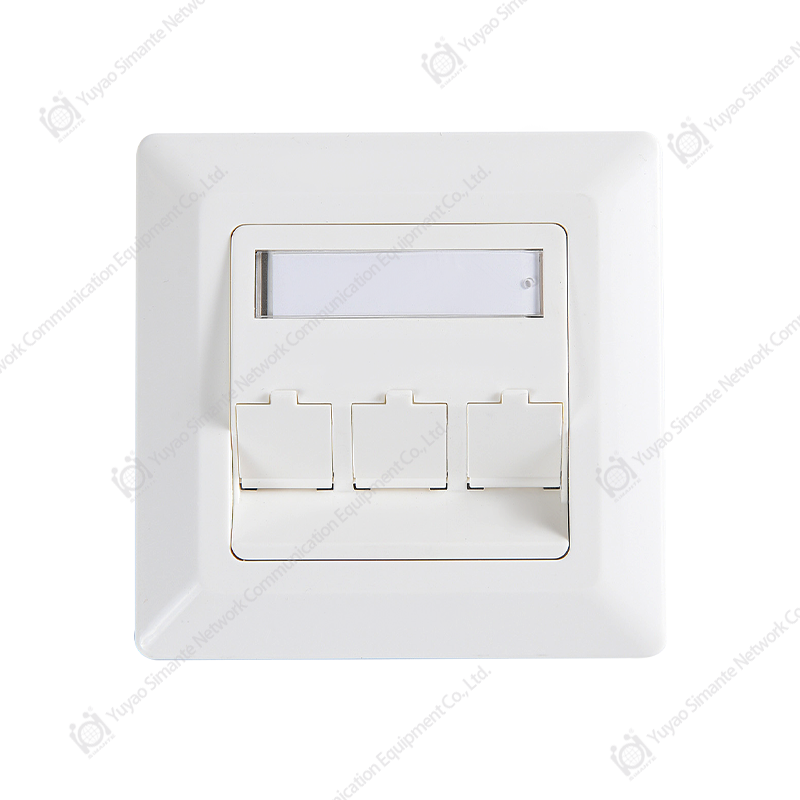
In structured cabling, the faceplate is often viewed as a small finishing component, yet it has a direct impact on installation quality, cable protection, long-term maintenance, room aesthetics, and user experience. The Two Ports Flat Frame 45° UK Type Faceplate is designed for copper and fiber network environments where installers need a reliable, neat, durable, and easy-to-manage wall-mounted outlet solution. Built for Type 86 exposed and concealed back boxes, it provides a practical interface for network, telephone, and information modules, supporting up to two connectors in a compact format. Its embedded flat frame, screwless visible surface, spring-type dust-proof doors, identification window, detachable logo plate, and high-quality ABS engineering plastic construction make it a strong choice for commercial buildings, residential projects, smart offices, educational facilities, hotels, and data communication spaces.
SMT-4306-86P-2X Two Ports Flat Frame 45°UK Type Faceplate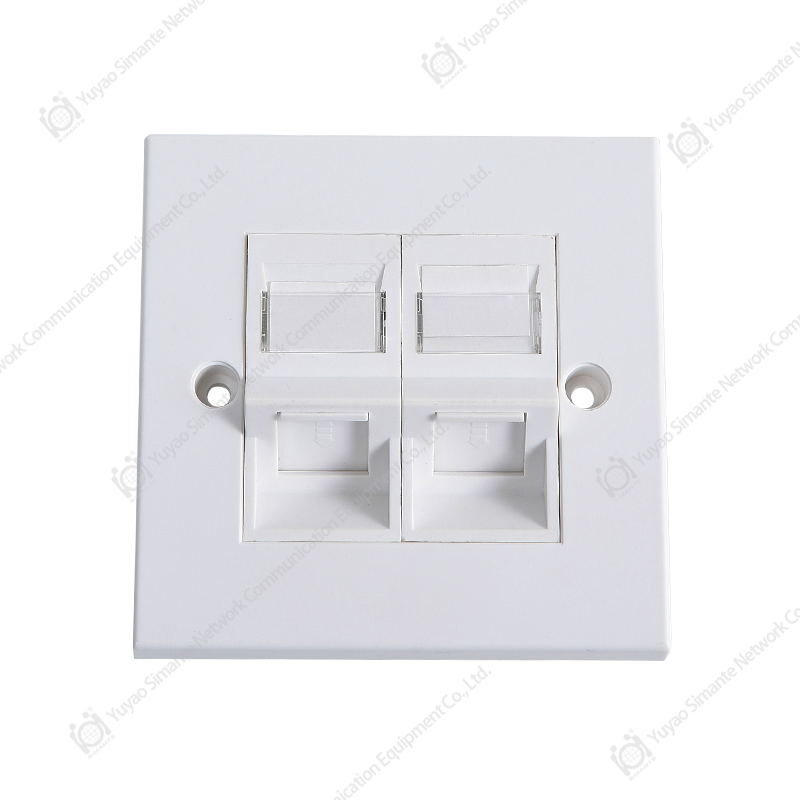
This article introduces the product from a complete application and procurement perspective. It explains the key design details, the advantages over many ordinary faceplates on the market, the value it brings to installers and end users, and the manufacturing strengths behind the product. It also explores why a professional network communication equipment manufacturer with strong production capacity, engineering support, testing ability, and OEM/ODM experience is especially important when selecting cabling system components.
Product Overview
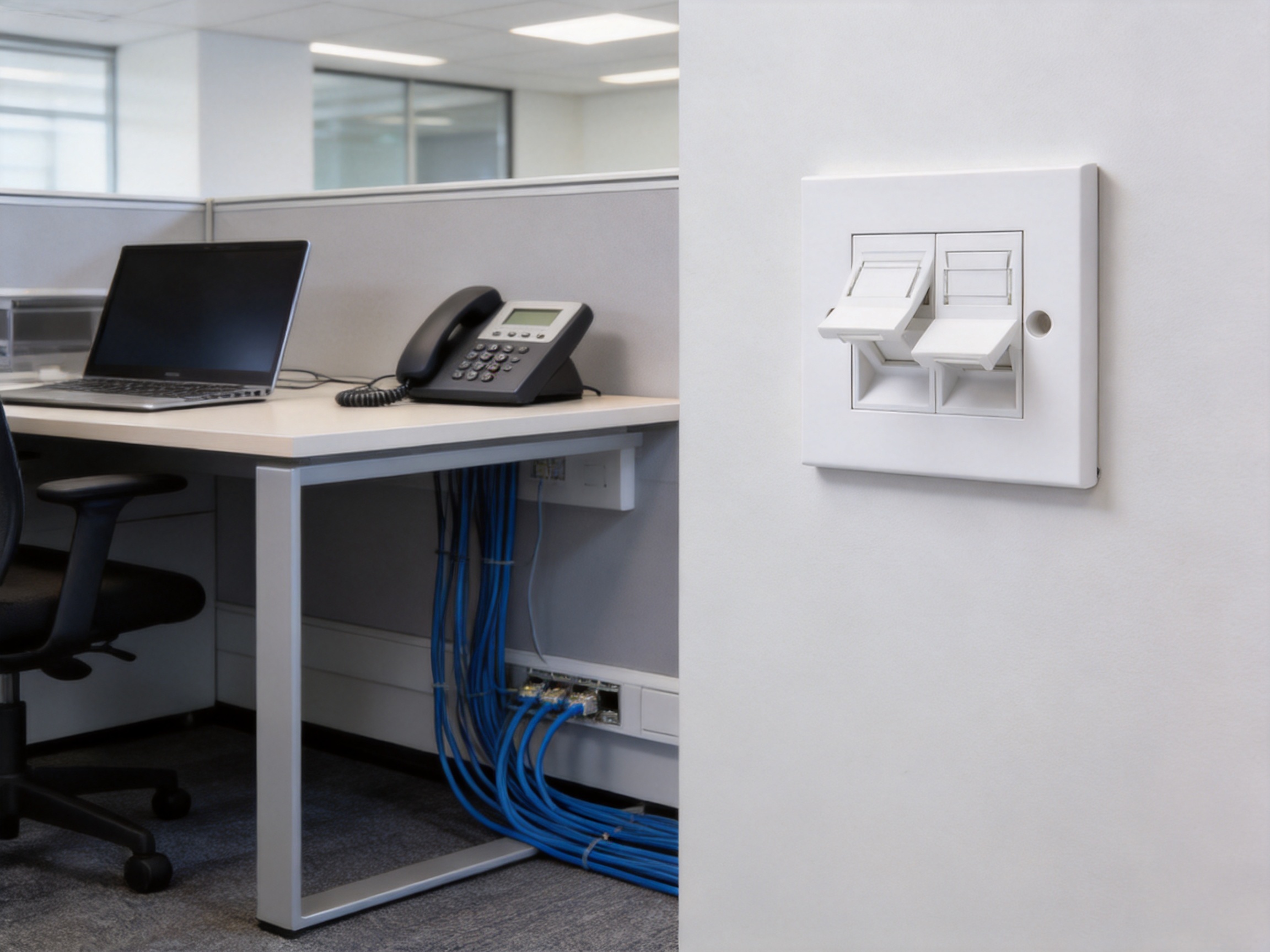
The Two Ports Flat Frame 45° UK Type Faceplate is a wall-mounted outlet plate used in structured cabling systems. It is compatible with common Type 86 exposed and concealed back boxes, which are widely adopted in building wiring projects. The product is designed to accept information and telephone modules using an Amp-style interface, with a maximum capacity of two installed connectors. This two-port configuration is suitable for workstations, meeting rooms, reception counters, classrooms, hotel rooms, apartment network points, security system access positions, and other areas where copper or fiber communication access must be arranged neatly at the wall surface.
The faceplate uses an embedded face frame structure. This means that after installation, the visible front surface does not show exposed screws. The result is a cleaner appearance and a more refined finish compared with traditional screw-visible wall plates. In addition to visual benefits, the embedded structure also contributes to convenient installation and disassembly. Installers can work efficiently during initial deployment, and maintenance personnel can access the outlet later without unnecessary difficulty.
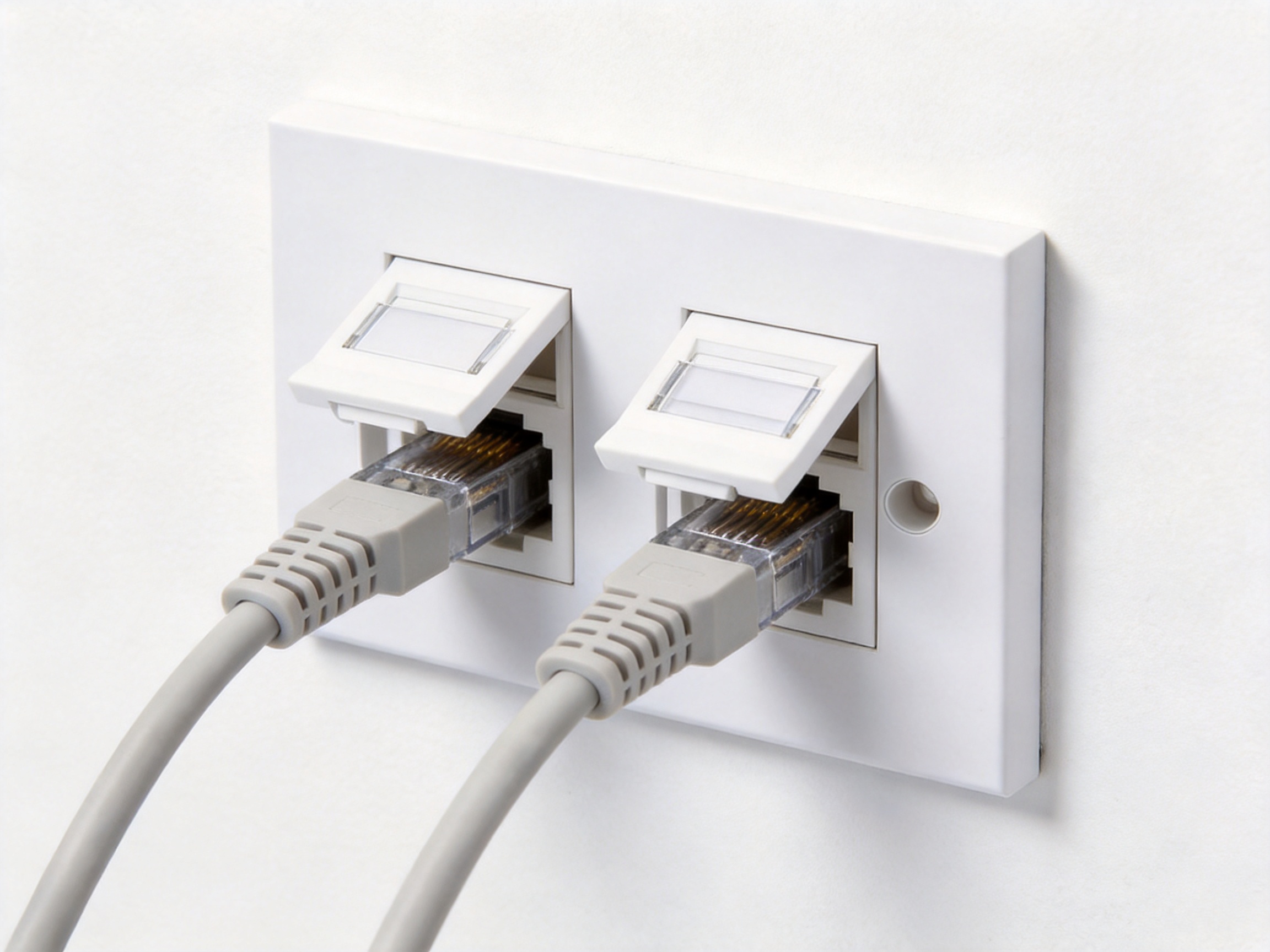
A key feature of the product is the 45° angled port direction. In many real installations, cable bend radius and patch cord direction matter. A straight-outlet faceplate can place more stress on patch cords when furniture is close to the wall or when network cables need to run downward or sideways. A 45° angled design helps guide patch cords more naturally, reduces protrusion, and can improve cable management at the user end. For work areas where desks, cabinets, or wall-mounted devices are positioned near the outlet, this feature can be especially useful.
The product is equipped with spring-type dust-proof doors. These doors help protect unused ports from dust, debris, and accidental contamination. In structured cabling, small particles can affect connection quality over time, especially in high-traffic or renovation environments. Dust protection is therefore not only a cosmetic feature but also a practical element that supports stable performance and longer service life. The front logo window and detachable label plate make it easier to identify ports, record network point numbers, and manage cabling resources during operation.
Main Technical and Functional Characteristics
The faceplate is manufactured from high-quality ABS engineering plastic. ABS is commonly used in electrical and communication products because it offers a good balance of mechanical strength, impact resistance, dimensional stability, and processability. For a wall outlet plate, these characteristics are important. The faceplate may be touched frequently, exposed to accidental impact, or installed in environments where temperature changes occur. The material selection helps the product resist deformation and remain stable during use.
The product is designed to meet ROHS environmental requirements. Compliance with ROHS standards supports responsible material control by restricting certain hazardous substances. For global procurement, environmental compliance is often a required condition, especially in markets such as Europe and other regions with strict regulatory expectations. Using compliant materials also reflects the manufacturer’s commitment to safer, more sustainable cabling components.
Its operating environmental temperature range is from -25°C to +70°C. This broad range supports use in many indoor and semi-controlled environments. While the product is mainly applied in structured cabling installations inside buildings, cabling equipment may still face varying conditions during transportation, storage, project installation, and operation. A wide temperature tolerance helps maintain performance consistency and reduces the risk of cracking, warping, or premature aging under normal use conditions.
The product package is designed for organized storage and transportation. Each product is placed into a special blister bag and then into a cardboard box with accessories. The model and quantity label is applied to the carton for easy warehouse identification. Regular packing quantity is arranged as 10 boxes per inner box, 20 pieces per box, and 200 pieces per carton. This clear packaging plan helps distributors, contractors, and project managers manage inventory, reduce handling confusion, and protect the product before installation.
| Item | Specification or Feature | Practical Benefit |
|---|---|---|
| Product Type | Two-port flat frame 45° UK-type faceplate | Supports neat wall access for network and telephone modules |
| Back Box Compatibility | Common Type 86 exposed and concealed back boxes | Suitable for widely used building wiring standards |
| Port Capacity | Up to 2 connectors | Ideal for workstation and dual-service outlet applications |
| Port Direction | 45° angled design | Improves patch cord routing and reduces cable stress |
| Surface Design | Embedded frame with no visible screws | Provides a clean appearance and easier maintenance |
| Dust Protection | Spring-type dust-proof doors | Protects unused ports and supports long-term reliability |
| Identification | Logo window and detachable logo plate | Simplifies port numbering and management |
| Material | High-quality ABS engineering plastic | Offers impact resistance, anti-collision performance, and dimensional stability |
| Environmental Requirement | ROHS compliant | Meets environmental expectations for responsible procurement |
| Temperature Range | -25°C to +70°C | Works reliably across varied installation conditions |
Why the Faceplate Matters in a Structured Cabling System
A structured cabling system is only as reliable as its weakest component. Many users pay close attention to cables, patch panels, switches, and racks, but the wall outlet faceplate is the point that people interact with every day. It must hold the module firmly, protect the connector, maintain a clean appearance, and allow fast identification. If the faceplate is poorly designed, it can cause inconvenience even when the rest of the system is high quality.
For example, a weak faceplate may deform after repeated use, causing the module to loosen. A poorly fitted plate may leave gaps at the wall, affecting aesthetics and collecting dust. A faceplate without dust doors may allow contaminants into unused ports. A product without a clear label area can make troubleshooting slower because technicians must trace cables manually. The Two Ports Flat Frame 45° UK Type Faceplate addresses these common problems through careful design.
In modern buildings, network outlets often need to meet multiple requirements at the same time. They must look clean enough for interior decoration, be strong enough for long service life, be convenient enough for installers, and be standardized enough for large-scale deployment. This product provides a practical balance of these requirements. Its two-port arrangement supports common data and voice combinations, such as one data port plus one telephone port, two data ports, or other module combinations depending on the project design.
The faceplate can also support different cabling scenarios when used with compatible modules. For copper systems, it can be used with keystone jacks or information modules for Ethernet access. For fiber-related wall access points, suitable adapter modules may be installed according to compatibility and project requirements. This makes the product relevant to both copper system and fiber system categories, especially for projects where mixed infrastructure is common.
Design Advantages Over Ordinary Competitor Faceplates
The first advantage is the screwless visible surface. Many traditional faceplates use exposed screws on the front. Although this is a simple structure, it can look less refined and may collect dust around screw heads. Exposed screws may also become scratched, rusted, loosened, or mismatched in color after maintenance. A screwless visible surface gives the outlet a cleaner visual effect, which is important in offices, hotels, apartments, schools, and commercial interiors where appearance matters.
The second advantage is easier installation and disassembly. In large projects, installers may need to install hundreds or thousands of wall plates. A product that is simple to assemble and remove saves labor time and reduces installation errors. The embedded face frame design supports a more efficient workflow. During maintenance, technicians can access internal modules without damaging the wall finish or struggling with complex structures.
The third advantage is the 45° angled port design. Compared with straight-facing ports, the angled structure can reduce patch cord bending and protrusion. This is valuable when outlets are installed behind desks, near furniture, or in areas where people frequently move. Reduced cable stress helps protect both the patch cord and the connector module, contributing to stable signal transmission. It also creates a tidier installation because the cable naturally routes downward or away from the wall.
The fourth advantage is integrated dust protection. Some low-cost faceplates do not include dust doors, or the doors may be loose and unreliable. This product uses spring-type dust-proof doors, which provide more active closing performance. When a port is not in use, the dust door helps cover the opening. This is particularly useful in construction sites before final occupancy, in classrooms and public areas, and in facilities where outlets may remain unused for long periods.
The fifth advantage is convenient labeling. Port identification is a critical part of structured cabling management. Without clear labeling, troubleshooting becomes slow and costly. The faceplate includes a front logo window and detachable logo plate, helping installers and administrators mark each port clearly. The detachable design supports updates when network points are reassigned, upgraded, or reconfigured.
The sixth advantage is material quality. The use of high-quality ABS engineering plastic provides a stronger physical structure than many low-grade plastics. Cheap plastics may become brittle, yellow, or deform over time. ABS offers better impact resistance and dimensional stability. In daily operation, a durable faceplate reduces replacement frequency and lowers total maintenance cost.
Detailed Feature Analysis
Embedded Flat Frame Structure
The embedded flat frame structure is one of the most noticeable design characteristics. From the user’s perspective, the front panel appears clean and integrated with the wall surface. From the installer’s perspective, the structure supports practical handling. In modern interior environments, wall accessories are expected to be simple, smooth, and visually consistent. The flat frame responds to this expectation while maintaining the functional strength needed for network cabling.
A faceplate that sits poorly on the wall can affect the perceived quality of an entire cabling project. Even if the internal cable is certified and the network performs well, a crooked or unattractive outlet can leave a negative impression. The flat frame design helps create a professional finish. This is particularly important for hotels, office towers, exhibition spaces, high-end residential buildings, and public facilities where the visible details of installation are evaluated closely.
Two-Port Capacity for Flexible Applications
Two-port faceplates are among the most commonly used configurations in structured cabling. One port may be used for computer network access and the other for telephone, printer, IP camera, wireless access point support, or backup network access. In some applications, both ports may serve data connections. In others, one may be reserved for future expansion. The ability to install up to two connectors allows project designers to plan efficiently without occupying excessive wall space.
The two-port format also helps reduce the number of wall openings required in a room. Instead of installing two separate single-port outlets, the installer can place two services within one faceplate. This saves time, improves appearance, and simplifies labeling. For large projects, this advantage becomes significant because it reduces labor and materials while supporting a clean standardized layout.
Compatibility with Type 86 Back Boxes
The product is common to Type 86 exposed and concealed back boxes. Type 86 format is widely used in many building electrical and low-voltage wiring installations. Compatibility with both exposed and concealed back boxes gives the installer more flexibility. Concealed boxes are commonly used in new construction or renovation projects where the wiring is hidden inside walls. Exposed boxes may be used in retrofits, industrial areas, temporary buildings, or spaces where concealed installation is difficult.
This compatibility can reduce procurement complexity. Contractors do not need to choose separate faceplate models for exposed and concealed box conditions if the same plate can cover both typical requirements. This supports standardization across projects, simplifies inventory, and reduces the risk of ordering mistakes.
Spring-Type Dust-Proof Door
The spring-type dust-proof door is designed to close automatically or remain positioned to protect the port opening when not in use. Dust protection is important because communication outlets are often installed before the final cleaning stage of a construction project. During construction, dust from wall finishing, flooring, ceiling work, and furniture installation may enter open ports. Once dust accumulates inside a connector interface, it can affect contact quality and create long-term reliability concerns.
In daily use, dust doors also protect outlets in public places. Schools, offices, hotels, and commercial spaces may have outlets that are not always occupied. A protected port looks cleaner and is less likely to collect debris. The spring mechanism provides a more dependable user experience than a loose manual cover.
Logo Window and Detachable Label Plate
Good network management begins with clear identification. The front logo window allows visible marking, while the detachable label plate makes updates easier. In a structured cabling system, every port should correspond to a patch panel position, floor plan, or network administration record. If port numbers are unclear, technicians may spend unnecessary time tracing cables, testing links, and confirming endpoints.
The detachable label plate supports future changes. Buildings evolve over time. Offices may be rearranged, departments may move, and network assignments may change. Instead of replacing the whole faceplate, the label can be updated. This feature seems small, but it contributes to long-term operational efficiency.
ABS Engineering Plastic Housing
ABS engineering plastic is selected for its balanced mechanical performance. It resists impact, supports precise injection molding, and maintains shape under normal operating conditions. For a faceplate, dimensional accuracy is important because the module opening, frame fit, and dust door movement all depend on stable molding quality. If the plastic shrinks unevenly or deforms easily, the module may not fit securely.
High-quality ABS also supports a smooth surface finish. A clean surface is easier to maintain and more suitable for visible installation areas. The product is described as anti-collision, impact resistant, and not easy to deform, all of which are essential for long service life in working environments.
Applications in Copper and Fiber Systems
The product belongs to both copper system and fiber system application categories because wall outlets are needed wherever communication access points are distributed throughout a building. In copper cabling systems, the faceplate can house compatible network or telephone modules, supporting Ethernet connectivity for computers, IP phones, printers, access control devices, wireless access points, and other terminal equipment.
In fiber-related structured cabling, wall access points may be required in fiber-to-the-desk, fiber-to-the-room, or specialized communication systems. Depending on module compatibility and project configuration, the faceplate can serve as a neat outlet location for optical fiber connectivity. The smooth front design and protected port structure help maintain a professional installation appearance in both copper and fiber environments.
Modern networks increasingly combine copper and fiber infrastructure. Fiber may be used for backbone transmission, high-bandwidth links, or special equipment, while copper remains common for user access points. A supplier capable of offering both copper and fiber structured cabling components gives customers a more integrated procurement path. This reduces coordination challenges and improves component compatibility across the project.
Installation and Maintenance Benefits
For installers, a good faceplate should be easy to handle, align, fasten, and inspect. This product is supplied with standard M3.5/M4 bolts, supporting typical installation requirements. The compatibility with Type 86 back boxes allows installers to work with familiar infrastructure. The embedded frame and no-visible-screw appearance provide a clean result without complicated finishing work.
The product’s two-port layout simplifies module installation and cable routing. Installers can prepare the back box, terminate the modules, place the modules into the faceplate, and complete the outlet assembly. The 45° angle helps guide the patch cord direction after the user connects equipment. This can reduce the likelihood of patch cords being sharply bent or pressed against furniture.
Maintenance personnel benefit from the removable structure and labeling features. When a port needs testing, replacement, or relabeling, the faceplate can be accessed without major disruption. Clear labeling reduces time spent identifying ports. Dust doors keep unused ports cleaner, which can reduce cleaning and inspection effort.
For project managers, standard packaging and labeling support inventory management. Carton labels indicate model and quantity, and the packaging arrangement supports organized storage. The stated storage conditions are an ambient temperature of -5°C to +30°C, relative humidity not more than 70%, no acid, alkali, or other corrosive gases in the surrounding air, and a storage period of three years. These instructions help distributors and contractors preserve quality before installation.
Manufacturing Strength Behind the Product
A faceplate may appear simple, but consistent quality depends on manufacturing control. Yuyao Simante Network Communication Equipment Co., Ltd. is a professional manufacturer focused on network cabling solutions and optical fiber products. The company integrates design, development, sales, and service, which means it is not only a trading provider but a manufacturer with technical and production resources behind the product.
The company has nearly 20 years of service experience in the cabling field. Long-term experience is important because structured cabling products must satisfy practical installation habits, international market requirements, and stable batch quality. Through years of communication with customers, the manufacturer has accumulated knowledge about what installers and distributors need: reliable fit, stable material quality, clear packaging, flexible customization, and consistent delivery.
The company’s mature research and development system helps ensure product stability from the design stage. More than 10 engineers and over 30 full-time technical personnel contribute to product improvement, quality optimization, and updates. This engineering team supports the development of components such as keystone jacks, patch panels, wall faceplates, data sockets, and other structured cabling accessories.
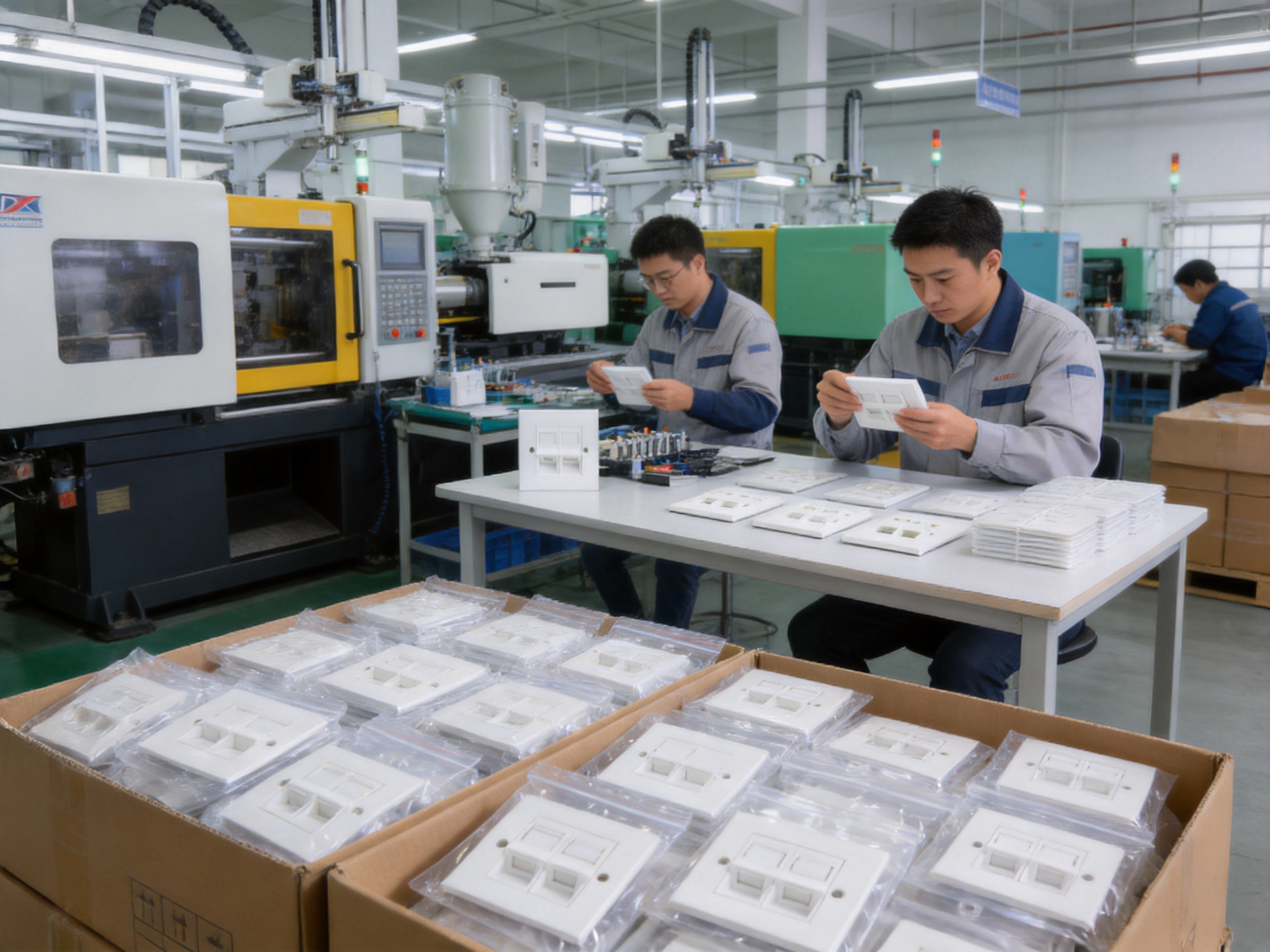
Production capacity is another strength. The factory has 10 regular and customization production lines, 10 fully automatic injection molding machines, 20 semi-automatic injection molding machines, and 8 automatic installation machines. These resources support a stable annual output of more than 9 million units. For buyers, this matters because a supplier with strong production capacity can better support large project orders, regular distribution demand, and OEM/ODM programs.
Injection molding capability is especially relevant for faceplates. The shape, surface finish, port opening accuracy, dust door fit, and frame stability all depend on mold design and molding process control. Fully automatic and semi-automatic injection molding equipment allows the manufacturer to produce plastic components efficiently while maintaining consistency. Automatic installation machines further support assembly efficiency and repeatability.
Quality Control and Performance Testing
High-end market positioning requires strict quality management. The manufacturer emphasizes stable quality and product performance testing. In structured cabling components, quality control should cover material selection, injection molding, dimensional inspection, assembly fit, appearance inspection, packaging verification, and functional checks. For a faceplate, even small differences in dimensions can affect how modules lock into place or how the frame sits against the wall.
Material control is a foundational step. ABS engineering plastic must meet the required mechanical and environmental standards. The finished product should resist impact, remain dimensionally stable, and maintain an acceptable appearance. ROHS compliance requires attention to material composition and supplier control. When a manufacturer has an established quality system, buyers can have more confidence in long-term consistency.
Appearance inspection is also important for faceplates. Since the product is visible after installation, scratches, color inconsistency, flashing, deformation, or poor surface finish can lead to rejection by project owners. Careful inspection helps ensure that the product not only performs correctly but also looks professional.
Functional inspection may include checking the spring-type dust-proof door movement, confirming the logo window and label plate fit, verifying module compatibility, and ensuring the plate can be installed with the supplied bolts. Packaging inspection ensures that accessories are included and that cartons are properly labeled. These steps reduce installation-site problems and improve customer satisfaction.
OEM and ODM Value for Global Customers
Many distributors and project contractors require customized packaging, private labeling, or product adjustments. The product information notes that the product use mark can be customer-specified packaging. This flexibility is important for OEM and ODM cooperation. A supplier with customization production lines and engineering support can help customers adapt products to market requirements, brand positioning, and project standards.
OEM services may include customized cartons, labels, model numbers, color options, or accessory packages. ODM support may go further, involving design modification, new mold development, special module compatibility, or customized appearance. Because the manufacturer has in-house engineering and production capabilities, it can respond more effectively to such needs than a supplier that only resells finished products.
Global customers also need stable export experience. The company maintains stable export volume in Europe, Australia, Africa, the Middle East, and Southeast Asia. Experience in multiple markets means the manufacturer is familiar with varied customer expectations, packaging requirements, environmental compliance concerns, and quality standards. This international exposure supports better communication and more reliable order execution.
Advantages for Different Users
For Installers
Installers benefit from compatibility, easy handling, and clear structure. The Type 86 back box compatibility reduces uncertainty on site. The two-port structure supports common outlet configurations. The embedded frame produces a neat final appearance without exposed front screws. The supplied bolts and intuitive design help speed up installation.
For System Integrators
System integrators need components that work consistently across many rooms and floors. This faceplate supports standardized deployment and simple labeling. Its dust-proof doors and angled ports help improve the practical quality of the completed cabling system. A neat wall outlet reflects well on the integrator’s workmanship.
For Building Owners
Building owners value long service life, low maintenance, and attractive appearance. The ABS construction, impact resistance, dust protection, and screwless surface help maintain a clean and reliable installation. Clear port identification makes future moves, additions, and changes easier.
For Distributors
Distributors need products that are easy to store, sell, and supply in quantity. The regular packaging arrangement, stable production capacity, broad application range, and environmental compliance support distribution business. The manufacturer’s OEM/ODM capabilities also help distributors build differentiated product offerings.
For End Users
End users experience the product through everyday interaction. A patch cord should plug in easily, the outlet should look clean, and the port should be identifiable. The 45° angle helps keep cords organized, while the dust door protects unused ports. These simple details improve the daily usability of the workspace.
Comparison with Common Alternatives
Many low-cost faceplates compete mainly on price, but price alone does not determine value. A cheaper faceplate may save a small amount at the purchasing stage but create higher costs later through breakage, poor fit, unattractive appearance, difficult labeling, or replacement needs. The Two Ports Flat Frame 45° UK Type Faceplate is positioned as a reliable component for users who care about both installation efficiency and long-term performance.
Compared with screw-visible plates, the embedded screwless surface offers a more modern appearance. Compared with straight-port plates, the 45° design improves patch cord routing. Compared with plates without dust protection, the spring-type dust doors offer better port cleanliness. Compared with unlabeled or hard-to-label products, the logo window and detachable logo plate improve network management. Compared with low-grade plastic plates, ABS engineering plastic supports better durability.
The product’s value is therefore not based on one feature alone. It comes from the combination of design, material, compatibility, protection, identification, packaging, and manufacturing support. In structured cabling, this combination is often what separates a professional component from an ordinary accessory.
Packaging, Storage, and Logistics Considerations
Proper packaging is necessary to preserve the product before installation. Each faceplate is placed into a special blister bag, then into a cardboard box with accessories. The carton is labeled with model and quantity information. This helps warehouse staff, distributors, and installation teams identify the product quickly and avoid confusion during project preparation.
The regular packing quantity is 10 boxes per box, 20 pieces per box, and 200 pieces per carton. Such organized packaging supports both wholesale distribution and project delivery. For large building projects, cartons can be counted and allocated by floor, room, or installation phase. For distributors, the carton configuration supports stock management and shipment planning.
Storage conditions are also clearly defined. Packaged products should be stored in a warehouse with ambient temperature from -5°C to +30°C, relative humidity not more than 70%, and no acid, alkali, or corrosive gases in the surrounding air. The storage period is three years under suitable conditions. These details show that the product is managed as a professional cabling component rather than a generic plastic accessory.
Role in Smart Buildings and Network-Ready Spaces
As smart homes, smart offices, intelligent hotels, and automated facilities expand, the number of network access points continues to grow. Wall outlets are no longer limited to desktop computers. They may support IP phones, access control panels, sensors, wireless access points, smart displays, security devices, and building automation equipment. A reliable faceplate becomes part of the visible infrastructure that connects users and devices to the network.
The compact two-port design is suitable for these evolving environments. It can support current needs while allowing reserve capacity for future changes. The detachable label plate is useful when a port’s function changes from telephone to data, from standard network to security system, or from reserved to active use. The clean flat frame helps the outlet blend into modern interiors without appearing outdated.
In smart building projects, maintenance efficiency is especially important. Network points may be numerous and distributed across many rooms. Clear labeling and consistent product format make system administration easier. The faceplate therefore contributes not only to physical connection but also to the manageability of the entire building network.
Why Choose a Specialized Manufacturer
Choosing a specialized manufacturer is different from purchasing generic parts from an unknown source. A professional manufacturer understands the full structured cabling environment, including modules, patch panels, data sockets, back boxes, packaging, and project installation needs. This knowledge leads to better product design and more reliable compatibility.
Yuyao Simante Network Communication Equipment Co., Ltd. has experience across copper and fiber structured cabling systems. Its product range includes keystone jacks, patch panels, wall faceplates, data sockets, and related components. Because these products interact within the same cabling ecosystem, the company can design and manufacture with system-level understanding.
Engineering support is another reason to choose a specialized manufacturer. If a customer requires a customized structure, special packaging, or product adjustment, engineers and technical personnel can evaluate feasibility and provide solutions. This is especially valuable for OEM/ODM buyers, regional distributors, and project-based customers.
Production scale supports supply stability. With multiple production lines and a large annual output, the manufacturer can support ongoing demand. For distributors, stable supply means fewer stock interruptions. For project contractors, it means a lower risk of delayed installation due to component shortages. For brand owners, it means more dependable OEM cooperation.
Practical Selection Guidance
When selecting a faceplate for a structured cabling project, buyers should consider more than port count. First, confirm back box compatibility. This product is suitable for common Type 86 exposed and concealed back boxes. Second, confirm module compatibility. It is designed for information and telephone modules of the Amp interface, supporting up to two connectors. Third, evaluate the installation environment. The ABS material, ROHS compliance, and -25°C to +70°C environmental performance cover many typical building applications.
Fourth, consider appearance requirements. If the project involves modern offices, hotels, apartments, schools, or public spaces, the screwless visible surface and flat frame can improve the final look. Fifth, review maintenance needs. Dust doors, labels, and removable parts all contribute to easier long-term management. Sixth, evaluate supplier capability. A product backed by engineering, production capacity, testing, and export experience is more reliable for repeat purchase and project scaling.
Finally, consider total cost rather than unit price alone. A durable, easy-to-install, well-labeled faceplate can reduce labor, maintenance, and replacement costs. In a large project, these savings may exceed the difference between a basic low-cost plate and a professional-grade product.
Q&A Section
Q1: What is the main purpose of the Two Ports Flat Frame 45° UK Type Faceplate?
It is used as a wall-mounted outlet plate in structured cabling systems. It holds up to two compatible information or telephone modules and provides a clean, protected, and manageable connection point for network or communication services.
Q2: What type of back box is the faceplate compatible with?
It is common to Type 86 exposed and concealed back boxes, making it suitable for a wide range of building wiring installations.
Q3: Why is the 45° angled design useful?
The 45° port angle helps guide patch cords more naturally, reduces cable bending stress, and minimizes protrusion from the wall. This is useful near desks, cabinets, and other furniture.
Q4: Does the product have visible screws on the front surface?
No. The embedded face frame design ensures that screws are not visible on the surface, creating a cleaner and more modern appearance.
Q5: How many connectors can be installed?
Up to two connectors can be installed, depending on the compatible modules used in the project.
Q6: What material is used for the faceplate?
The product uses high-quality ABS engineering plastic, which provides impact resistance, anti-collision performance, and resistance to deformation.
Q7: What is the function of the spring-type dust-proof door?
The dust-proof door helps protect unused ports from dust and debris, supporting cleaner connections and longer service life.
Q8: Is the product suitable for port identification and management?
Yes. It has a front logo window and a detachable logo plate, making port numbering and management easier during installation and maintenance.
Q9: Does the product meet environmental requirements?
Yes. The product meets ROHS requirements, supporting responsible material control and international procurement needs.
Q10: What is the operating temperature range?
The product’s environmental performance covers temperatures from -25°C to +70°C.
Q11: Can it be used in both copper and fiber systems?
Yes. The faceplate is relevant to copper and fiber structured cabling applications when used with compatible modules or adapters according to project requirements.
Q12: What makes this product different from ordinary low-cost faceplates?
Its advantages include a screwless visible surface, embedded flat frame, 45° angled ports, spring-type dust doors, detachable label plate, durable ABS material, ROHS compliance, and support from a professional manufacturer with strong production and engineering capabilities.
Q13: Is customized packaging available?
Yes. The product information indicates that customer-specified packaging can be supported, which is valuable for OEM and ODM cooperation.
Q14: Why is supplier manufacturing strength important for this type of product?
Manufacturing strength affects dimensional accuracy, appearance consistency, material quality, delivery stability, and customization ability. A professional manufacturer with advanced injection molding, assembly equipment, engineering staff, and testing processes can provide more reliable products in bulk.
Conclusion
The Two Ports Flat Frame 45° UK Type Faceplate is a small but important component in modern structured cabling systems. Its value lies in the careful combination of practical features: Type 86 back box compatibility, two-port capacity, 45° angled connection direction, embedded screwless front design, spring-type dust protection, clear labeling support, durable ABS engineering plastic, ROHS compliance, and broad temperature performance.
For installers, it simplifies deployment and helps create a professional finish. For network administrators, it supports clear identification and easier maintenance. For building owners, it provides durable and attractive wall access points. For distributors and OEM/ODM customers, it is backed by a manufacturer with engineering capability, production scale, injection molding resources, assembly equipment, testing awareness, export experience, and customization support.
In competitive cabling projects, details matter. A reliable faceplate protects the connection point, improves cable routing, enhances room appearance, and supports long-term network management. Compared with ordinary alternatives, this product offers a more complete solution for professional structured cabling installations in offices, homes, hotels, schools, commercial buildings, and smart infrastructure environments.
References
1. ISO/IEC 11801, Information Technology: Generic Cabling for Customer Premises.
2. ANSI/TIA-568, Commercial Building Telecommunications Cabling Standard.
3. BICSI Telecommunications Distribution Methods Manual.
4. IEC 60603 Series, Connectors for Electronic Equipment.
5. European Union Directive 2011/65/EU, Restriction of Hazardous Substances in Electrical and Electronic Equipment.
6. General Engineering References on ABS Plastic Material Properties and Injection Molding Quality Control.