Español
 عربى
عربى русский
Content
- 1 1. The Role of Industrial Ethernet Connectors in Modern Automation
- 2 2. Understanding the SMT-3017T8C6A-FTP Product Concept
- 3 3. Cat6A Support for High-Bandwidth Industrial Communication
- 4 4. The Importance of FTP Shielding in Industrial Environments
- 5 5. Mechanical Reliability for Factory and Machine Applications
- 6 6. Manufacturing Strengths Behind the Product
- 7 7. Engineering and Product Development Capability
- 8 8. Quality Control and Performance Testing
- 9 9. Competitive Advantages Compared with Basic Commercial Connectors
- 10 10. Applications in Industrial and Commercial Infrastructure
- 11 11. Installation Considerations for Reliable Results
- 12 12. How the Product Supports Structured Cabling Solutions
- 13 13. Procurement Benefits for Distributors and System Integrators
- 14 14. Sustainability, Efficiency, and Total Cost of Ownership
- 15 15. Recommended Evaluation Checklist
- 16 16. Why Manufacturer Expertise Matters
- 17 17. Q&A About the Cat6A Profinet Industrial Ethernet Connector
- 17.1 Q1: What is the SMT-3017T8C6A-FTP?
- 17.2 Q2: What does “eight core” mean in this product name?
- 17.3 Q3: Why is Cat6A useful in industrial networks?
- 17.4 Q4: What is the benefit of FTP shielding?
- 17.5 Q5: Can this connector be used in an ordinary office network?
- 17.6 Q6: Does the connector itself guarantee network performance?
- 17.7 Q7: What should installers verify before termination?
- 17.8 Q8: What manufacturing capabilities support this product?
- 17.9 Q9: Does the supplier provide customization?
- 17.10 Q10: Can the supplier provide other structured cabling products?
- 17.11 Q11: Is the connector appropriate for moving machinery?
- 17.12 Q12: How can buyers assess product quality before a large order?
- 18 18. Conclusion
- 19 References
- 20 Product: SMT-3017T8C6A-FTP Eight Core Cat6A Profinet Industrial Ethernet Connector
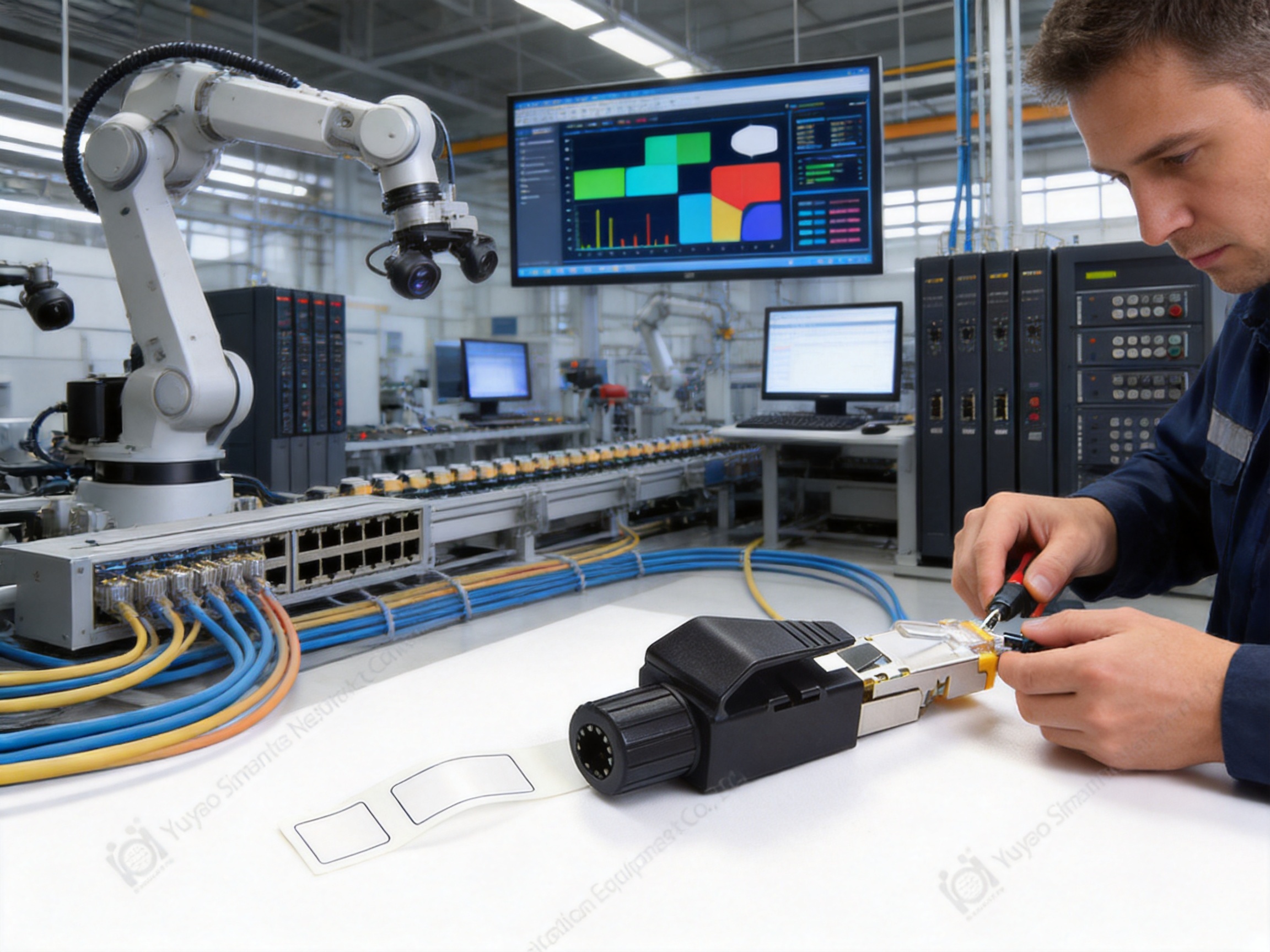
Industrial communication networks must operate under conditions that are considerably more demanding than those found in ordinary office environments. Electrical noise, vibration, dust, temperature changes, repeated maintenance, limited installation space, and continuous machine operation can all affect the performance of a network connection. For this reason, industrial Ethernet systems require more than a standard commercial data connector. They need carefully designed components that support high-speed transmission while providing mechanical stability, shielding performance, installation convenience, and long-term service reliability.
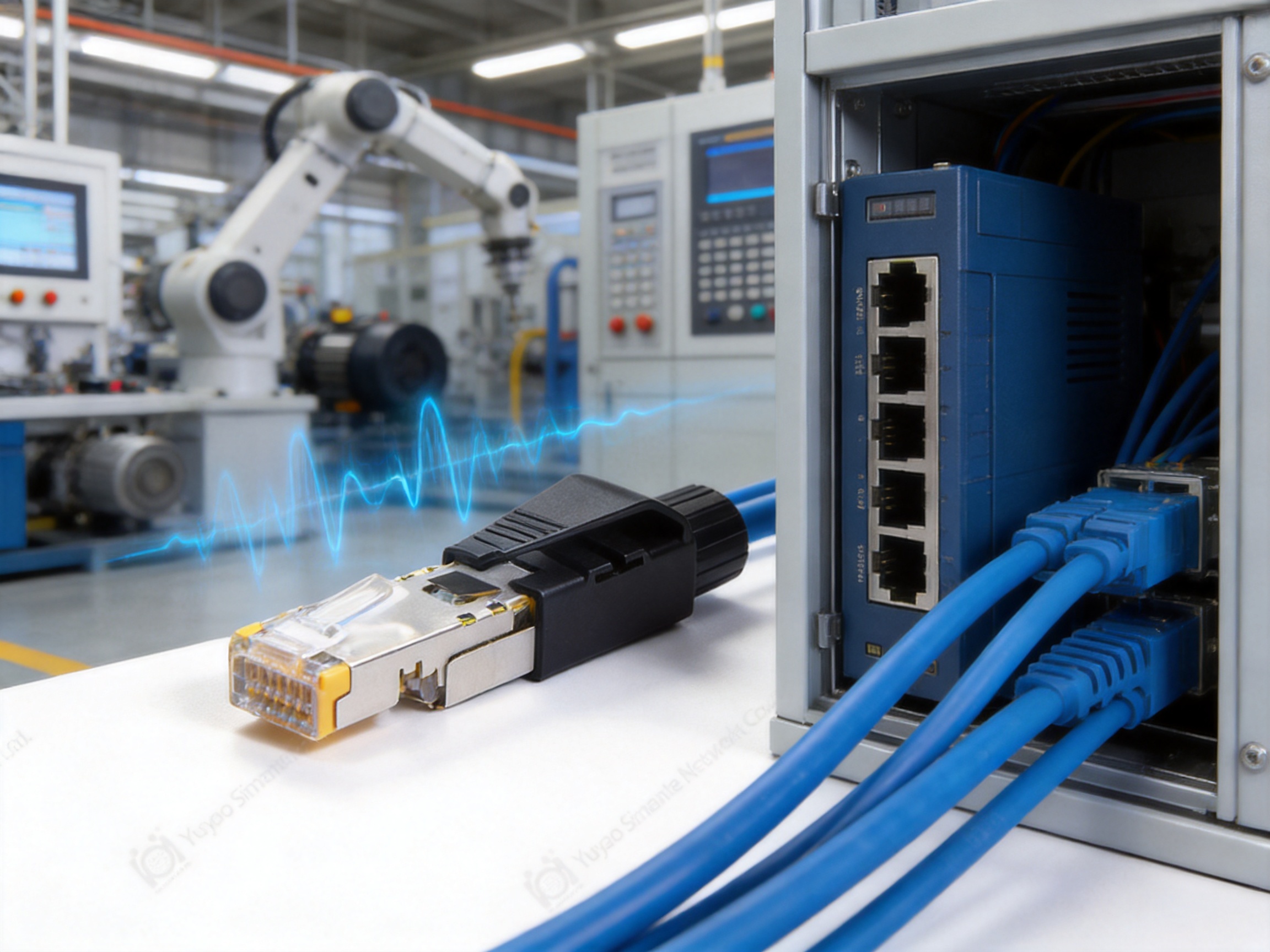
The SMT-3017T8C6A-FTP Eight Core Cat6A Profinet Industrial Ethernet Connector is developed for this type of demanding application. As a male connector for copper structured cabling systems, it is intended to support industrial Ethernet installations based on eight-core Cat6A cable and Profinet communication requirements. Its FTP construction is designed to help control electromagnetic interference, while the Cat6A platform provides a suitable foundation for high-bandwidth data communication in automation, manufacturing, control, and industrial networking environments.
This product also reflects the manufacturing capabilities of Yuyao Simante Network Communication Equipment Co., Ltd., a professional supplier of network cabling solutions and optical fiber products. The company integrates product design, development, sales, service, injection molding, assembly, testing, and customization. Its manufacturing infrastructure includes multiple production lines, automatic injection molding equipment, semi-automatic molding equipment, and automatic assembly machines. This combination allows the connector to be produced with attention to dimensional consistency, material stability, assembly efficiency, and customer-specific requirements.
The following article examines the structure, application value, manufacturing strengths, and competitive advantages of this eight-core Cat6A Profinet industrial Ethernet connector. It also explains how professional production management and testing capabilities contribute to reliable structured cabling systems.
1. The Role of Industrial Ethernet Connectors in Modern Automation
Industrial Ethernet has become an essential communication platform for factories, warehouses, process plants, transportation systems, energy installations, and intelligent infrastructure. It connects programmable logic controllers, industrial computers, sensors, actuators, human-machine interfaces, drives, robots, cameras, remote input and output modules, and supervisory control systems.
Although the network may use familiar Ethernet protocols, the physical environment is often very different from an office. Industrial cables can be routed beside motors, frequency converters, welding systems, power supplies, and high-current conductors. Machines may move continuously, causing repeated stress at connection points. Technicians may need to install or replace connectors inside crowded control cabinets or production cells. A connector that performs adequately in a quiet office may not provide the same level of reliability in an automated factory.
The connector is therefore a critical part of the complete transmission channel. It must maintain electrical contact, preserve the geometry of the twisted pairs, support the cable jacket, and help maintain shielding continuity where required. It must also be compatible with the intended cable construction and installation method. Poor termination can reduce transmission performance even when the cable and active network equipment are of high quality.
The SMT-3017T8C6A-FTP connector is positioned as a component for industrial copper networking where a male connection format, eight-core Cat6A transmission, and FTP shielding architecture are required. By combining these characteristics in one product, it can help system designers build organized and serviceable connections for industrial control and communication networks.
2. Understanding the SMT-3017T8C6A-FTP Product Concept
The product name identifies several important characteristics. “SMT-3017T8C6A-FTP” is the model designation. “Eight Core” indicates compatibility with the four twisted pairs commonly used in full eight-conductor Ethernet cabling. “Cat6A” identifies the transmission category associated with higher-frequency structured cabling performance than earlier categories. “Profinet Industrial Ethernet” identifies the intended industrial communication context. “Connector” describes its role as a physical connection component, while “Male Connector” defines its product category.
These characteristics are important because an industrial network is not assembled from isolated parts. Cable construction, connector design, shielding method, termination technique, panel interface, and active equipment must work together. The connector must be selected according to the cable type, the required transmission category, the installation environment, and the equipment interface.
The FTP configuration is particularly relevant in applications where electromagnetic interference may affect communication quality. In an FTP cable system, the overall cable assembly generally includes a foil shield around the twisted-pair group. A properly designed compatible connector can help preserve the shield path at the connection point. This does not eliminate the need for correct grounding, bonding, cable routing, and installation practices, but it supports a more controlled electromagnetic environment for the data channel.
The eight-core arrangement is also valuable for applications that use the complete set of twisted pairs. Depending on the network architecture and equipment, all pairs may be used for higher-speed Ethernet transmission or for other approved communication and power arrangements. System integrators should always verify the pin assignment, cable construction, and equipment requirements before installation.
Because it is intended for industrial Ethernet use, the connector can be considered as part of a broader structured cabling solution rather than merely as a small replacement component. Its value includes not only the physical connection but also the potential to improve installation consistency, simplify maintenance, and support the long-term performance of connected automation equipment.
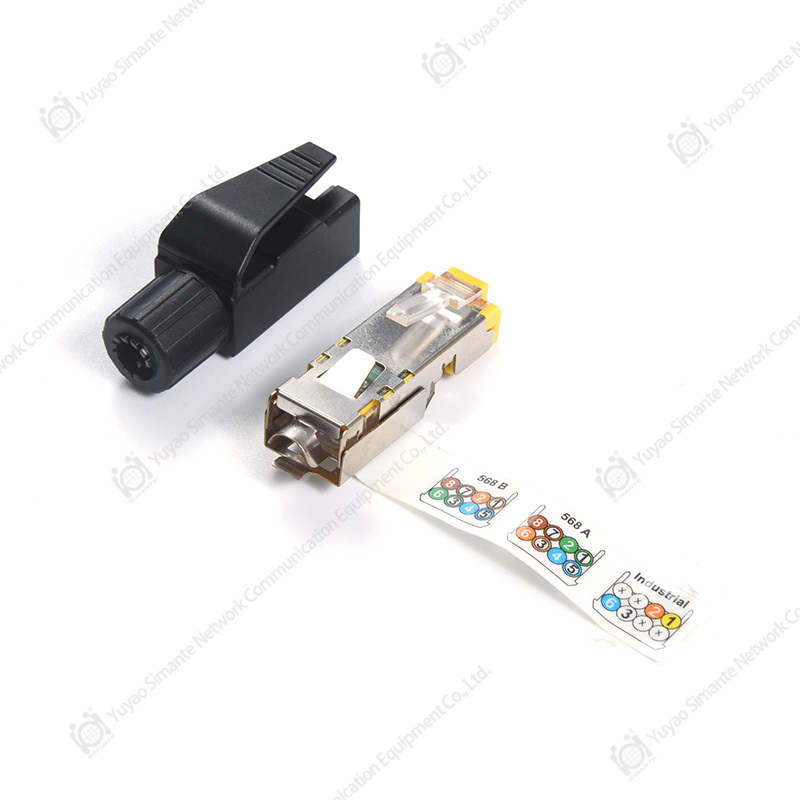
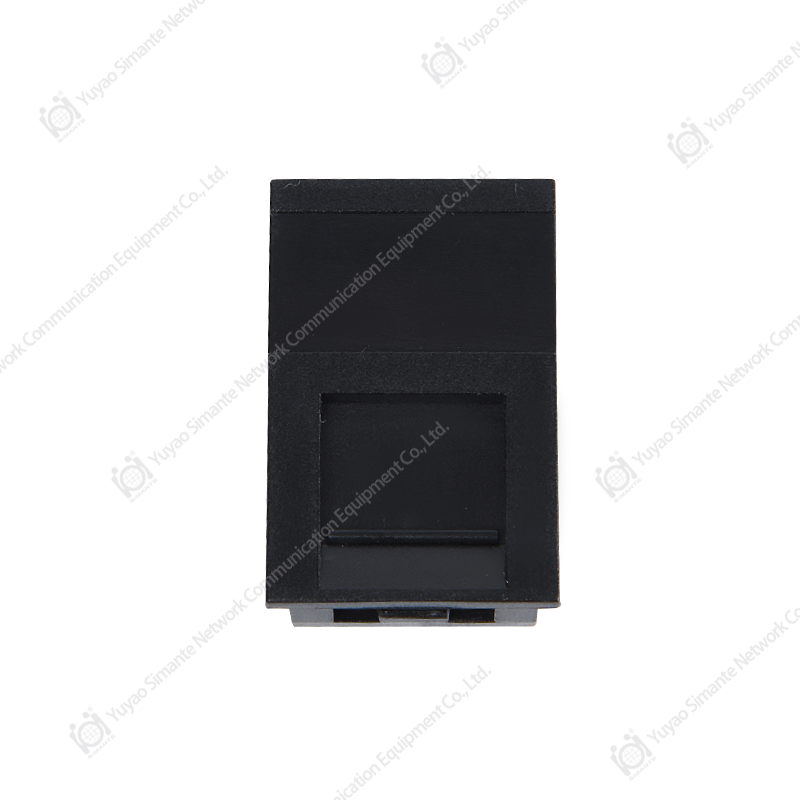
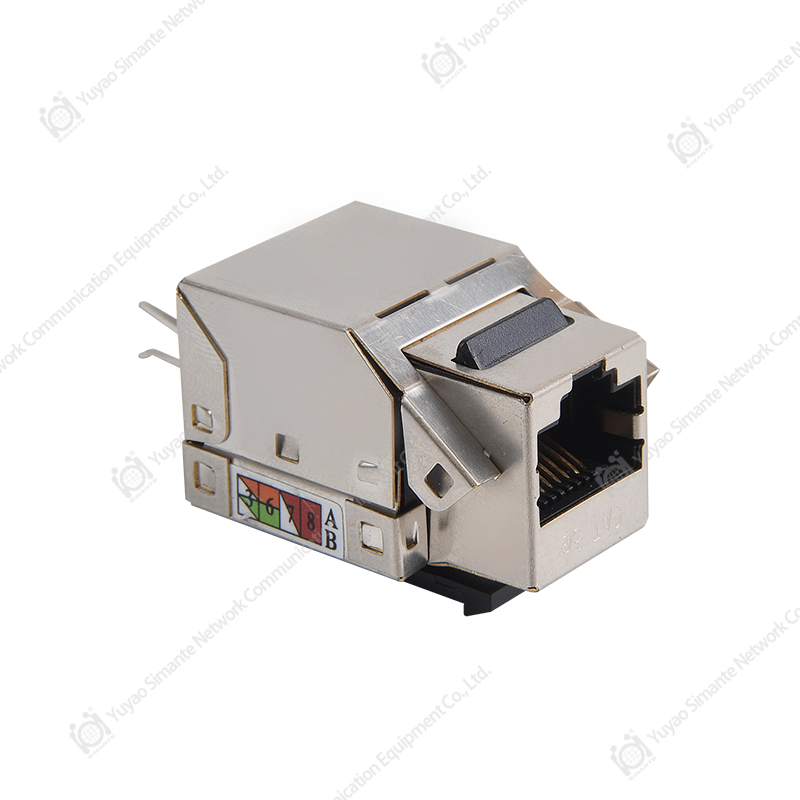
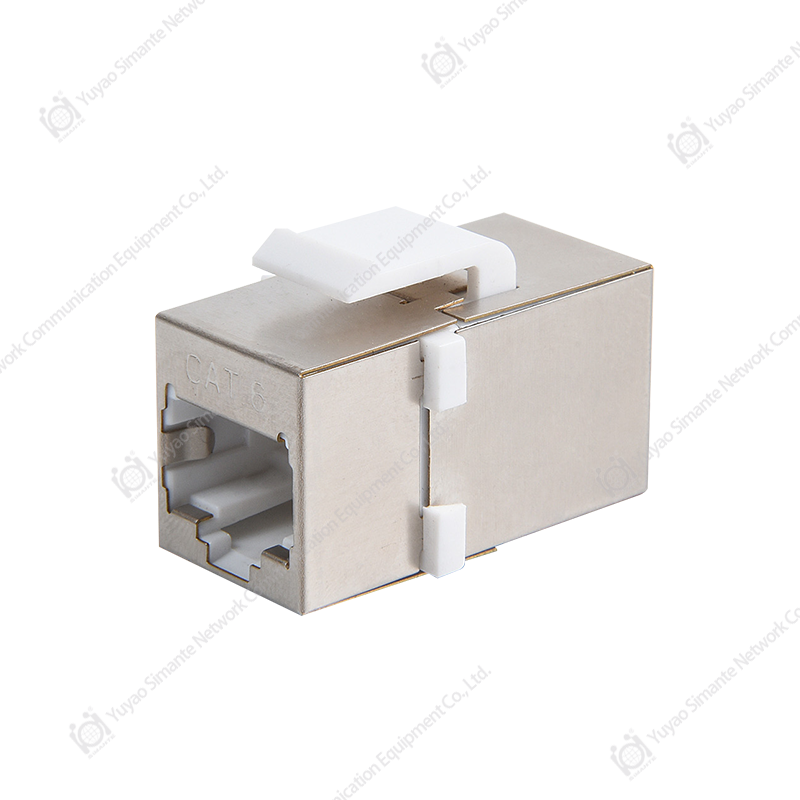
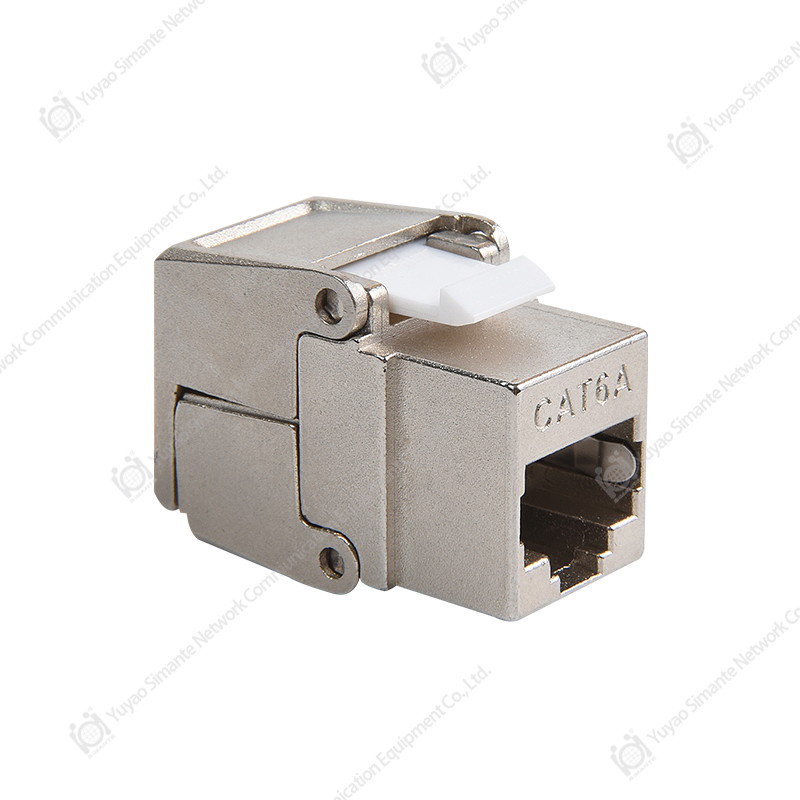
SMT-3017T8C6A-FTP Eight Core Cat6A Profinet Industrial Ethernet Connector
3. Cat6A Support for High-Bandwidth Industrial Communication
Modern factories increasingly depend on data-intensive applications. Machine vision systems generate large image files, industrial controllers exchange data at short intervals, production systems collect information from many devices, and manufacturing execution systems require continuous communication with shop-floor equipment. As data volumes increase, the physical cabling infrastructure must provide sufficient performance headroom.
Cat6A is widely selected for applications that require a higher-performance copper cabling platform. Compared with lower-category cabling, Cat6A is associated with improved support for high-frequency transmission and better suitability for demanding Ethernet applications. The connector must preserve the arrangement and separation of the twisted pairs so that the transmission characteristics of the overall channel are not unnecessarily degraded during termination.
A quality Cat6A connector should be designed with attention to conductor positioning, contact alignment, pair management, and the interaction between the plug and the cable. These details influence insertion quality, contact stability, impedance continuity, and the ability of the finished assembly to meet the intended transmission objectives.
For industrial users, Cat6A also offers a practical way to prepare a network for future expansion. A factory may initially install a network for controller communication and later add cameras, remote diagnostics, database connections, condition-monitoring sensors, or edge-computing equipment. A stronger cabling foundation can reduce the need for early infrastructure replacement as data requirements grow.
The SMT-3017T8C6A-FTP model is therefore suitable for projects in which the connector must be aligned with an eight-core Cat6A cable system. It can be considered for control cabinets, machine interconnections, industrial switches, automation panels, equipment interfaces, and structured industrial cabling installations where high-speed copper communication is required.
4. The Importance of FTP Shielding in Industrial Environments
Electromagnetic interference is one of the most common concerns in industrial data communication. Motors, inverters, contactors, transformers, welding equipment, and high-current cables can create electrical and magnetic fields. If a data cable is poorly selected or incorrectly installed, interference may increase error rates, cause retransmissions, reduce network stability, or create intermittent faults that are difficult to diagnose.
FTP construction provides an additional shielding layer around the twisted-pair group. When the cable, connector, equipment, and grounding system are correctly matched, the shield can help reduce the influence of external interference and limit unwanted emissions from the communication channel. This is particularly useful in areas where data cables must pass near sources of electrical noise.
However, shielding is not a substitute for professional installation. The cable should be routed with appropriate separation from power conductors, bend limitations should be respected, and the shield should be terminated in accordance with the system design. Grounding and bonding practices must also be evaluated for the specific facility. A shielded connector performs best when it is used as part of a complete shielded channel.
The FTP feature gives the SMT-3017T8C6A-FTP an advantage over unshielded connectors in applications where interference control is a priority. It can help system designers select a connection component that is consistent with shielded Cat6A cable and industrial Ethernet requirements. For production lines with variable-speed drives, robotic systems, or high-power machinery, this compatibility can be an important part of network planning.
Another advantage is system organization. By maintaining a consistent shielded connection method throughout the installation, contractors and maintenance teams can more easily identify which cables belong to protected industrial network channels. Clear separation between shielded data infrastructure and ordinary office cabling can support better documentation and troubleshooting.
5. Mechanical Reliability for Factory and Machine Applications
Industrial connectors must remain functional despite mechanical conditions that are not normally present in commercial buildings. Vibration can loosen weak connections. Repeated movement can stress the cable near the termination. Maintenance personnel may need to disconnect and reconnect equipment several times during the service life of a machine. Dust, oil mist, and temperature variation may also influence the performance of surrounding components.
A connector designed for industrial use should therefore support a stable mating interface and a reliable cable transition. Contact elements need to remain correctly positioned, while the housing should help protect the internal termination area. The cable support area is also important because it helps reduce concentrated stress at the point where the cable meets the connector.
The SMT-3017T8C6A-FTP product is intended to address industrial connection requirements through a purpose-oriented design rather than through a basic office connector format. Its application focus makes it suitable for network equipment and control systems in which the connection must remain organized and serviceable under regular operation and maintenance.
Mechanical reliability also affects electrical reliability. A connection that shifts under vibration can introduce intermittent contact resistance or change the geometry of the terminated pairs. These problems may not appear during a simple initial connectivity check, yet they can become serious after months of machine operation. Consistent assembly and appropriate strain management are therefore essential.
When comparing industrial connectors, buyers should evaluate more than the external appearance. They should consider material quality, dimensional consistency, contact retention, mating performance, cable compatibility, shielding continuity, installation method, and supplier quality controls. A connector that is easy to terminate correctly and remains stable after installation can provide greater practical value than a low-cost component with inconsistent assembly performance.
6. Manufacturing Strengths Behind the Product
The performance of a network connector depends strongly on the manufacturing process. Precision molded parts, conductive contacts, shielding components, and assembly features must work together within controlled dimensional limits. Small variations in plastic geometry or contact position can influence the final connection.
Yuyao Simante Network Communication Equipment Co., Ltd. has developed an integrated manufacturing model covering design, development, production, sales, and service. This model gives the company the ability to manage the product lifecycle from the early design stage through mass production and customer support. It also allows feedback from customers and production teams to be considered during product improvement.
The company operates multiple regular and customization production lines. This is valuable for customers that need standard network components as well as customers requiring product adjustments, packaging changes, private labeling, special configurations, or OEM and ODM services. A supplier with both standard production and customization capabilities can help reduce the need to coordinate several different factories for one structured cabling project.
Its production equipment includes fully automatic injection molding machines, semi-automatic injection molding machines, and automatic installation machines. Injection molding is especially important for connector housings and insulation components because it influences shape accuracy, surface quality, structural strength, and assembly compatibility. Automatic and semi-automatic equipment can improve repeatability while supporting different production volumes and product designs.
Automatic installation equipment can also help maintain consistency in the assembly of contacts and other components. While automation does not replace engineering oversight, it can reduce variation caused by manual handling and improve production efficiency. Consistent insertion depth, positioning, and assembly sequence are valuable for connectors that must mate reliably with network equipment.
The company reports an annual output of more than nine million units across its production capabilities. A substantial production capacity can benefit customers by supporting stable supply, repeat orders, project schedules, and inventory planning. It also indicates that the manufacturer has experience coordinating materials, production processes, quality inspection, packaging, and delivery at commercial scale.
7. Engineering and Product Development Capability
Manufacturing equipment alone does not guarantee a successful connector product. Product development requires knowledge of transmission performance, plastics, metal contacts, cable structures, shielding, tooling, assembly, and application conditions. Engineering teams must understand how the connector will be installed and used in the field.
Yuyao Simante Network Communication Equipment Co., Ltd. has more than ten engineers and over thirty full-time technical personnel. This technical organization supports product development, process improvement, quality management, production troubleshooting, and customer communication. A dedicated engineering team is particularly important when customers request customized dimensions, alternative materials, special markings, or modifications for a particular equipment interface.
The company’s mature research and development system is intended to place quality considerations at the design source. This approach is useful because many production problems originate in early design decisions. If a housing is difficult to mold, if the assembly sequence is unnecessarily complicated, or if a cable support feature does not match the intended cable diameter, later inspection may identify the symptoms without solving the root cause. Design-stage evaluation helps prevent these issues.
For the SMT-3017T8C6A-FTP connector, engineering attention may include the relationship between the Cat6A cable, the eight conductors, the shielded construction, the male interface, and the installation process. The goal is to create a component that is not only technically suitable but also practical for installers and system integrators.
Engineering support can also assist customers in selecting products for different network architectures. A project may require a combination of copper connectors, keystone jacks, patch panels, wall face plates, data sockets, industrial switches, and fiber products. A manufacturer with a broad portfolio can help customers create a more coordinated structured cabling system.
8. Quality Control and Performance Testing
Quality assurance is especially important for connectors because many defects are small but can create significant system problems. A contact may be slightly misaligned, a housing may have a dimensional variation, or a shielding component may not maintain a consistent connection. These conditions can lead to intermittent faults, increased insertion force, poor retention, or degraded transmission performance.
Simante emphasizes production management and performance testing as part of its quality approach. Testing should ideally cover the characteristics most relevant to the connector’s use, including visual appearance, dimensional conformity, contact position, mating behavior, assembly condition, and electrical continuity. For shielded high-speed products, the complete channel should also be evaluated according to the applicable project requirements and testing procedures.
Performance testing provides several advantages over visual inspection alone. It can identify defects that are not obvious from the outside and can help verify that production changes have not affected product behavior. Test records can also support traceability, customer confidence, and continuous improvement.
Quality stability begins with incoming material control. Plastic resin, metal contacts, shielding materials, packaging materials, and other components should be checked according to defined requirements. Process control then continues through molding, contact installation, assembly, inspection, and final packing. When each stage is managed systematically, the finished product is more likely to perform consistently from batch to batch.
For international buyers, stable quality is often more important than the lowest initial purchase price. A connector that causes fewer installation failures, service calls, network interruptions, and replacement operations can lower the total cost of ownership. It can also protect the reputation of the equipment integrator and reduce the risk of production downtime.
9. Competitive Advantages Compared with Basic Commercial Connectors
The SMT-3017T8C6A-FTP connector has several potential advantages when compared with ordinary unshielded commercial Ethernet connectors or generic products that are not specifically intended for industrial applications.
9.1 Industrial Application Orientation
The product is developed around Profinet industrial Ethernet and factory networking requirements. This application orientation encourages attention to vibration, interference, repeated maintenance, structured installation, and high network availability. A general office connector may provide basic connectivity but may not be optimized for the mechanical and electrical conditions of a manufacturing environment.
9.2 Cat6A Platform
The Cat6A designation makes the product appropriate for higher-performance copper networks that require more bandwidth and greater infrastructure headroom. This can be advantageous over connectors designed only for lower-category cabling, especially when the network includes machine vision, industrial data collection, or high-speed uplinks.
9.3 FTP Shielding Compatibility
The FTP structure supports shielded cable systems where electromagnetic interference is a concern. Compared with an unshielded connector, a compatible shielded connector can contribute to a more complete interference-control strategy when paired with proper cable routing and grounding.
9.4 Eight-Core Connection
The eight-core arrangement supports the complete twisted-pair structure used by many high-speed Ethernet systems. This gives system designers greater flexibility than connection components intended for reduced-conductor applications.
9.5 Manufacturing Scale
The manufacturer’s production capacity, multiple lines, molding equipment, and automatic assembly resources support consistent supply for both smaller projects and larger deployment programs. Stable availability is a practical advantage when a customer is building network infrastructure across multiple factories or equipment models.
9.6 Customization and OEM/ODM Support
Customers may require customized packaging, labels, assembly options, product variations, or coordinated product families. The company’s experience with OEM and ODM projects can provide an advantage over suppliers that only sell fixed catalog items.
9.7 Broad Structured Cabling Portfolio
In addition to industrial Ethernet connectors, Simante manufactures products such as keystone jacks, patch panels, wall face plates, and data sockets, and it also supplies optical fiber products. A broad portfolio can simplify procurement and help customers coordinate copper and fiber sections within one structured cabling solution.
10. Applications in Industrial and Commercial Infrastructure
The SMT-3017T8C6A-FTP connector can be considered for a wide range of applications where shielded Cat6A copper connections are needed. The final suitability depends on the cable, equipment, environmental conditions, installation method, and applicable standards.
10.1 Factory Automation
Automated production lines depend on communication between controllers, distributed input and output devices, drives, robots, sensors, and supervisory software. A stable industrial connector helps maintain organized links between these devices and can support easier maintenance when a machine module must be replaced.
10.2 Robotics and Motion Systems
Robotic cells often contain motors, drives, control cabinets, and moving cable routes. The electrical noise generated by motion equipment can make shielded communication infrastructure valuable. Connectors should be installed with suitable cable support and routing practices to minimize stress at the termination point.
10.3 Machine Vision
Machine vision systems can transmit high volumes of image data between cameras, industrial computers, switches, and storage systems. Cat6A cabling can provide a suitable high-performance copper platform, while FTP shielding can support installations located near motors and other interference sources.
10.4 Process Control
Process industries may operate pumps, valves, instrumentation, and control systems continuously. Network interruptions can affect monitoring and production decisions. Structured, well-documented cabling with reliable connector assemblies can support the availability objectives of these facilities.
10.5 Warehousing and Logistics
Automated storage and retrieval systems, conveyor controls, barcode scanners, sorting equipment, and warehouse management systems rely on dependable network communication. Industrial connectors can be applied in control panels and equipment zones where vibration and electrical noise are more significant than in standard offices.
10.6 Energy and Infrastructure Systems
Power distribution monitoring, renewable energy installations, transportation systems, and intelligent infrastructure may use Ethernet networks to connect remote equipment. Shielded copper connections can be useful in locations where long equipment runs and electrical machinery create a challenging environment.
10.7 Building Automation
Large commercial buildings increasingly use Ethernet for security, access control, lighting, HVAC, energy monitoring, and facility management. Although not every building zone requires industrial-grade components, shielded Cat6A connectors can be appropriate in mechanical rooms, equipment areas, and locations with substantial electrical equipment.

11. Installation Considerations for Reliable Results
The best connector cannot compensate for incorrect installation. System integrators should begin by confirming that the connector is compatible with the selected cable diameter, conductor arrangement, shielding construction, and equipment interface. The product should be used according to the manufacturer’s technical instructions and the requirements of the network design.
During cable preparation, installers should avoid unnecessary untwisting of the pairs. Excessive untwisting can change the transmission characteristics near the connector. The cable jacket should be removed carefully, and the conductors should be arranged according to the required wiring scheme. The shield should remain properly positioned so that the connection can support continuity through the intended path.
Installers should use suitable tools and avoid excessive force. Over-compression, conductor damage, or incomplete seating can create defects that may not be immediately visible. After assembly, the connection should be inspected and tested. Testing should include wire mapping, continuity, polarity, and, where required, channel or permanent-link performance measurements.
Cable routing is also important. Data cables should be separated from high-voltage and high-current conductors whenever possible. When crossing power cables is unavoidable, crossing at an appropriate angle can reduce parallel exposure. Bend radius, pulling force, cable support, and movement allowance should follow the cable manufacturer’s requirements.
For shielded networks, grounding and bonding must be planned as part of the complete installation. An isolated or poorly bonded shield may not provide the intended protection. Conversely, inappropriate grounding arrangements can introduce unwanted current paths. Electrical engineers should evaluate the facility design and apply the relevant local standards and safety practices.
Maintenance teams should document connector locations, cable identifiers, port assignments, and test results. Clear labeling reduces troubleshooting time and helps prevent accidental disconnection of critical equipment. When a connector must be replaced, the replacement should match the original cable and system specifications rather than being selected only by external appearance.
12. How the Product Supports Structured Cabling Solutions
Structured cabling is based on organized, repeatable infrastructure rather than improvised point-to-point wiring. It allows network components to be installed, identified, tested, expanded, and maintained according to a planned architecture. Connectors are important because they form the transition points between horizontal cabling, equipment cords, panels, outlets, and industrial devices.
The SMT-3017T8C6A-FTP connector can be used as part of a copper structured cabling system that also includes compatible Cat6A cable, patch panels, modular outlets, industrial switches, and cabinet accessories. In larger facilities, the copper network may connect to fiber backbone cabling, creating a hybrid copper and fiber architecture. Simante’s product portfolio covers both network cabling components and optical fiber products, which can help customers coordinate these two media types.
A structured approach provides better scalability. If a production line is expanded, new network drops can be added according to the existing labeling and patching system. If equipment is relocated, the network can be modified without rebuilding the entire facility infrastructure. Standardized connector selection also makes it easier for technicians to keep replacement parts and tools available.
Structured cabling can improve documentation and lifecycle management as well. A properly recorded network makes it easier to identify critical links, locate faults, schedule maintenance, and plan upgrades. The connector is a small component, but its compatibility with the broader system influences the effectiveness of the entire network architecture.
13. Procurement Benefits for Distributors and System Integrators
Distributors and system integrators often evaluate suppliers according to more than product specifications. They also consider delivery reliability, customization capability, technical communication, packaging, quality consistency, and long-term cooperation.
A manufacturer with standard products and customization production lines can serve several customer groups at once. Distributors may need repeat orders of a stable catalog model. Machine builders may need a product adapted to a specific enclosure or cable assembly. Network contractors may require coordinated packaging and labeling. Original equipment manufacturers may need private branding or a custom product family.
Simante’s experience in OEM and ODM projects is relevant to these procurement needs. Technical discussions can address the product configuration, mold requirements, assembly details, packaging method, inspection criteria, and delivery schedule. Such cooperation can be especially useful when the connector is integrated into a machine or equipment platform and must remain consistent across multiple production batches.
Supply stability is also important. The reported annual capacity of more than nine million units provides a foundation for project planning, although actual capacity and lead time should be confirmed for each product and order. A supplier with established production lines and equipment may be better positioned to support continuing demand than a small trading operation that relies entirely on external subcontractors.
International experience can further simplify cooperation. Simante maintains export activity in Europe, Australia, Africa, the Middle East, and Southeast Asia. Experience with different markets can support familiarity with international packaging expectations, customer communication, shipment coordination, and product documentation.
14. Sustainability, Efficiency, and Total Cost of Ownership
Industrial network components should be evaluated over their full service life. The purchase price is only one part of the total cost. Installation labor, testing, maintenance, replacement frequency, downtime, and inventory requirements can have a greater financial effect than the initial unit price.
A connector that supports efficient assembly can reduce installation time. A connector with consistent dimensions can reduce rework. A connector that remains stable under the intended conditions can reduce service visits. A connector from a supplier with dependable production can reduce the risk of project delays caused by shortages or inconsistent batches.
Automatic molding and assembly processes can also improve manufacturing efficiency by reducing repetitive manual operations and controlling production variation. Efficient processes may help use materials and labor more effectively while maintaining the required product quality. The environmental benefits of any specific product depend on its materials, factory energy management, packaging, shipping, and service life, so customers should request detailed information when sustainability reporting is required.
Longer service life can contribute to sustainability because replacing failed components consumes additional raw materials, packaging, transportation, and labor. Reliable network connections can also help factories improve their own energy and production efficiency through better monitoring, predictive maintenance, and process control. In this sense, a small connector can contribute indirectly to broader operational efficiency.
15. Recommended Evaluation Checklist
Before selecting the SMT-3017T8C6A-FTP connector for a project, buyers and engineers should review the following points:
First, confirm that the intended cable is an eight-core Cat6A cable compatible with the connector’s termination structure. Cable diameter, conductor size, insulation dimensions, and shielding construction should be checked against the product’s technical documentation.
Second, verify the required male interface and mating equipment. The connector must fit the relevant jack, socket, industrial switch, panel, or device port. Mechanical compatibility is essential for reliable installation.
Third, determine whether the application requires FTP shielding and how the shield will be grounded or bonded. The connector should be evaluated as one part of the complete shielded channel.
Fourth, review the environmental conditions. Temperature, vibration, dust, moisture, chemicals, oil, ultraviolet exposure, and mechanical movement may influence the choice of housing, cable, and protection accessories.
Fifth, establish the required testing level. Basic continuity testing may be sufficient for some applications, while high-speed or mission-critical networks may require certification testing of the completed link.
Sixth, consider production and supply requirements. For large projects, ask about capacity, lead time, batch consistency, packaging, labeling, quality records, and replacement availability.
Seventh, evaluate customization needs. If the connector will be installed in a branded machine or integrated equipment platform, confirm whether the supplier can support custom packaging, markings, documentation, or OEM and ODM production.
Finally, request current technical data and samples before placing a large order. A sample evaluation allows the customer to confirm termination ease, cable fit, mating behavior, shielding continuity, and performance in the actual application.
16. Why Manufacturer Expertise Matters
Choosing a connector manufacturer is a strategic decision because the supplier influences product quality, technical support, delivery continuity, and future development. A manufacturer that only purchases and resells components may have limited control over material changes, tooling, process variation, and quality improvement. An integrated manufacturer can usually respond more directly to these areas.
Yuyao Simante Network Communication Equipment Co., Ltd. combines engineering resources, production equipment, technical personnel, testing practices, and international service experience. Its nearly twenty years of industry service provide a foundation for understanding structured cabling and optical fiber product requirements. The company’s product range covers network outlets, patching components, modular products, and fiber-related solutions, allowing it to address multiple parts of a customer’s infrastructure.
This integrated capability is relevant to the SMT-3017T8C6A-FTP connector because industrial Ethernet projects often require coordination among product design, cable compatibility, installation methods, and quality testing. A supplier that understands the complete network environment can provide more useful support than a supplier focused only on one isolated component.
For customers seeking a dependable long-term partner, the combination of product specialization and manufacturing capacity can be a significant advantage. It supports repeatability, product updates, customization, and communication throughout the project lifecycle.
17. Q&A About the Cat6A Profinet Industrial Ethernet Connector
Q1: What is the SMT-3017T8C6A-FTP?
The SMT-3017T8C6A-FTP is an eight-core Cat6A FTP Profinet industrial Ethernet connector. It is categorized as a male connector and is intended for shielded copper network connections in industrial Ethernet and structured cabling applications.
Q2: What does “eight core” mean in this product name?
“Eight core” refers to the eight conductors arranged as four twisted pairs in a typical full Ethernet cable. The exact wiring arrangement should be confirmed against the cable and equipment requirements before installation.
Q3: Why is Cat6A useful in industrial networks?
Cat6A provides a higher-performance copper cabling platform for high-bandwidth communication. It can support applications such as industrial data exchange, machine vision, automation control, and future network expansion when the complete channel is designed and installed correctly.
Q4: What is the benefit of FTP shielding?
FTP shielding can help reduce the influence of electromagnetic interference when the connector is used with compatible shielded cable and properly grounded equipment. It is especially relevant near motors, variable-frequency drives, welding systems, and other sources of electrical noise.
Q5: Can this connector be used in an ordinary office network?
It may be suitable for an office or commercial network if the cable, interface, and installation requirements are compatible. However, its main value is in industrial Ethernet and other demanding environments where Cat6A performance and shielded construction are important.
Q6: Does the connector itself guarantee network performance?
No. Network performance depends on the complete channel, including cable, connector, patching equipment, active devices, installation quality, grounding, routing, and testing. The connector is one important part of the system but cannot compensate for incorrect cable preparation or poor installation.
Q7: What should installers verify before termination?
Installers should verify cable compatibility, conductor arrangement, cable diameter, shielding method, wiring scheme, required tools, and the manufacturer’s assembly instructions. They should also plan strain relief, bend radius, cable routing, and post-installation testing.
Q8: What manufacturing capabilities support this product?
The manufacturer integrates design, development, production, sales, and service. Its resources include engineers, technical personnel, automatic and semi-automatic injection molding machines, automatic assembly equipment, multiple production lines, and performance testing capabilities.
Q9: Does the supplier provide customization?
The company operates customization production lines and undertakes OEM and ODM projects. Customers should discuss required modifications, branding, packaging, labeling, technical documentation, tooling, minimum order quantities, and delivery schedules directly with the supplier.
Q10: Can the supplier provide other structured cabling products?
Yes. The company’s product range includes keystone jacks, patch panels, wall face plates, data sockets, and optical fiber products. This can help customers coordinate copper and fiber components for a complete network cabling solution.
Q11: Is the connector appropriate for moving machinery?
It may be considered for moving machinery when the complete cable assembly, strain relief, bend radius, environmental protection, and installation method are suitable. Moving applications should be evaluated carefully because repeated flexing can affect the cable and termination.
Q12: How can buyers assess product quality before a large order?
Buyers can request technical documentation and samples, evaluate cable fit and termination, inspect the mating interface, check shield continuity, perform network tests, and review the supplier’s quality-control and production information. A pilot order can also help confirm batch consistency and delivery performance.
18. Conclusion
The SMT-3017T8C6A-FTP Eight Core Cat6A Profinet Industrial Ethernet Connector is designed for a networking environment in which transmission performance, shielding, mechanical stability, and production consistency all matter. Its Cat6A platform supports high-performance copper structured cabling, while its FTP configuration is suitable for shielded network architectures that must address electromagnetic interference.
Compared with basic commercial connectors, its industrial Ethernet orientation makes it more appropriate for automation systems, control cabinets, production lines, machine vision, robotics, logistics equipment, and other demanding applications. Its eight-core design supports full twisted-pair Ethernet cabling, and its male connector format provides a practical option for equipment and cable connection requirements.
The product is supported by the manufacturing strengths of Yuyao Simante Network Communication Equipment Co., Ltd. The company combines engineering development, injection molding, automatic assembly, quality testing, multiple production lines, customization services, and international supply experience. Its broad product portfolio also enables customers to source related copper and fiber structured cabling components from one experienced supplier.
For the best results, the connector should be evaluated as part of a complete network channel. Correct cable selection, careful termination, appropriate shielding and grounding, proper routing, mechanical support, and final testing are all essential. When these elements are managed together, the SMT-3017T8C6A-FTP can contribute to a reliable, scalable, and maintainable industrial Ethernet infrastructure.
References
1. ISO/IEC structured cabling principles for information technology cabling systems.
2. ANSI/TIA commercial building telecommunications cabling guidelines.
3. Ethernet physical-layer and twisted-pair cabling engineering principles.
4. Profinet industrial communication system installation and cabling practices.
5. Cat6A balanced copper cabling design and performance considerations.
6. Electromagnetic compatibility principles for industrial communication networks.
7. Industrial automation network design, grounding, bonding, and cable-routing practices.
8. Manufacturer-provided product information for the SMT-3017T8C6A-FTP Eight Core Cat6A Profinet Industrial Ethernet Connector.
9. Manufacturer-provided information regarding network cabling products, optical fiber products, manufacturing facilities, quality management, OEM services, and ODM services.