Español
 عربى
عربى русский
Content
- 1 Product Overview
- 2 Key Product Characteristics
- 3 Why Metal Construction Matters
- 4 Advantages Over Common Competing Solutions
- 5 Applications in Copper and Fiber Structured Cabling Environments
- 6 Installation Value for Contractors and System Integrators
- 7 Design Considerations for Reliable Use
- 8 Manufacturing Strength Behind the Product
- 9 Advanced Manufacturing Processes and Quality Control
- 10 OEM and ODM Support for Global Customers
- 11 How the Holder Supports Better Network Management
- 12 Comparison With Alternative Mounting Methods
- 13 Role in a Complete Structured Cabling Product Portfolio
- 14 Packaging, Handling, and Delivery Considerations
- 15 Sustainability Through Durability and System Longevity
- 16 Recommended Purchasing Considerations
- 17 Q&A Section
- 17.1 What is a 6 Port Metal Keystone Module Holder used for?
- 17.2 Why choose a metal holder instead of a plastic holder?
- 17.3 Is the holder suitable for copper and fiber cabling systems?
- 17.4 How does a six-port holder improve installation efficiency?
- 17.5 Can different keystone modules be installed in the same holder?
- 17.6 What types of projects can use this product?
- 17.7 What manufacturing strengths support the product?
- 17.8 Is OEM or ODM support available?
- 17.9 How should buyers evaluate quality before purchasing?
- 17.10 What is the main competitive advantage of this product?
- 18 Conclusion
- 19 References
- 20 Product: SMT-2205-6P 6 Port Metal Keystone Module Holder
In modern data cabling, small components often determine the reliability, neatness, and serviceability of the whole network. A 6 Port Metal Keystone Module Holder is one of those compact but essential products: it provides a strong, organized mounting position for keystone modules and supports structured cabling layouts in offices, data rooms, smart buildings, industrial control areas, retail environments, and residential network distribution points.
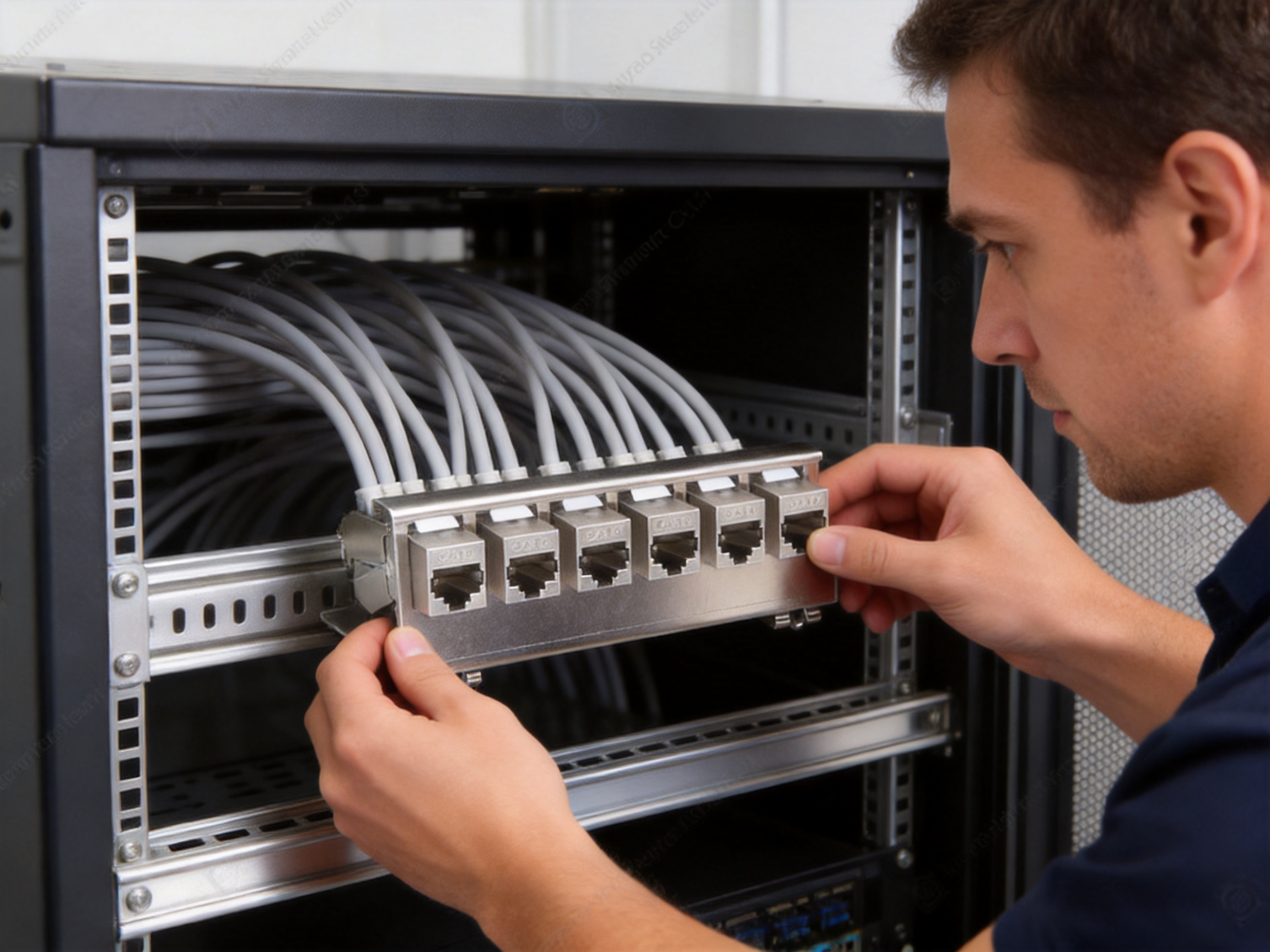
The SMT-2205-6P 6 Port Metal Keystone Module Holder is designed for installers, system integrators, distributors, and OEM customers who need a durable metal holder for multiple keystone modules in one compact assembly. As a keystone jack accessory, it helps transform individual cabling terminations into a clean, stable, and easy-to-maintain interface. Instead of leaving modules loosely installed or spread across separate mounting points, the holder brings six ports together in a controlled structure that improves installation efficiency and cable management.
This article introduces the product’s functions, advantages, installation value, manufacturing background, quality considerations, and practical application scenarios. It also explains how the manufacturing strength behind the product supports stable supply, customization capability, and consistent product quality for professional structured cabling projects.
SMT-2205-6P 6 Port Metal Keystone Module Holder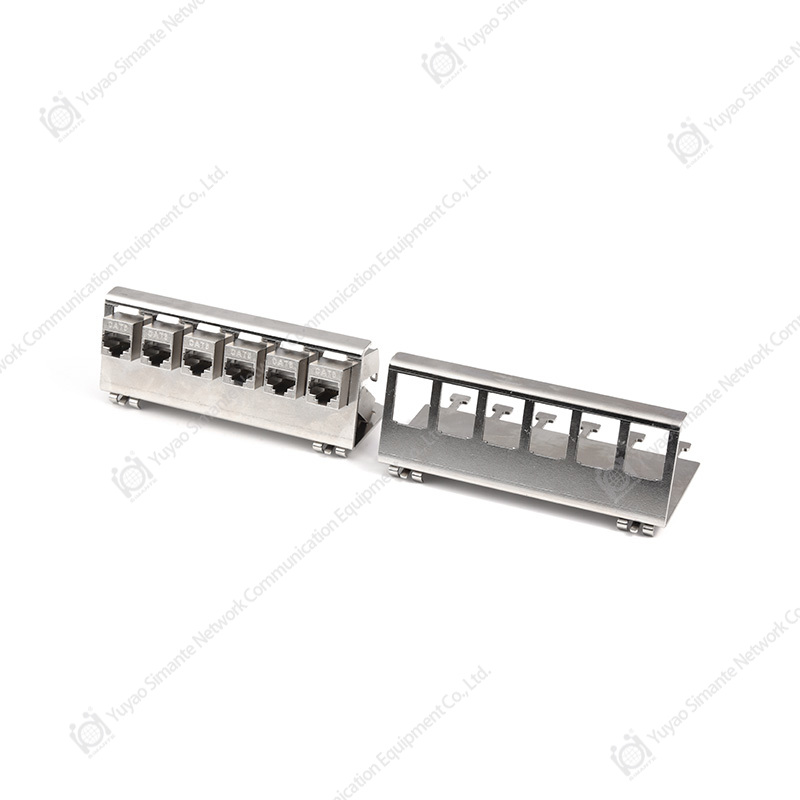
Product Overview
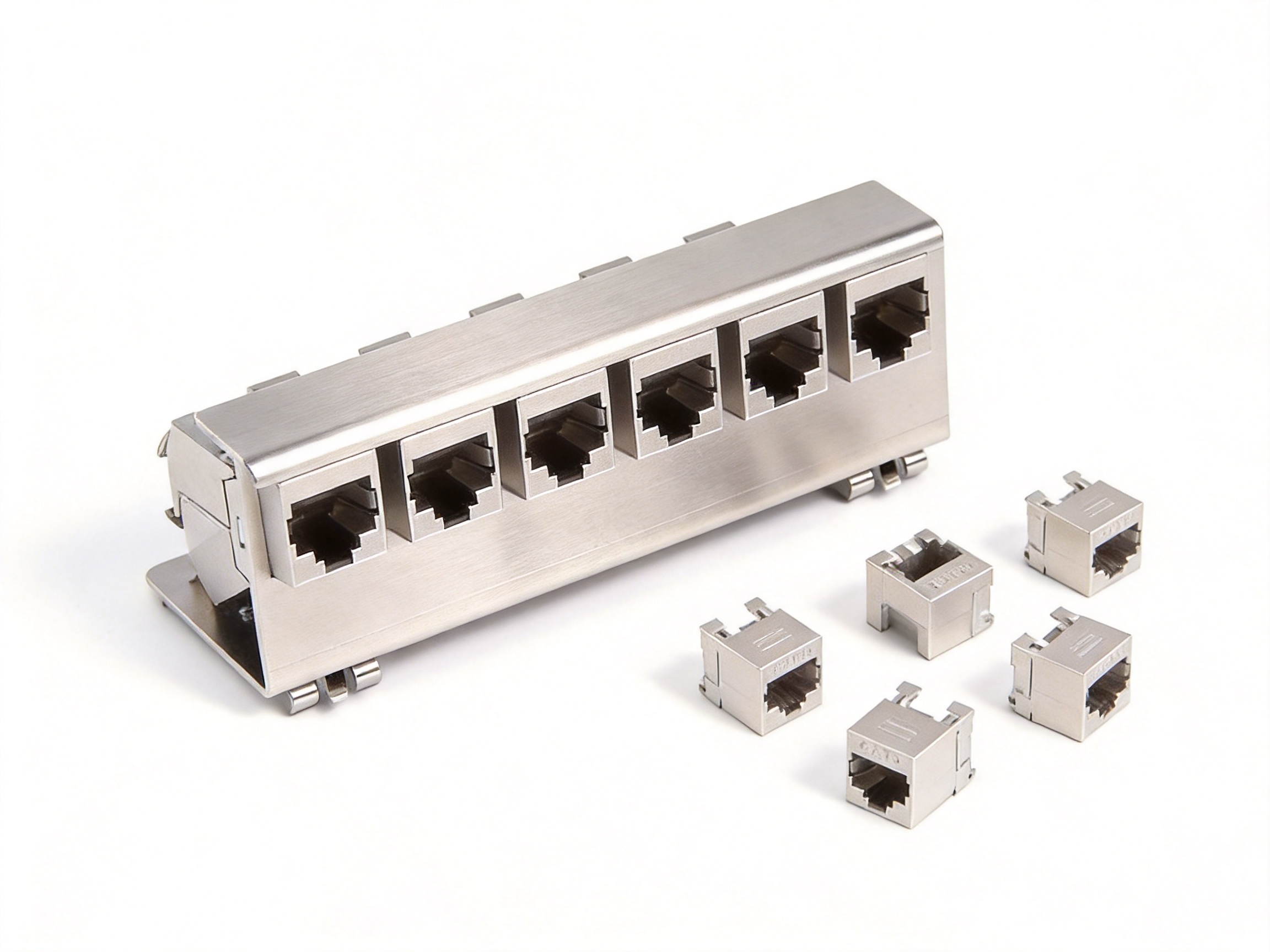
The 6 Port Metal Keystone Module Holder is a metal mounting component used to hold up to six keystone modules. In structured cabling systems, keystone modules are commonly used for copper network connections, telephone connections, multimedia interfaces, and other low-voltage signal outlets. A holder gives these modules a defined mechanical position, allowing installers to create an orderly connection point that can be integrated into a patching area, equipment cabinet, wall-mounted enclosure, work area outlet, or customized distribution panel.
The product belongs to the keystone jack category because its purpose is closely connected to keystone module installation. It is not simply a decorative part; it is a functional supporting component that influences the stability of the connection area. Metal construction gives the holder a solid structure, helping it resist deformation during handling, installation, and long-term service. For many projects, this mechanical reliability is just as important as the electrical performance of the module itself, because unstable mounting can lead to poor cable routing, module movement, or difficult maintenance.
A six-port configuration offers a practical balance between density and accessibility. It is compact enough for space-limited installations but large enough to support multiple lines in one organized point. Six ports may be used for workstation connections, small office branch points, security devices, wireless access points, IP phones, control systems, or mixed copper and signal applications depending on the installed keystone modules. This modular design allows the same holder to support different project requirements without forcing users into a fixed port type.
The holder is especially useful when installers need a professional finish and repeatable assembly. In a structured cabling project, repeatability reduces labor mistakes and makes future maintenance easier. When each module is seated in a standardized holder, technicians can identify ports more quickly, replace modules more conveniently, and keep cable paths more predictable. These advantages are important for both large commercial installations and smaller network upgrades.
Key Product Characteristics
The main characteristic of the 6 Port Metal Keystone Module Holder is its combination of strength, modularity, and practical port density. Metal provides a rigid mounting platform, while the keystone format provides flexibility. The six-port layout gives installers enough capacity for grouped connections without creating an oversized or complicated assembly.
Unlike a single-port accessory, a six-port holder supports a small cluster of connections. This makes it suitable for areas where several devices need to be connected near one another. For example, a small office zone may require network access for computers, IP phones, printers, access control devices, and wireless equipment. A six-port holder allows these connections to be assembled into a neat and maintainable interface.
Another important characteristic is adaptability. Because keystone modules are widely used in copper and low-voltage cabling systems, the holder can support different module types as long as the module dimensions and locking structure are compatible. This means the installer can choose the appropriate module for each position, such as data, voice, or specialized signal modules. The holder provides the mechanical framework, while the modules define the exact connectivity.
The product also supports clean cable organization. When modules are arranged in a fixed row or grouped layout, cables can be routed more consistently behind the holder. This reduces messy cable bends and helps technicians maintain a clear separation between lines. Good cable organization is essential for minimizing accidental disconnection, improving airflow in cabinets, and reducing the time required for troubleshooting.
| Item | Description | Value for Installers |
|---|---|---|
| Product Type | 6 port metal keystone module holder | Provides a stable mounting platform for multiple keystone modules |
| Port Capacity | Six keystone module positions | Supports grouped network or signal connections in a compact area |
| Material Concept | Metal holder structure | Improves rigidity, durability, and professional installation quality |
| Application Area | Structured cabling, network communication, smart building, automation equipment | Suitable for commercial, residential, and light industrial cabling projects |
| System Compatibility | Designed for keystone-format modules, subject to module specification | Allows flexible configuration with appropriate keystone jacks or modules |
| Installation Benefit | Organized six-port mounting | Improves maintenance, labeling, cable routing, and service access |
Why Metal Construction Matters
In structured cabling, plastic accessories are common and often suitable for many light-duty applications. However, metal holders provide several important advantages when strength, stability, and professional appearance are priorities. A metal holder is less likely to flex under normal installation pressure, and this rigidity helps maintain consistent module alignment. When modules are inserted, removed, or serviced, the holder can better resist mechanical stress.
Metal construction is especially valuable in environments where equipment may be handled frequently. In network rooms, patching areas, or customized enclosures, technicians may access ports repeatedly over the product’s service life. A strong holder helps preserve the integrity of the mounting area even after multiple maintenance operations. This is one of the key advantages over lighter or less rigid alternatives.
A metal holder can also contribute to a cleaner and more professional installation appearance. Straight edges, firm positioning, and a stable mounting surface help create a finished system that looks intentional and well engineered. For installers and contractors, appearance matters because it reflects workmanship and can influence customer confidence. A neat six-port holder signals that the cabling has been planned and organized rather than improvised.
Durability also reduces hidden costs. A weak mounting component may seem inexpensive at the purchasing stage, but if it bends, loosens, or requires replacement, the labor cost can exceed the initial savings. A robust metal holder helps reduce the likelihood of service disruption caused by physical mounting failure. For building owners and IT managers, long-term stability is a practical economic advantage.
Advantages Over Common Competing Solutions
The 6 Port Metal Keystone Module Holder offers a strong value proposition when compared with loose module mounting, low-density single holders, or less rigid multi-port alternatives. Its first advantage is integrated organization. Six ports can be arranged in one defined component, reducing scattered installations and making labeling easier. In cabling projects, clear port grouping can shorten troubleshooting time and reduce confusion during moves, adds, and changes.
The second advantage is mechanical confidence. Compared with lighter holders that may flex during installation, a metal holder provides a firmer base. This can be important when keystone modules have tight locking tabs or when cables create pulling forces behind the mounting area. A more stable holder reduces movement and helps preserve a consistent interface for the user.
The third advantage is space efficiency. A six-port configuration gives practical density without excessive size. It can be used in compact cabinets, wall boxes, distribution frames, or custom panels where space must be managed carefully. Instead of installing six separate mounting points, installers can use one organized holder to simplify layout planning.
The fourth advantage is modular flexibility. Fixed-port panels may require the user to accept a predetermined connector type, but a keystone holder can be populated according to the project requirement. If a site needs a mix of data, voice, or other compatible keystone modules, the holder supports that modular approach. This is valuable for distributors and contractors who serve different customer requirements with a limited number of base components.
The fifth advantage is serviceability. When multiple ports are located together in a solid holder, technicians can inspect and replace modules more easily. The structure supports consistent alignment, which helps the front interface remain accessible. Good serviceability is particularly important in commercial buildings where network downtime must be minimized.
Finally, the product benefits from a manufacturing environment focused on network cabling and optical fiber products. A component is only as reliable as the process behind it. Stable production, experienced technical teams, and mature quality control practices help ensure that each holder meets the expectations of professional installers and OEM customers.
Applications in Copper and Fiber Structured Cabling Environments
Although the product is categorized as a keystone jack accessory and is most directly associated with copper cabling, its usefulness extends across broader structured cabling environments. Modern infrastructure often combines copper network cabling, fiber backbone links, security systems, wireless access points, automation devices, and multimedia interfaces. A modular holder can support the access-layer organization needed in these mixed environments.
In office buildings, the holder can be used to group workstation outlets or departmental network points. A six-port layout may support several users in a small work zone, or it may provide a concentrated connection point for printers, phones, and access points. By keeping these connections together, facility teams can simplify documentation and reduce maintenance time.
In equipment cabinets, the holder can serve as part of a customized patching or transition area. It can help organize keystone modules used for local equipment connections, management ports, or auxiliary services. Because metal construction supports a stable mechanical interface, it is suitable for cabinet environments where cables may be moved during maintenance.
In smart home and residential distribution systems, a six-port holder can provide a tidy connection hub for data outlets, media devices, IP cameras, and home automation equipment. As homes become more connected, organized cabling becomes increasingly important. A compact multi-port holder helps avoid messy wiring and supports future upgrades.
In automation and light industrial settings, the holder may be used where low-voltage signal connections need to be mounted in an orderly way. Stable mounting is important in these environments because cables may be exposed to more handling or movement than in typical office spaces. A metal holder can provide added confidence compared with less rigid mounting accessories.
In retail, hospitality, education, and healthcare facilities, structured cabling must support both daily operation and future expansion. A modular six-port holder helps contractors build flexible connection points that can be adapted as device requirements change. For example, a location that currently uses three data modules may later add IP cameras or access control interfaces, depending on module compatibility and system design.
Installation Value for Contractors and System Integrators
Contractors and system integrators judge a component not only by its purchase price but also by how it affects labor, project speed, consistency, and warranty confidence. The 6 Port Metal Keystone Module Holder supports these priorities by creating a repeatable mounting solution. Repeatability is valuable because it reduces the number of decisions installers must make on site. When a team uses the same holder across multiple areas, installation procedures become more consistent.
A consistent holder also improves labeling and documentation. Ports can be identified in a logical sequence, and the six-port format makes it easier to map physical locations to network records. Clear documentation reduces errors during commissioning and helps future technicians understand the system quickly.
During installation, the holder can help control cable positioning. When modules are fixed in a stable frame, cables can be routed behind them with planned bend paths and strain relief practices. This improves the professional quality of the installation and reduces the risk of cables being pulled at awkward angles. Although the holder itself is not a cable performance component, its mechanical organization can support good installation workmanship.
For system integrators, modularity is another benefit. Projects often change during construction. A room originally planned for four data outlets may require six, or a mixed application may require different module types. A six-port holder gives the integrator flexibility to respond to changes without redesigning the entire mounting area. This can reduce delays and simplify material planning.
For distributors, the holder is a practical stock item because it serves multiple applications. Instead of carrying many fixed connector plates for every possible configuration, a distributor can offer modular holders and compatible keystone modules. This helps customers assemble the exact solution they need while keeping inventory more efficient.
Design Considerations for Reliable Use
When selecting a keystone module holder, installers should consider mechanical fit, port capacity, mounting environment, material strength, cable routing space, and module compatibility. The SMT-2205-6P holder addresses the need for a sturdy six-port mounting platform, but final system performance also depends on selecting suitable modules and following proper installation practices.
Module compatibility should always be checked before assembly. Keystone modules are broadly standardized in concept, but dimensions, latch designs, and front profiles can vary between manufacturers. A professional installer should confirm that the chosen modules fit securely and can be inserted and removed without excessive force. A holder that grips properly helps prevent loose interfaces and service problems.
Cable routing space behind the holder is also important. Even a strong holder cannot compensate for poor cable management. Installers should provide enough rear clearance for cables to maintain recommended bend radius and avoid sharp stress points. For copper data cabling, excessive bending or pulling may affect transmission performance. For fiber or other delicate signal cables, bend management is even more critical.
The installation environment should determine whether the holder needs additional protection or enclosure support. In clean office environments, the holder may be installed in a standard cabling assembly. In dusty, high-traffic, or exposed areas, it may be better integrated into a protective box, cabinet, or panel. The product’s metal construction supports durability, but the overall installation should match the site conditions.
Finally, the holder should be included in the project documentation. Even mechanical accessories deserve accurate records, especially in large installations. Documentation helps future technicians understand port grouping, module type, cable destination, and service history. A well-documented six-port holder becomes part of an efficient network management strategy.
Manufacturing Strength Behind the Product
A product used in professional cabling systems must be supported by dependable manufacturing capability. Yuyao Simante Network Communication Equipment Co., Ltd. is a professional manufacturer focused on network cabling solutions and optical fiber products. The company integrates design, development, sales, and service, giving customers a complete support system from product inquiry to delivery and after-sales communication.
With nearly 20 years of service experience, the company has developed a mature understanding of structured cabling requirements. This experience matters because keystone accessories must meet practical installation demands, not just appear acceptable in a catalog. Products must be easy to use, stable in shape, consistent in fit, and suitable for repeated supply. Long-term industry experience helps the manufacturer recognize these details during product development and production.
The company’s research and development system is an important strength. More than 10 engineers and over 30 full-time technical personnel contribute to product improvement, quality enhancement, and technical support. This team structure allows the company to refine designs, respond to customer feedback, and support OEM and ODM projects. For a product such as a metal keystone module holder, engineering attention can influence dimensional consistency, assembly convenience, surface quality, and compatibility with related cabling components.
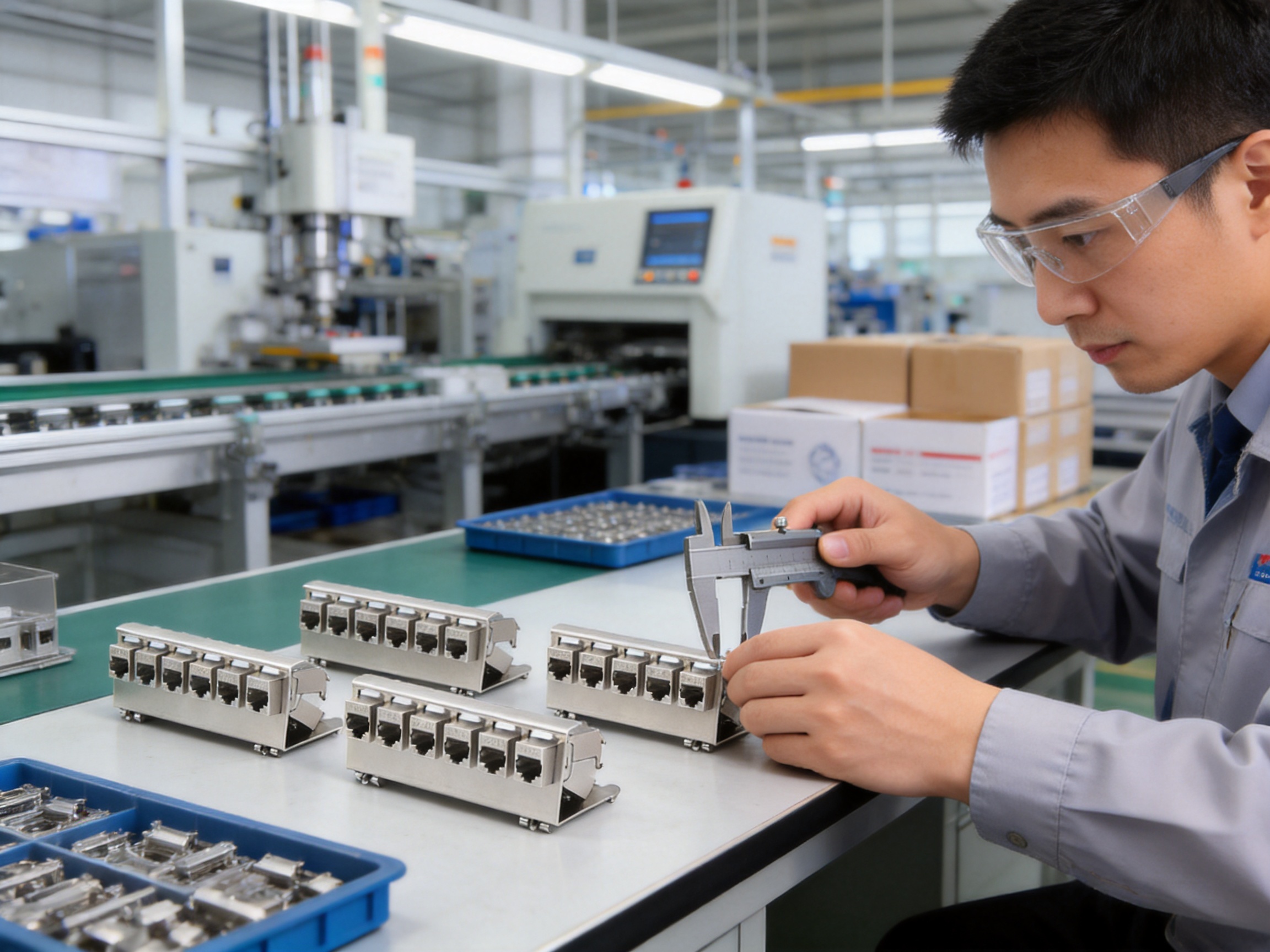
Production capacity is another competitive advantage. The factory operates 10 regular and customization production lines, 10 fully automatic injection molding machines, 20 semi-automatic injection molding machines, and 8 automatic installation machines. Although the 6 Port Metal Keystone Module Holder is a metal product, this broader production infrastructure demonstrates the company’s ability to manufacture complete cabling system components, including keystone jacks, patch panels, wall face plates, data sockets, and related accessories. A manufacturer with broad process capability can better coordinate complete system solutions for customers.
The factory maintains a stable annual output of more than 9 million pieces across its product lines. This scale supports consistent delivery for distributors, project contractors, and OEM customers who need dependable supply. For customers serving multiple markets, production reliability can be just as important as product performance. A stable supply chain helps avoid project delays and inventory shortages.
Advanced Manufacturing Processes and Quality Control
Advanced manufacturing is not defined only by machinery; it is also defined by process control, technical responsibility, inspection discipline, and continuous improvement. The manufacturing system behind the 6 Port Metal Keystone Module Holder is supported by established production lines, technical personnel, and a quality-focused culture. These factors help ensure that the product delivered to customers is consistent and suitable for professional use.
Design source control is one of the company’s stated strengths. Quality stability begins before production, during the design and development stage. When dimensions, material choices, tooling concepts, and assembly requirements are considered early, the final product is more likely to perform reliably. For a keystone holder, small dimensional variations can affect module fit, so design control is essential.
Manufacturing consistency also depends on tooling and production management. Regular production lines support standard high-volume orders, while customization lines support customer-specific requirements. This combination is valuable for distributors and OEM clients because it allows both standard product availability and tailored project solutions. Customers can request adjustments or private-label configurations within the scope of manufacturing feasibility.
The presence of automatic and semi-automatic equipment supports repeatability. Automated processes reduce variation caused by manual inconsistency and help maintain stable output. At the same time, technical personnel can monitor quality, handle special requirements, and address production issues. This balance between automation and human expertise is important in cabling component manufacturing, where both precision and flexibility are required.
Testing and inspection are also emphasized. The company aims to meet customers’ comprehensive testing requirements through good performance testing. For keystone-related products, inspection may include dimensional checks, assembly fit verification, visual appearance review, packaging inspection, and related functional checks depending on product type. The goal is to deliver products that meet customer expectations before they arrive at the job site.
Strict production management supports stable quality. Cabling components often look simple, but they are installed in systems expected to last for years. A small defect can create inconvenience during installation or maintenance. By controlling production processes, the manufacturer helps reduce the risk of inconsistent fit, rough finish, weak structure, or packaging-related damage.
OEM and ODM Support for Global Customers
OEM and ODM capability is important for customers who need products adapted to specific markets, packaging styles, private labels, project requirements, or distribution channels. The company undertakes OEM and ODM projects and maintains export business across Europe, Australia, Africa, the Middle East, and Southeast Asia. This international experience supports familiarity with different customer expectations and market standards.
For the 6 Port Metal Keystone Module Holder, customization may involve packaging, labeling, order configuration, or related system combinations. In some cases, customers may require coordinated products such as keystone jacks, patch panels, wall face plates, data sockets, and accessories. A manufacturer with broad product categories can help build complete copper and fiber structured cabling offerings rather than isolated components.
OEM customers also benefit from engineering communication. When a distributor or brand owner has a specific requirement, technical personnel can evaluate feasibility and provide practical suggestions. This reduces the risk of choosing an unsuitable product or designing a component that is difficult to manufacture consistently. Good OEM cooperation depends on both manufacturing capacity and honest technical feedback.
ODM support is valuable when customers want product development assistance. The manufacturer’s engineering team can support design evaluation and product improvement based on market needs. In structured cabling, product details such as module fit, mounting strength, installation convenience, and packaging protection can influence customer satisfaction. ODM cooperation allows these details to be optimized for target users.
Global export experience also suggests that the company understands the importance of stable documentation, packaging reliability, and communication efficiency. International customers need clear product information and dependable logistics coordination. A supplier with long-term export volume is better positioned to meet these expectations.
How the Holder Supports Better Network Management
Network management is often associated with software, switches, and documentation, but physical cabling organization is equally important. A poorly organized cabling interface can make even a well-designed network difficult to maintain. The 6 Port Metal Keystone Module Holder supports better physical network management by grouping connections clearly and securely.
When six ports are arranged in one holder, technicians can label them in a sequence that corresponds to floor plans, device groups, or patching records. This reduces confusion during troubleshooting. If a user reports a connection problem, the technician can identify the relevant port faster. Over time, this saves labor and reduces downtime.
The holder also supports controlled change management. In active buildings, network connections are frequently added, removed, or reassigned. A stable holder makes it easier to perform these changes without disturbing adjacent connections unnecessarily. The physical grouping helps technicians understand which ports belong together and which cables serve a particular zone.
In environments with multiple contractors or maintenance teams, standardized holders improve communication. When each installation area uses the same six-port structure, technicians can approach service tasks with familiar expectations. Standardization reduces the learning curve and helps maintain consistent workmanship across the building.
Good physical organization can also support security. While the holder itself is not a security device, clearly arranged ports make it easier to detect unauthorized or unexpected connections. In sensitive areas, documented port layouts help IT managers compare actual cabling with approved records.
Comparison With Alternative Mounting Methods
Loose or improvised mounting is sometimes used in temporary installations, but it is not ideal for professional structured cabling. Loose modules can move, labels can become unclear, and cables may be stressed. The 6 Port Metal Keystone Module Holder provides a more professional alternative by fixing modules into a defined structure.
Single-port holders are useful for simple point-to-point outlets, but they may become inefficient when multiple ports are required in one location. Installing several individual holders can take more time and create inconsistent spacing. A six-port holder simplifies multi-port layouts and presents a cleaner appearance.
Large fixed panels provide higher density, but they may be excessive for small installations or customized local connection points. A six-port holder offers a middle solution: enough capacity for a functional group of ports, but compact enough for flexible placement. This makes it useful for installations that do not require a full patch panel.
Plastic multi-port holders may offer low cost, but they may not provide the same rigidity as a metal holder. In many applications, plastic is acceptable, but when durability and a firm installation feel are priorities, metal construction can provide a competitive advantage. The choice should depend on the project environment, budget, and service expectations.
Custom fabricated brackets can solve special installation challenges, but they may lack consistency and may increase labor cost. A manufactured six-port holder provides a repeatable solution that can be stocked, documented, and installed more efficiently. This improves project predictability.
Role in a Complete Structured Cabling Product Portfolio
The 6 Port Metal Keystone Module Holder is part of a wider structured cabling ecosystem. A professional cabling solution may include keystone jacks, patch panels, wall face plates, data sockets, fiber products, cable management accessories, and related enclosures. When these components are supplied by an experienced manufacturer, customers can source coordinated products for complete projects.
The company’s main products include keystone jacks, patch panels, wall face plates, data sockets, and other network cabling accessories. This portfolio gives customers the ability to build complete copper cabling systems and support optical fiber product requirements. For distributors, a broad product range simplifies procurement and helps create a more complete catalog.
System compatibility and product consistency are easier to manage when components are developed with structured cabling applications in mind. A holder used with suitable keystone jacks and face plates can help create a coherent installation. This is particularly useful for OEM customers who want to offer a unified product line under their own branding.
The company’s focus on high-end market expectations also affects product development. Customers in demanding markets often expect consistent quality, stable packaging, and reliable delivery. By maintaining higher requirements for product quality and production management, the manufacturer supports customers who compete in professional distribution channels.
Packaging, Handling, and Delivery Considerations
Although the visible performance of a keystone holder is determined during installation, product protection begins much earlier. Packaging and handling must preserve the holder’s shape, surface, and usability during transport. For metal components, protecting against scratches, bending, and mixed-part confusion is important.
Professional packaging supports efficient distribution. Distributors need products that can be stored, counted, picked, and shipped without unnecessary rework. Clear packaging and stable cartons help reduce warehouse errors. For project contractors, receiving clean and organized products can shorten preparation time before installation.
Export customers also require packaging that can withstand long-distance transportation. Products shipped to Europe, Australia, Africa, the Middle East, Southeast Asia, or other regions may pass through multiple handling stages. A manufacturer with stable export experience understands the importance of protective packaging and accurate order fulfillment.
For OEM customers, packaging may also support branding and market positioning. A simple accessory such as a keystone module holder can still contribute to the customer’s brand image when packaged professionally. Clear labels, consistent cartons, and well-protected parts help distributors present reliable quality to their customers.
Sustainability Through Durability and System Longevity
Sustainability in cabling products is not only about material selection; it is also about durability, service life, and reduced replacement frequency. A strong metal keystone module holder can support sustainability goals by lasting longer in service and reducing the need for premature replacement. When components remain stable over time, fewer resources are consumed in maintenance and reinstallation.
Modular design also supports sustainability. Instead of replacing an entire assembly when a connector requirement changes, technicians can replace or reconfigure compatible keystone modules while continuing to use the holder. This reduces waste and supports future adaptability. In buildings where technology needs change frequently, modular infrastructure is a practical way to extend system usefulness.
Good cable organization can also indirectly support energy and maintenance efficiency. Clean cabling improves airflow in cabinets and reduces time spent searching for connections. While the holder is one small part of the system, many well-organized components together create a more efficient network environment.
Recommended Purchasing Considerations
When purchasing a 6 Port Metal Keystone Module Holder, buyers should evaluate more than price. Important considerations include material strength, dimensional consistency, module compatibility, supplier experience, production capacity, customization support, packaging quality, and long-term availability. A low-cost holder that causes installation difficulty may not be economical in real project conditions.
Buyers should also consider whether the supplier can provide related products. If keystone jacks, wall plates, patch panels, and data sockets are required for the same project, sourcing from a manufacturer with a broad cabling portfolio may simplify coordination. It can also help ensure more consistent product appearance and installation logic.
For distributors, stable supply is especially important. A product line is only valuable if repeat orders can be fulfilled consistently. The manufacturer’s annual output capacity and multiple production lines support the ability to serve ongoing demand. This is a competitive advantage for customers building long-term product programs.
For OEM and ODM customers, technical communication should be a priority. Before placing large orders, customers should confirm product dimensions, module fit, packaging requirements, and any customization details. A manufacturer with engineering and technical teams can support this process more effectively than a purely trading-based supplier.
Q&A Section
What is a 6 Port Metal Keystone Module Holder used for?
It is used to mount and organize up to six keystone modules in a structured cabling system. It provides a stable mechanical platform for network, voice, multimedia, or other compatible low-voltage modules, depending on the project design and module compatibility.
Why choose a metal holder instead of a plastic holder?
A metal holder generally offers greater rigidity, better resistance to deformation, and a more durable installation feel. This can be useful in cabinets, communication rooms, customized panels, and other areas where ports may be accessed repeatedly over time.
Is the holder suitable for copper and fiber cabling systems?
The holder is mainly associated with keystone-format modules and copper cabling accessories, but it can be used in broader structured cabling environments where compatible keystone modules are part of the system. Final suitability depends on the exact module type, application, and installation design.
How does a six-port holder improve installation efficiency?
It groups six ports into one organized mounting component, reducing the need for separate individual holders. This helps installers save time, maintain consistent spacing, improve labeling, and create a cleaner finished appearance.
Can different keystone modules be installed in the same holder?
Different compatible keystone modules may be used, provided their dimensions and locking structures match the holder. Installers should always verify fit before final installation, especially when mixing modules from different sources.
What types of projects can use this product?
It can be used in offices, equipment cabinets, smart homes, retail spaces, educational buildings, healthcare facilities, automation systems, and customized cabling panels. It is suitable wherever multiple keystone connections need stable and organized mounting.
What manufacturing strengths support the product?
The manufacturer has nearly 20 years of industry service experience, more than 10 engineers, over 30 full-time technical personnel, multiple regular and customized production lines, automatic and semi-automatic equipment, and stable annual output exceeding 9 million pieces across product lines.
Is OEM or ODM support available?
Yes. OEM and ODM projects are supported, including customer-specific requirements within manufacturing feasibility. This is useful for distributors, brand owners, and project customers who need tailored packaging, product combinations, or development assistance.
How should buyers evaluate quality before purchasing?
Buyers should review material rigidity, dimensional consistency, module fit, surface finish, packaging protection, supplier production capacity, and technical support. If possible, samples should be tested with the intended keystone modules before bulk ordering.
What is the main competitive advantage of this product?
Its main advantage is the combination of metal durability, six-port organization, modular flexibility, and support from an experienced structured cabling manufacturer. This creates value for installers, distributors, OEM customers, and end users who need reliable cabling infrastructure components.
Conclusion
The SMT-2205-6P 6 Port Metal Keystone Module Holder is a practical and durable component for professional structured cabling systems. Its metal construction provides strength and stability, while the six-port layout offers a useful balance of density and accessibility. By organizing multiple keystone modules into one reliable mounting platform, the holder improves installation neatness, serviceability, labeling, and cable management.
Compared with loose mounting, single-port solutions, or less rigid alternatives, the product offers clear advantages in professional appearance, mechanical confidence, and long-term usability. It is suitable for a wide range of applications, including office networks, cabinet installations, smart homes, automation systems, commercial buildings, and customized cabling projects.
The manufacturing strength behind the product further enhances its value. Yuyao Simante Network Communication Equipment Co., Ltd. brings nearly 20 years of experience, a mature research and development system, engineering and technical teams, multiple production lines, automatic equipment, stable annual output, and OEM/ODM capability. These strengths help ensure consistent product supply, practical design support, and quality-focused production.
For contractors, the holder saves time and improves installation consistency. For distributors, it is a versatile product that supports multiple applications. For OEM customers, it can become part of a complete structured cabling portfolio. For end users, it supports a cleaner, more maintainable network infrastructure.
In a cabling system, every connection point matters. A strong and organized keystone module holder may be a small component, but it contributes significantly to the reliability, appearance, and future serviceability of the whole installation.
References
ANSI/TIA-568.2-D, Balanced Twisted-Pair Telecommunications Cabling and Components Standard.
ISO/IEC 11801, Information Technology Generic Cabling for Customer Premises.
BICSI, Telecommunications Distribution Methods Manual.
IEC 60603 Series, Connectors for Electronic Equipment.
EN 50173 Series, Information Technology Generic Cabling Systems.
Common Practices in Structured Cabling Installation and Physical Layer Infrastructure Management.