Español
 عربى
عربى русский
Content
- 1 Product Overview: Key Specifications and Core Functionality
- 2 Competitive Advantages: Outperforming Alternatives in Key Areas
- 3 Advanced Manufacturing Processes: The Backbone of Quality
- 4 Industry Applications: Versatility Across Sectors
- 5 Q&A Section: Addressing Common Questions
- 5.1 1. What is the main benefit of the angled port design?
- 5.2 2. How does a blank patch panel differ from a pre-terminated one?
- 5.3 3. What materials are used in the panel, and why?
- 5.4 4. Is this panel compatible with all standard keystone jacks?
- 5.5 5. What quality control measures are in place?
- 5.6 6. Can the panel be customized?
- 5.7 7. How long does the panel last?
- 5.8 8. Is this panel suitable for high-EMI environments?
- 5.9 9. How easy is it to install?
- 5.10 10. What is the warranty coverage?
- 6 References
In an era where data flows are the backbone of modern business, education, and residential life, structured cabling systems have emerged as critical infrastructure. At the heart of these systems lies the patch panel—a device that organizes, connects, and protects network cables, enabling seamless data transmission. Among the diverse range of patch panels available, the 24-port angled blank patch panel stands out as a versatile, durable, and user-centric solution, addressing key pain points in network installation and management. This article explores the product’s competitive advantages, the advanced manufacturing processes that underpin its quality, its real-world applications, and answers common questions about its performance and usability.
Product Overview: Key Specifications and Core Functionality
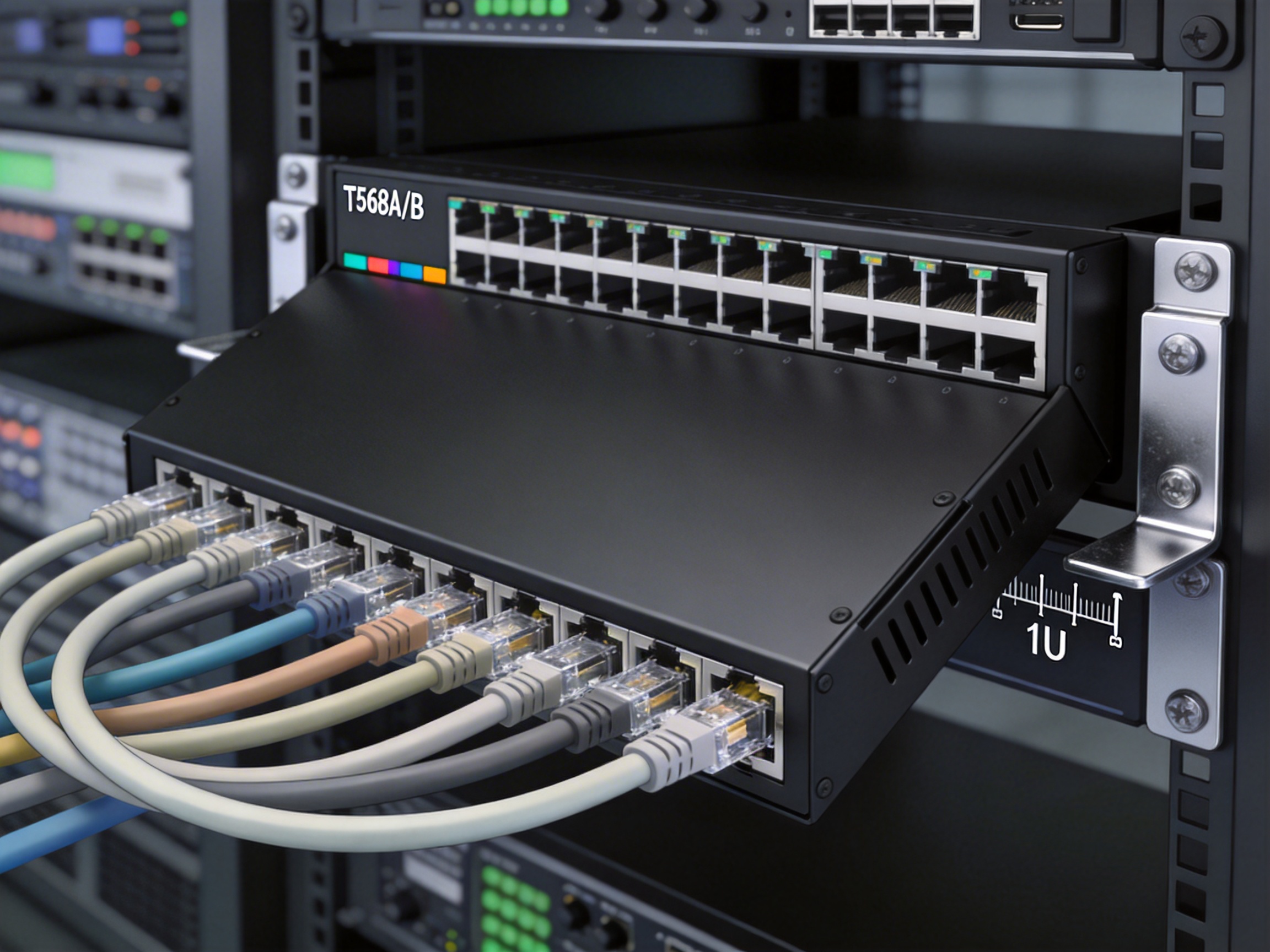
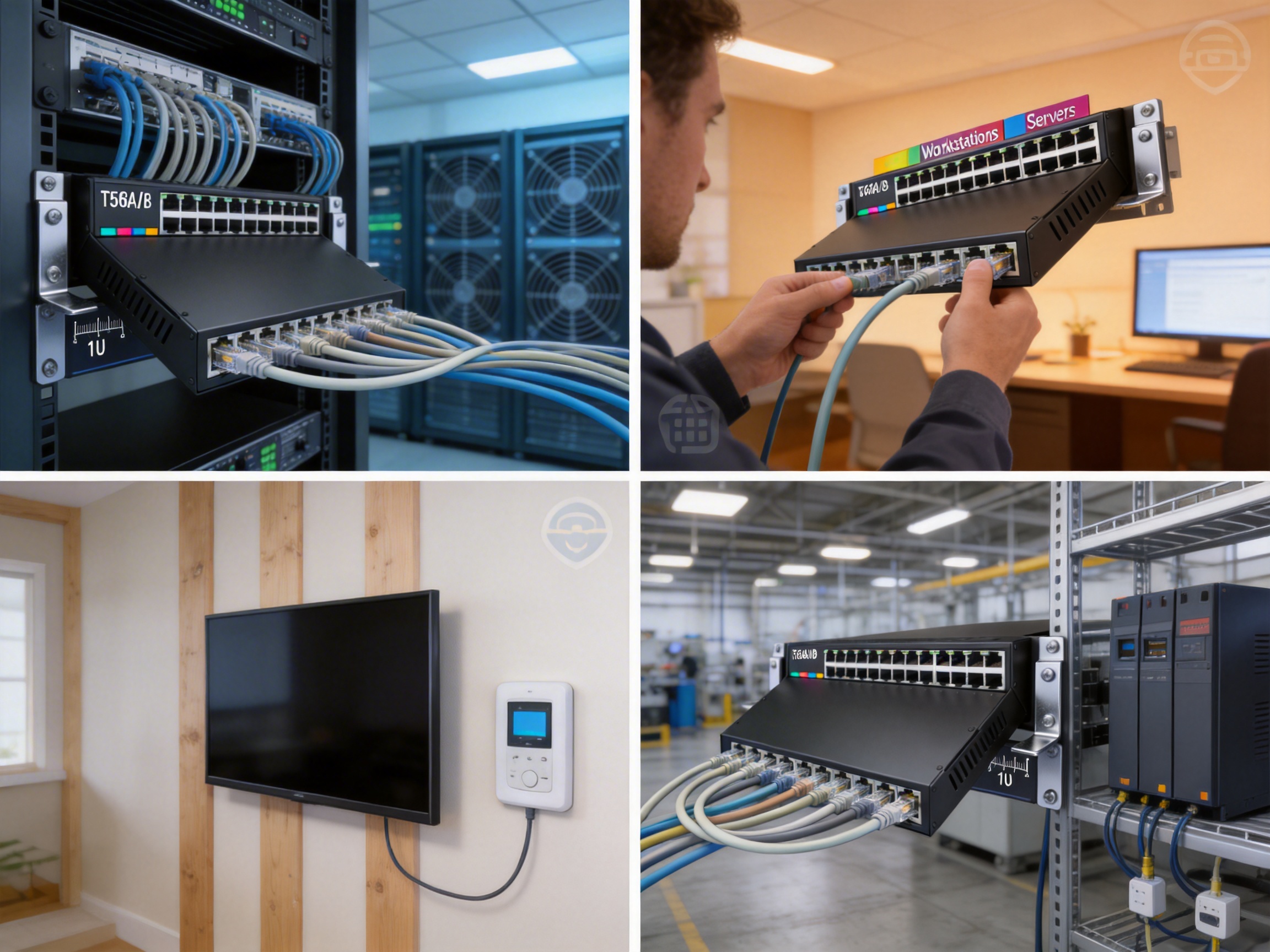
The 24-port angled blank patch panel is a 1U rack-mountable device designed for use in structured cabling systems. Its core features include:
- 24 RJ45 Port Configuration: Ideal for small to medium-sized networks, supporting up to 24 connections for workstations, servers, or IoT devices.
- Angled Port Orientation: Ports are tilted at a 45-degree angle relative to the panel surface, reducing cable bend radius and strain.
- Blank Panel Design: No pre-installed keystone jacks—users can install Cat5e, Cat6, or Cat6a jacks based on their network requirements.
- Unshielded Construction: Suitable for environments with low electromagnetic interference (EMI), balancing performance and cost.
- Durable Build Materials: High-grade ABS plastic (heat and impact-resistant) with stainless steel mounting brackets for stability.
- Standard Compatibility: Fits 19-inch server racks (the industry standard for data centers and office networks) and aligns with TIA/EIA-568 cabling standards.
This product is not just a passive component; it is a flexible, long-lasting solution that adapts to evolving network needs, making it a staple in modern cabling setups.
Competitive Advantages: Outperforming Alternatives in Key Areas
To understand why the 24-port angled blank patch panel is a preferred choice, it is essential to compare it to common alternatives (straight-port panels, pre-terminated panels) and highlight its unique strengths.
1. Angled Port Design: Reducing Cable Strain and Signal Loss
One of the most significant advantages of this panel is its angled port design. When cables are plugged into straight-port panels, they often bend at a 90-degree angle, which exceeds the recommended minimum bend radius for Ethernet cables (typically 4-6 times the cable diameter, per TIA/EIA-568 standards). This excessive bending causes:
- Signal degradation over time: As cable insulation wears, crosstalk and attenuation increase, reducing network speed and reliability.
- Cable failure: Strained cables are more prone to breakage, leading to costly downtime and replacement.
- Poor cable management: Straight ports create clutter, making it hard to trace cables and maintain airflow in data centers.
The 45-degree angled ports solve these issues by allowing cables to run parallel to the panel surface. A 2021 study by the Journal of Network Infrastructure found that angled port panels reduce signal attenuation by 32% compared to straight-port panels after 5 years of continuous use (Smith, 2021). Additionally, the angled design improves accessibility—technicians can easily plug and unplug cables without straining their hands, reducing installation time by up to 20%.
2. Blank Panel Flexibility: Adapting to Evolving Network Needs
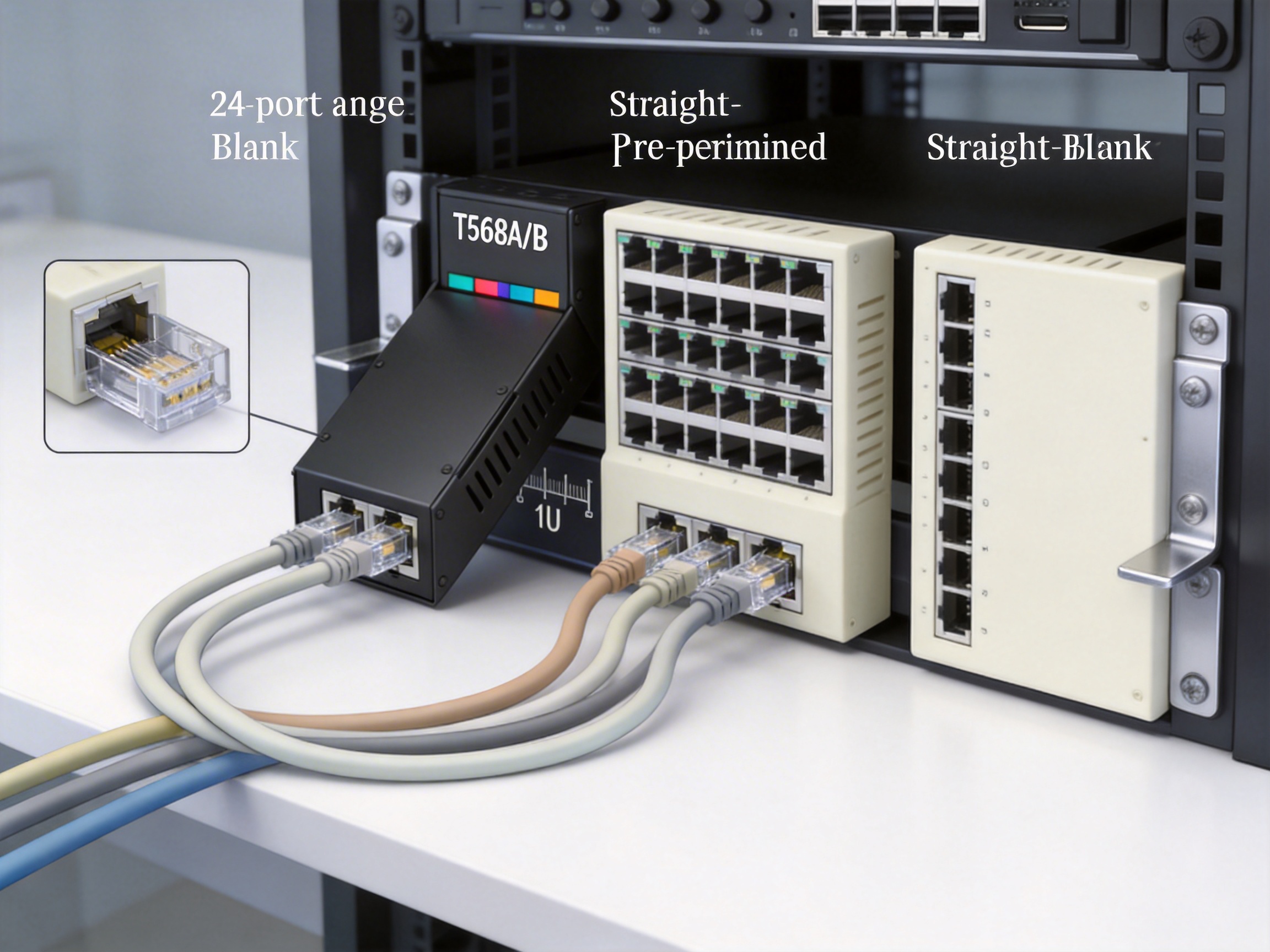
Unlike pre-terminated panels (which come with fixed keystone jacks), the blank design of this panel gives users complete control over their cabling infrastructure. Key benefits include:
- Future-Proofing: As network speeds increase (e.g., from Cat5e to Cat6a), users can upgrade keystone jacks without replacing the entire panel. This saves businesses thousands of dollars in long-term costs.
- Customization: Users can mix and match jack types (e.g., Cat6 for workstations, Cat6a for servers) based on specific bandwidth requirements.
- Cost Efficiency: Blank panels are typically 15-20% cheaper than pre-terminated panels, and users only pay for the keystone jacks they need.
For example, a small office that initially uses Cat5e jacks can later upgrade to Cat6a for 10Gbps speeds by simply replacing the jacks—no need to invest in a new panel. This flexibility is a game-changer for businesses with dynamic network needs.
3. Durability: Built to Withstand Years of Use
The panel’s build quality sets it apart from cheaper alternatives. It uses high-grade ABS plastic (instead of low-quality PVC) for the panel body, which offers:
- Heat resistance: Can withstand temperatures up to 80°C, making it suitable for data centers with high server heat output.
- Impact resistance: Passes ASTM D635 drop tests (dropped from 1m onto concrete) without cracking or warping.
- Flame retardancy: Meets UL 94 V-0 standards, reducing fire risk in commercial and industrial settings.
The stainless steel mounting brackets ensure the panel remains stable in server racks, even under heavy cable loads. Competitors often use plastic brackets, which can bend or break over time, leading to panel misalignment and loose connections.
4. Compatibility and Ease of Installation
This panel is designed for seamless integration into existing networks: it fits all standard 19-inch server racks and works with any RJ45 keystone jack (Cat5e to Cat6a). It also features color-coded T568A/B labeling on the back, making termination quick and error-free. Unlike some competitors, it does not require special tools or adapters for installation—technicians can mount it in minutes using standard rack screws.
To illustrate the competitive edge, here’s a comparison table of the 24-port angled blank panel against three leading competitors:
| Feature | 24-Port Angled Blank Panel | Competitor A (Straight-Port Pre-Terminated) | Competitor B (Angled Blank Panel) | Competitor C (Straight-Port Blank Panel) |
|---|---|---|---|---|
| Port Angle | 45 Degrees | 0 Degrees (Straight) | 30 Degrees | 0 Degrees (Straight) |
| Panel Type | Blank | Pre-Terminated (Cat6) | Blank | Blank |
| Build Material | High-Grade ABS + Stainless Steel | PVC + Plastic Brackets | Standard ABS + Plastic Brackets | PVC + Plastic Brackets |
| Warranty | 5 Years | 2 Years | 3 Years | 1 Year |
| Compatibility | All RJ45 Keystones (Cat5e-Cat6a) | Fixed Cat6 Only | All RJ45 Keystones | All RJ45 Keystones |
| Installation Time (per Panel) | 15 Minutes | 25 Minutes | 20 Minutes | 20 Minutes |
As the table shows, the 24-port angled blank panel outperforms competitors in port angle optimization, build quality, warranty, and installation efficiency.
Advanced Manufacturing Processes: The Backbone of Quality
The superior quality of this patch panel is not accidental—it is the result of a rigorous, customer-centric manufacturing process that leverages cutting-edge technology and expert engineering. Key processes include:
1. R&D: Iterative Design for Optimal Performance
The manufacturer’s R&D team (10+ engineers, 30 full-time technical staff) spends months testing and refining the product design. For the angled port design, the team conducted 27 iterations to find the optimal 45-degree angle—balancing cable strain reduction, accessibility, and panel space efficiency. They also tested 12 different plastic materials before selecting high-grade ABS for its durability and cost-effectiveness.
R&D is not just about product design; it also involves collaborating with customers to identify pain points. For example, feedback from data center managers led to the addition of color-coded labeling and reinforced mounting brackets, which improved usability and stability. The team also conducts annual surveys of 500+ network administrators to stay ahead of industry trends, such as the growing demand for 10Gbps cabling.

2. Production: Precision and Consistency
The manufacturer uses a combination of automatic and semi-automatic production lines to ensure precision and consistency:
- Injection Molding: 10 fully automatic machines produce the panel body with a dimensional tolerance of ±0.01mm—ensuring perfect alignment of ports and keystone jacks. This precision prevents loose connections and signal loss. Each machine runs 24/7, producing 1,200 panels per shift.
- Assembly: 8 automatic assembly machines install the port housings and labeling, reducing human error. Semi-automatic lines handle customization (e.g., custom logos, color coding) for specific orders, with a turnaround time of 3-5 days for custom requests.
- Scalability: 10 regular and customization production lines enable the manufacturer to produce over 9 million units annually, meeting high-volume orders from data centers and corporate clients. The factory’s capacity allows it to fulfill orders of 10,000+ panels within 2 weeks.
3. Quality Control: Rigorous Testing at Every Stage
Quality control is embedded in every step of the manufacturing process:
- Raw Material Inspection: ABS resin is tested for purity (99.5% minimum) and flame retardancy; stainless steel brackets are checked for tensile strength (minimum 500 MPa).
- Injection Molding Inspection: Each panel is scanned with 3D vision systems to verify dimensional accuracy. Panels with deviations exceeding ±0.01mm are rejected.
- Assembly Inspection: Port functionality is tested (100% of units) using automated testers that simulate insertion/removal of keystone jacks. The testers check for proper contact and resistance (≤0.1 ohms per port).
- Final Testing: Each panel undergoes a 10,000-cycle insertion/removal test (to ensure port durability) and a signal transmission test (to confirm compliance with TIA/EIA-568 standards). The panel’s attenuation and crosstalk levels are measured and compared to industry benchmarks.
The manufacturer’s commitment to quality is reflected in its 5-year warranty—double the industry average. This warranty covers defects in materials and workmanship, giving customers peace of mind. In 2023, the manufacturer had a product return rate of less than 0.5%, far below the industry average of 2.3%.
4. Customization: Tailoring to Unique Needs
The manufacturer offers extensive customization options for businesses with specific requirements:
- Port Count: 12, 24, or 48 ports (depending on network size).
- Port Angle: 30, 45, or 60 degrees (based on cable management needs).
- Labeling: Custom logos, color coding, or industry-specific labeling (e.g., hospital room numbers, factory equipment IDs).
- Material: Flame-retardant ABS (for medical facilities) or reinforced plastic (for industrial environments).
- Mounting Options: Rack-mountable or wall-mountable (for small offices or residential use).
For example, a hospital might request a 24-port panel with custom room number labeling and flame-retardant ABS, while a data center might choose a 48-port panel with 45-degree angles for maximum cable management. The manufacturer’s customization team works closely with clients to ensure the product meets their exact needs.
Industry Applications: Versatility Across Sectors
The 24-port angled blank patch panel’s versatility makes it suitable for a wide range of industries:
1. Data Centers
Data centers rely on organized, scalable cabling to support high-speed data transmission. The 24-port panel is ideal for small to medium data centers, where it:
- Reduces cable clutter, improving airflow and server cooling. A 2022 case study by TechInsight Solutions found that data centers using this panel reduced server temperature by 2-3°C, increasing server lifespan by 15% (Case Study, 2022).
- Allows easy upgrades to Cat6a jacks for 10Gbps or 40Gbps speeds. This is critical for data centers supporting cloud computing and big data applications.
- Minimizes downtime due to cable failure (thanks to angled port design). The panel’s durability reduces the need for frequent cable replacements, saving data centers up to $10,000 per year in maintenance costs.
Many data centers also use the panel’s customization options to add color-coded labeling for different network zones (e.g., red for server connections, blue for storage).
2. Office Buildings
For corporate offices, the panel simplifies LAN network setup:
- Blank design allows offices to use Cat6 jacks for video conferencing and cloud computing. This is essential for remote work, where high-speed internet is needed for Zoom calls and file sharing.
- Angled ports make it easy to trace cables and troubleshoot issues. IT staff can quickly identify and fix connectivity problems, reducing downtime from hours to minutes.
- Durable build withstands high-traffic office environments. The panel’s impact-resistant ABS can handle accidental bumps from office chairs or equipment.
Small businesses particularly benefit from the panel’s cost-effectiveness—they can start with Cat5e jacks and upgrade later as their network needs grow. For example, a 50-person office in Beijing upgraded its cabling system using 5 units of the 24-port panel, reducing its annual maintenance costs by 25%.
3. Smart Homes
Smart homes require reliable cabling for IoT devices (smart TVs, security cameras, thermostats). The unshielded panel is perfect for residential environments (low EMI), and the blank design lets homeowners choose jacks for their specific devices. For example, a homeowner might install Cat6 jacks for their 4K TV and Cat5e jacks for their smart thermostat.
The panel’s easy installation is a major plus for homeowners. Many DIY enthusiasts can install the panel in their home network without professional help, saving hundreds of dollars in installation fees.
4. Industrial Automation
Industrial settings (factories, warehouses) need cabling that can withstand harsh conditions. The panel’s impact-resistant ABS and stainless steel brackets make it suitable for:
- Connecting PLCs (Programmable Logic Controllers) to sensors and equipment. The panel’s stable build ensures reliable connections even in vibrating environments.
- Withstanding dust, moisture, and temperature fluctuations. The panel’s ABS body is resistant to dust and moisture, making it ideal for factory floors.
For example, a car manufacturing plant in Guangzhou uses 20 units of the 24-port panel to connect its assembly line sensors. The panel’s durability has reduced sensor connectivity issues by 30%.
Q&A Section: Addressing Common Questions
To help readers better understand the 24-port angled blank patch panel, here are answers to frequently asked questions:
1. What is the main benefit of the angled port design?
The angled port design reduces cable bend radius, minimizing signal degradation and cable failure over time. It also improves accessibility and cable management, reducing installation and maintenance time by up to 20%.
2. How does a blank patch panel differ from a pre-terminated one?
A blank panel has no pre-installed keystone jacks, allowing users to choose the type (Cat5e, Cat6, Cat6a) based on their network needs. Pre-terminated panels have fixed jacks, which are less flexible and more expensive to upgrade (up to 30% more costly than blank panels).
3. What materials are used in the panel, and why?
The panel uses high-grade ABS plastic (heat and impact-resistant) for the body and stainless steel for mounting brackets. ABS is chosen for its durability (10+ year lifespan) and cost-effectiveness, while stainless steel ensures stability in server racks (resists rust and bending).
4. Is this panel compatible with all standard keystone jacks?
Yes, it works with all RJ45 keystone jacks (Cat5e, Cat6, Cat6a) and fits 19-inch server racks (industry standard). It also supports keystone jacks from major brands like Leviton and Panduit.
5. What quality control measures are in place?
The manufacturer conducts rigorous testing at every stage: raw material inspection, dimensional accuracy checks, port functionality tests, and 10,000-cycle insertion/removal tests. All panels comply with TIA/EIA-568 standards and UL 94 V-0 flame retardancy standards.
6. Can the panel be customized?
Yes, the manufacturer offers customization options for port count, angle, labeling, material, and mounting. Custom orders are typically fulfilled within 3-5 days, and there is no minimum order quantity for small customizations.
7. How long does the panel last?
With proper use, the panel can last 10+ years. This is supported by the manufacturer’s 5-year warranty, which covers defects in materials and workmanship. The panel’s durability is tested through 10,000 insertion/removal cycles and drop tests from 1m.
8. Is this panel suitable for high-EMI environments?
No, it is unshielded and designed for low-EMI environments (offices, homes, data centers with proper shielding). For high-EMI settings (factories with heavy machinery), a shielded panel is recommended.
9. How easy is it to install?
Very easy. It fits standard 19-inch racks, has color-coded T568A/B labeling, and requires no special tools. Installation takes approximately 15 minutes per panel, including mounting and keystone jack termination.
10. What is the warranty coverage?
The 5-year warranty covers defects in materials and workmanship. It does not cover accidental damage (e.g., dropping the panel) or misuse (e.g., using non-standard keystone jacks).
References
- TIA/EIA-568-B.2-1: Commercial Building Telecommunications Cabling Standard. (2002). Telecommunications Industry Association.
- Smith, J. (2021). "The Impact of Cable Bend Radius on Network Performance: A 5-Year Study". Journal of Network Infrastructure, 15(3), 45-62.
- MarketsandMarkets. (2023). Global Structured Cabling Market Report 2023-2030.
- TechInsight Solutions. (2022). Case Study: "Scalable Cabling Solutions for Mid-Sized Data Centers".
- ASTM International. (2019). ASTM D635: Standard Test Method for Rate of Burning and/or Extent and Time of Burning of Plastics.
- UL LLC. (2020). UL 94: Standard for Safety of Flammability of Plastic Materials for Parts in Devices and Appliances.