Español
 عربى
عربى русский
Content
- 1 Introduction
- 2 Product Overview
- 3 Why Connector Quality Matters in Structured Cabling
- 4 Design and Functional Advantages
- 5 Manufacturing Strengths Behind the Product
- 6 Quality Control and Product Reliability
- 7 Advantages Compared with Low-Quality Alternatives
- 8 Application Areas
- 9 Installation and Purchasing Considerations
- 10 Customization and OEM or ODM Cooperation
- 11 Environmental and Operational Considerations
- 12 How the Product Supports Professional Network Projects
- 13 Recommended Evaluation Process
- 14 Frequently Asked Questions
- 14.1 What is the SMT-3020T8C8?
- 14.2 What type of cabling system is it intended for?
- 14.3 Can the connector be used in commercial buildings?
- 14.4 Can it be used for residential structured wiring?
- 14.5 What makes a professionally manufactured connector preferable to a low-cost alternative?
- 14.6 Does the manufacturer support OEM and ODM projects?
- 14.7 Can the product be purchased together with other network components?
- 14.8 What testing is recommended after installation?
- 14.9 Is detailed technical confirmation necessary before bulk purchasing?
- 14.10 Where is the manufacturer located?
- 15 Conclusion
- 16 References
- 17 Product: SMT-3020T8C8
Introduction
Modern communication networks depend on small connection components that must perform consistently under demanding electrical, mechanical, and environmental conditions. A connector may occupy only a small part of a cabling system, yet its contact structure, housing accuracy, termination quality, and compatibility can directly influence transmission stability, installation efficiency, and long-term maintenance costs. The SMT-3020T8C8 male connector is designed for copper structured cabling applications where dependable connectivity, practical installation, and consistent production quality are essential.
As a male connector within a professional network cabling product range, the SMT-3020T8C8 is intended to support the connection of copper communication cables and related network components. It can be incorporated into data cabling solutions used in offices, commercial buildings, intelligent homes, equipment rooms, automation facilities, and other low-voltage communication environments. Its role is especially important at the point where a cable assembly, patch cord, or field-terminated connection must interface securely with a compatible socket, jack, panel, or active networking device.
The product is manufactured by Yuyao Simante Network Communication Equipment Co., Ltd., a China-based manufacturer specializing in network cabling solutions and optical fiber products. The company combines product design, development, manufacturing, sales, and service within one integrated organization. This structure enables the manufacturer to control product development from the initial concept through tooling, molding, assembly, testing, packaging, and customer support.
This article examines the SMT-3020T8C8 from the perspective of product application, structural value, manufacturing capability, quality control, customization potential, and purchasing considerations. It also explains why a professionally produced connector can offer advantages over low-cost alternatives that may have inconsistent dimensions, unstable contacts, weak strain relief, or limited production traceability.
SMT-3020T8C8
Product Overview
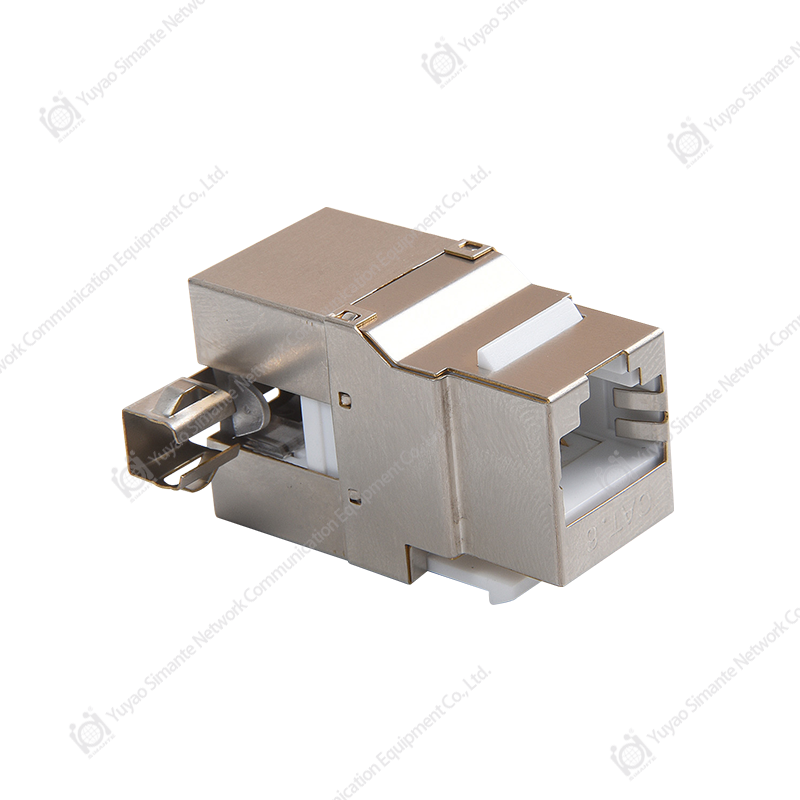
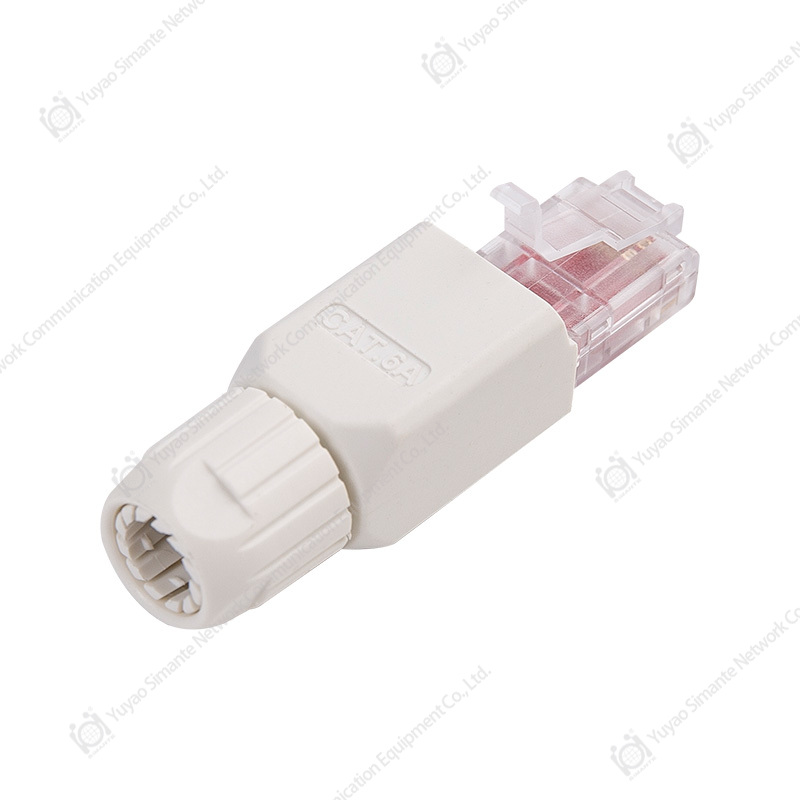
The SMT-3020T8C8 is categorized as a male connector for copper network cabling systems. In practical use, a male connector provides the projecting contact interface required to plug into a compatible female port. The connector must maintain correct contact alignment, withstand repeated insertion and removal, and preserve signal continuity after the cable has been assembled and installed.
Although a connector appears simple from the outside, its performance depends on multiple coordinated elements. These include the dimensions of the outer housing, the position and spring characteristics of the contacts, the relationship between the conductor termination area and the cable, the quality of the insulating material, and the accuracy of the assembly process. Even a minor dimensional deviation can affect insertion force, retention, contact pressure, or compatibility with a mating component.
The SMT-3020T8C8 is therefore best understood as a precision network interface component rather than merely a plastic plug or metal contact set. Its design value lies in the coordination of materials, tooling, assembly, and inspection. For installers and system integrators, this can translate into more predictable field work, fewer connection failures, and improved confidence in the finished cabling system.
The connector is suitable for use in applications where copper communication wiring is terminated or connected to other structured cabling components. Typical environments may include horizontal cabling, equipment-room connections, telecommunications cabinets, data outlets, patching arrangements, network distribution points, and automation control networks. The specific cable type, conductor construction, wiring sequence, and performance category should always be matched with the applicable product variant and project requirements.
Key Product Characteristics
The main characteristics of the SMT-3020T8C8 can be summarized as follows:
| Item | Product Information | Application Value |
|---|---|---|
| Product model | SMT-3020T8C8 | Provides a defined reference for purchasing, production, and project coordination |
| Product type | Male connector | Creates a plug-in interface with compatible network sockets or jacks |
| System category | Copper structured cabling system | Supports copper-based communication and data connection applications |
| Primary function | Electrical and mechanical cable termination or interconnection | Helps establish signal continuity and secure physical retention |
| Manufacturing support | Injection molding, automated assembly, semi-automated assembly, and testing | Promotes dimensional consistency and stable production output |
| Customization support | OEM and ODM project capability | Allows adaptation to customer specifications and application requirements |
| Related product range | Keystone jacks, patch panels, wall face plates, data sockets, and optical fiber products | Enables coordinated sourcing for broader cabling projects |
The table describes the product at a general application level. Detailed technical parameters, including conductor compatibility, material grades, plating options, wiring configuration, electrical performance, and applicable standards, should be confirmed with the manufacturer before mass ordering or project approval.
Why Connector Quality Matters in Structured Cabling
A structured cabling system is an interconnected infrastructure. Cable, connector, jack, patch panel, face plate, rack hardware, and active equipment must work together as a complete channel. A weakness at one connection point can reduce the reliability of the entire link. This is why the quality of a male connector should be evaluated in relation to the overall network rather than by appearance alone.
Reliable contact pressure is one of the most important requirements. The conductive elements must press against the mating interface with sufficient force to maintain a stable electrical path. If the force is too low, vibration, oxidation, repeated movement, or mechanical stress may create intermittent contact. If the force is excessive, insertion may become difficult and the mating component may experience unnecessary wear. Accurate forming and controlled material selection help achieve a practical balance.
Dimensional precision is equally significant. The connector must fit within the tolerance range of compatible network interfaces. A housing that is too large may be difficult to insert or remove, while a housing that is too loose may not provide adequate retention. Contact spacing must also remain consistent so that the conductive elements align correctly with the corresponding positions in the mating port.
Termination quality affects both electrical and mechanical performance. The cable conductors must be positioned correctly and secured in a way that limits movement. If the cable is not supported adequately, pulling or bending forces can be transferred directly to the contact area. Over time, this may lead to conductor displacement, contact instability, or failure during testing. A well-designed connector helps distribute mechanical stress and supports more repeatable assembly.
Material stability is another important consideration. The insulating housing must maintain its shape during molding, assembly, storage, and use. A material with inadequate dimensional stability may deform under temperature variation or mechanical stress. The conductive parts must also resist corrosion and maintain their functional properties throughout the expected service life of the installation.
These requirements explain why a professionally manufactured connector can outperform an inexpensive product that has not been supported by accurate tooling, controlled molding, reliable assembly, or systematic testing. The difference may not be visible in a showroom, but it becomes apparent during installation, certification testing, repeated maintenance, and long-term operation.
Design and Functional Advantages
Stable Mechanical Engagement
A male connector must engage with its mating port securely while remaining practical to install and remove. The SMT-3020T8C8 is developed for this balance between retention and usability. A properly controlled housing geometry helps guide the connector into the mating interface, while the contact arrangement supports stable engagement after insertion.
Stable mechanical engagement reduces the possibility of accidental disconnection caused by movement, cable handling, or routine maintenance. This is particularly valuable in equipment rooms, network cabinets, and densely installed communication areas where cables may be moved during troubleshooting or system expansion.
Consistent Contact Alignment
Contact alignment is central to the function of any network connector. The conductive elements must occupy the intended positions and remain separated from one another by the insulating structure. Accurate tooling and controlled assembly reduce the likelihood of misalignment, uneven spacing, or contact displacement.
Consistent alignment also improves compatibility between the connector and associated network components. When a connector is used with matching products from the same structured cabling family, dimensional coordination can simplify installation and reduce the need for field adjustments.
Support for Repeatable Installation
Large network projects require thousands of connection operations. A connector that is easy to handle and consistent from piece to piece can improve installer productivity. Repeatability is especially important for contractors working under time constraints, because inconsistent components may cause additional inspection, retermination, or replacement work.
The SMT-3020T8C8 can support a more standardized installation process when used with suitable cable, tooling, and assembly instructions. Standardization helps organizations train technicians more efficiently and establish clearer quality checkpoints for incoming materials and completed cable assemblies.
Integration with Broader Cabling Solutions
A connector is most useful when it can be incorporated into a complete product ecosystem. Yuyao Simante Network Communication Equipment Co., Ltd. also manufactures keystone jacks, patch panels, wall face plates, data sockets, and optical fiber products. This broader range can help distributors, contractors, and system integrators coordinate product sourcing for complete network infrastructure projects.
Single-source or coordinated sourcing may simplify communication about product specifications, packaging, delivery schedules, and quality expectations. It can also make it easier to develop a consistent appearance and installation method across multiple areas of a building or project.
Application Flexibility
The SMT-3020T8C8 is positioned for professional copper cabling applications rather than a single narrowly defined installation environment. It may be considered for commercial office networks, residential structured wiring, building automation, communication cabinets, educational facilities, hospitality projects, and industrial control infrastructure where compatible copper interfaces are required.
Application flexibility does not mean that every configuration is automatically interchangeable. Cable diameter, conductor type, insulation dimensions, wiring arrangement, transmission category, and installation conditions should be reviewed before selection. However, a product designed within a structured cabling portfolio can provide a practical foundation for multiple project types.
Manufacturing Strengths Behind the Product
The performance of a connector depends heavily on the production system behind it. Yuyao Simante Network Communication Equipment Co., Ltd. has nearly two decades of service experience in network communication products and optical fiber products. Its manufacturing model combines engineering development with production capability, allowing product requirements to be considered from both design and manufacturing perspectives.
Engineering and Development Resources
The company has more than ten engineers and over thirty full-time technical personnel. This technical organization supports product development, process improvement, quality management, and production updates. A dedicated engineering team is important for connector manufacturing because small changes in mold design, material flow, contact positioning, or assembly sequence can produce significant effects on product consistency.
Engineering resources also help the manufacturer respond to customer requirements. OEM and ODM projects may involve customized dimensions, packaging, labeling, material requirements, tooling changes, or coordinated product families. Such projects require more than simple trading support. They depend on the ability to translate application requirements into drawings, samples, process instructions, inspection criteria, and repeatable production.
Injection Molding Capability
The factory operates ten regular and customization production lines and has ten fully automatic injection molding machines together with twenty semi-automatic injection molding machines. This combination provides flexibility for both standardized products and customized orders.
Injection molding is a critical process for connector housings. The mold must define the external dimensions, internal supports, retention features, and contact positioning structures with high repeatability. Process parameters such as temperature, pressure, cooling time, material drying, and cycle control influence the final result. Automated and semi-automated equipment can be selected according to product design, order volume, tooling requirements, and production complexity.
Fully automatic molding equipment can support stable high-volume production and reduce variations caused by manual handling. Semi-automatic equipment can provide flexibility for products with different structures, lower-volume orders, or customization requirements. Maintaining both types of equipment allows the factory to balance efficiency with adaptability.
Automated Assembly Equipment
The factory also operates eight types of automatic installation machines. Automated assembly can improve the repeatability of contact insertion, component placement, and other production steps. It can also reduce the risk of inconsistent manual positioning, especially when the product contains small parts that must be installed at precise locations.
Automation is not valuable merely because it increases speed. Its deeper advantage is process control. When an assembly operation is defined by a machine setting, fixture, or programmed sequence, the manufacturer can establish repeatable conditions and inspect the result against known requirements. This supports stable output across large production batches.
At the same time, semi-automatic and manual operations may still be appropriate for certain customized or technically complex products. A well-organized factory does not rely on one production method for every item. Instead, it selects equipment according to the product structure and the required balance of precision, flexibility, and efficiency.
Production Capacity
The factory maintains a stable annual output of more than nine million units across its product range. This capacity indicates that the manufacturer is prepared to support regular distribution orders as well as larger project requirements. Stable capacity can be important for network contractors and wholesalers that need continuity of supply over several months or across multiple construction phases.
Capacity must be combined with quality management. High output without process control can increase variation, while strong process control without sufficient capacity can create delivery delays. The combination of production lines, molding equipment, assembly equipment, engineering personnel, and testing practices gives the manufacturer a foundation for balancing volume and quality.

Quality Control and Product Reliability
Quality control for a male connector should cover the entire production chain. It should begin with incoming materials and continue through molding, contact preparation, assembly, inspection, packaging, and customer feedback. A product can fail because of incorrect material, molding defects, poor contact forming, assembly errors, contamination, or packaging damage. For this reason, quality must be treated as a system rather than a final visual check.
Design-Source Quality
The company emphasizes a mature research and development system, with quality stability considered from the design source. This approach is valuable because many defects are easier and less expensive to prevent during design than to correct after production. Mold structure, assembly access, material selection, tolerances, and inspection points can be evaluated before the product enters mass manufacturing.
Design-source quality also supports better cooperation between engineering and production teams. When a product has been designed with realistic manufacturing tolerances and clear assembly requirements, it is more likely to achieve stable output. This reduces the risk that production workers must compensate for an impractical design through inconsistent manual adjustments.
Performance Testing
The manufacturer uses performance testing to meet comprehensive customer requirements. For a network connector, testing may be organized around mechanical, dimensional, visual, and electrical characteristics, depending on the product specification and customer application.
Mechanical checks may include insertion and extraction behavior, retention performance, component security, and resistance to handling stress. Dimensional checks may verify housing size, contact position, locking features, and compatibility-related measurements. Visual inspection may identify molding marks, cracks, flash, deformation, contamination, plating irregularities, or assembly defects. Electrical evaluation may be specified according to the intended cable system and applicable project requirements.
The precise test items and acceptance limits should be confirmed for each order. However, the presence of a structured performance-testing process provides an important advantage over unverified products whose quality is judged only by appearance or basic plug-in function.
Process Monitoring
Process monitoring helps identify variation before it becomes a customer complaint. In injection molding, monitoring may focus on cycle conditions, material handling, mold cleanliness, and part appearance. In assembly, it may focus on component presence, contact position, insertion depth, and fixture condition. Packaging inspections help ensure that finished products remain protected during transportation and storage.
For high-volume products, process monitoring is particularly important because a small deviation can affect a large batch. A manufacturer with established production systems can use inspection records, equipment checks, and corrective-action procedures to improve stability over time.
Traceability and Communication
Professional buyers increasingly require clear communication about materials, samples, drawings, inspection reports, packaging, and delivery schedules. A manufacturer that integrates design, production, and service can respond more efficiently to technical questions than a supplier that depends entirely on external factories.
Yuyao Simante Network Communication Equipment Co., Ltd. serves customers in Europe, Australia, Africa, the Middle East, and Southeast Asia. Experience with international markets can support communication regarding export packaging, product documentation, order coordination, and customer-specific requirements. For distributors and project suppliers, this can reduce uncertainty during product approval and repeat purchasing.
Advantages Compared with Low-Quality Alternatives
The SMT-3020T8C8 should not be compared only by unit price. The more meaningful comparison includes installation time, rejection rate, system stability, replacement frequency, supply continuity, and technical support. A low-cost connector may appear attractive at the purchasing stage but create additional costs if it causes failed tests, rework, field complaints, or delayed project completion.
More Consistent Dimensions
Low-quality connectors may have inconsistent housing dimensions or contact positions because of worn molds, uncontrolled molding conditions, or insufficient inspection. These inconsistencies can lead to tight insertion, loose engagement, poor retention, or compatibility problems. Controlled tooling and production monitoring help reduce such variation.
Improved Assembly Predictability
When components are produced consistently, installers can use the same working method across a larger batch. Predictable assembly reduces the need to sort parts manually or make individual adjustments. This is especially valuable for projects with large numbers of outlets, patch connections, or field-terminated cables.
Lower Risk of Intermittent Connections
An intermittent connection may be more difficult to diagnose than a complete open circuit. The link may work during initial testing and fail later when the cable is moved or the temperature changes. Stable contact design, suitable materials, and controlled assembly can help lower this risk. While no connector can compensate for incorrect installation or incompatible components, product consistency is an important part of overall reliability.
Better Support for OEM and ODM Programs
Many distributors and network-equipment brands require products with customized packaging, private labeling, modified structures, or coordinated product families. A factory with engineering personnel, customization production lines, and integrated manufacturing can be better positioned to support these programs than a supplier that offers only standard catalog products.
More Reliable Supply Planning
Project schedules often extend over months or years. A supplier with established production capacity can help customers plan repeat orders and maintain product availability. Stable annual output, multiple production lines, and a broad technical team support the possibility of continued supply as customer demand develops.
Application Areas
Commercial Office Networks
Office buildings require organized copper cabling to connect workstations, wireless access points, printers, telephones, surveillance devices, and other network equipment. Male connectors can be used in patching and equipment connections where a secure, standardized interface is required.
In commercial environments, installation speed and serviceability are important. A connector that is consistent and easy to handle can reduce the time required for new installations and later changes. Coordinated use with patch panels, data sockets, and wall face plates can also create a professional and orderly cabling infrastructure.
Residential Structured Wiring
Modern homes increasingly include broadband gateways, wireless access points, smart televisions, security systems, automation controllers, and network storage. Residential structured wiring benefits from compact, dependable connection components that can be installed in wall outlets, cabinets, and equipment locations.
Because residential systems may be modified by different installers over time, clear product identification and consistent termination practices are valuable. A dependable connector can support easier maintenance and reduce confusion when equipment is upgraded.
Data Centers and Equipment Rooms
Equipment rooms contain concentrated cable connections and often require frequent service activity. Connectors may be inserted, removed, labeled, tested, and rearranged many times during the life of the installation. Mechanical stability, accurate dimensions, and reliable contact behavior are therefore essential.
For high-density environments, product uniformity is particularly important. Even small differences in connector dimensions can become inconvenient when many connections are arranged closely together. Consistent manufacturing helps support predictable rack and panel layouts.
Building Automation
Building automation networks connect controllers, sensors, access systems, energy-management devices, and monitoring equipment. These systems may use structured copper cabling in areas where connection reliability and organized installation are important.
Although the connector is only one part of the automation network, a secure physical interface supports the stability of the communication channel. Installers should verify that the connector, cable, and active devices are suitable for the intended protocol and transmission requirements.
Industrial and Automation Equipment
Industrial environments may expose cabling to vibration, mechanical movement, dust, temperature variation, and frequent maintenance. The correct connector and protective installation method should be selected according to the environmental conditions. Where the SMT-3020T8C8 is suitable for the specified cable and interface, its consistent mechanical structure can contribute to a more dependable connection arrangement.
For demanding environments, system designers should also consider cable routing, strain relief, enclosure protection, grounding, bend radius, and installation separation from sources of electromagnetic interference. Connector quality is important, but it must be combined with sound system engineering.
Installation and Purchasing Considerations
Confirm Compatibility Before Ordering
Purchasers should confirm the connector’s compatibility with the intended cable, mating interface, conductor arrangement, and performance requirement. The product model should be included in technical submittals, purchase orders, drawings, and inspection documents to prevent substitutions without approval.
Questions may include whether the connector is intended for solid or stranded conductors, which cable outside diameter range it supports, which contact arrangement is required, and whether special plating or housing material is necessary. If the project has a defined transmission category or certification requirement, the connector should be evaluated as part of the complete channel rather than as an isolated component.
Use Appropriate Assembly Tools
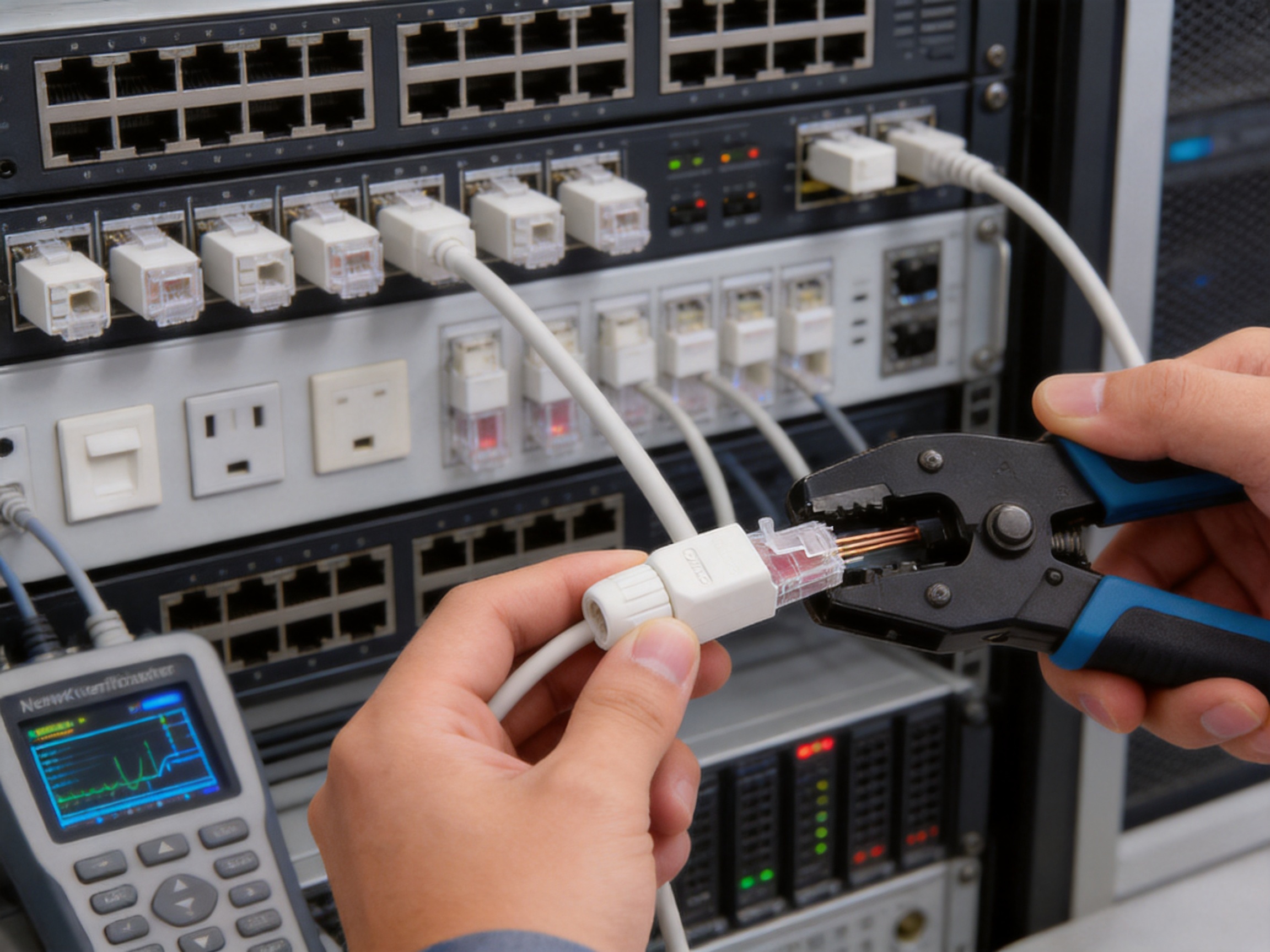
Proper tools help ensure that conductors are positioned correctly and that the connector is assembled without unnecessary deformation. Installers should follow the manufacturer’s instructions for cable preparation, conductor sequence, insertion, crimping, locking, and inspection.
Improvised tools can damage the housing or contacts and may create a connection that appears complete but does not meet the required mechanical or electrical performance. Training and standardized work instructions are recommended for larger installations.
Inspect Completed Connections
Each completed connection should be inspected for correct conductor order, full insertion, housing damage, contact deformation, locking engagement, and suitable strain relief. Where required, certification or continuity testing should be performed using equipment appropriate to the cabling system.
Testing should not be treated as a substitute for correct installation. It is most effective when combined with visual inspection, proper cable preparation, and consistent workmanship. Failed connections should be reterminated or replaced rather than repeatedly adjusted in the field.
Plan for Project Volume
For large projects, buyers should discuss forecast quantities, sample approval, production lead time, packaging requirements, delivery batches, and reserve stock. The manufacturer’s production capacity and customization capability can be used to establish a supply plan that matches the construction schedule.
Early sample approval is recommended when the connector will be integrated into a new product, private-label package, or customized network solution. Samples allow the customer to verify fit, appearance, handling, assembly method, and compatibility before mass production.
Consider Total Cost of Ownership
The total cost of a connector includes more than its purchase price. It may also include labor, testing, rework, replacements, technical support, shipping, inventory, and the financial impact of network downtime. A product with stable dimensions and reliable production can provide better value when these factors are considered.
Customization and OEM or ODM Cooperation
Different markets and projects may require different connector configurations, packaging formats, labels, colors, materials, or product combinations. The manufacturer’s OEM and ODM experience provides a basis for discussing these requirements.
OEM cooperation generally focuses on producing a product according to the customer’s approved design or specification, possibly with customized branding and packaging. ODM cooperation may involve a deeper engineering role, in which the manufacturer assists with product structure, tooling, materials, samples, testing, and production optimization.
A successful customization program should begin with clear technical information. Customers should provide drawings, reference samples, cable details, required standards, target quantities, environmental conditions, packaging expectations, and intended markets. The manufacturer can then evaluate tooling, materials, production methods, testing needs, and estimated lead times.
Customization should be managed through documented samples and approval procedures. Any change to contact material, plating, housing material, dimensions, or assembly method can affect performance. Written approval helps ensure that the mass-produced item matches the validated sample.
For customers seeking a complete structured cabling portfolio, customized coordination may extend beyond the male connector. Patch panels, keystone jacks, data sockets, wall face plates, and optical fiber products may be developed or supplied as part of a broader network cabling solution. This can help create consistent product presentation and simplify procurement.
Environmental and Operational Considerations
Network connectors are used in a wide range of locations, from climate-controlled offices to cabinets exposed to heat, dust, and vibration. Product selection should therefore account for the conditions in which the connector will operate. Temperature, humidity, mechanical movement, chemical exposure, ultraviolet light, and installation accessibility can all influence service performance.
The SMT-3020T8C8 should be applied within the environmental and technical limits confirmed by the manufacturer. If an installation has unusual conditions, the buyer should request additional information or testing before approval. Examples include outdoor enclosures, industrial production areas, high-temperature equipment rooms, marine locations, and applications with repeated cable movement.
Correct storage is also important. Connectors should remain in clean, dry packaging and should be protected from crushing, contamination, excessive heat, and prolonged exposure to unsuitable environments. Packaging should prevent contact damage and maintain product identification throughout transportation and warehouse handling.
During installation, connectors should not be subjected to excessive bending, pulling, twisting, or impact. Cable routing should maintain the recommended bend radius, and strain should be managed so that the connector does not carry more mechanical load than intended. Good installation practices protect the connector and improve the performance of the complete cabling system.
How the Product Supports Professional Network Projects
Professional network projects require coordination among designers, distributors, contractors, consultants, equipment manufacturers, and facility owners. A connector such as the SMT-3020T8C8 supports this process by providing a defined component that can be included in bills of materials, installation standards, inspection plans, and maintenance documentation.
For designers, the availability of a manufacturer with both standard and customized products can simplify the development of a complete cabling architecture. For distributors, stable production capacity and a broad product portfolio can support inventory planning and customer service. For contractors, repeatable components can reduce installation variation. For facility owners, dependable connections can help lower maintenance interruptions over the life of the network.
The manufacturer’s experience in international markets is also relevant to project cooperation. Customers in different regions may have different packaging, documentation, delivery, testing, and compliance expectations. Clear communication between the factory and buyer is essential to ensure that the selected product meets the requirements of the target market.
Simante’s focus on network communication equipment and optical fiber products allows customers to discuss copper and fiber infrastructure with one specialized supplier. Copper and fiber systems serve different transmission purposes, but they are often deployed together in modern communication networks. Coordinated sourcing can improve consistency across the physical infrastructure while allowing each medium to be selected for the appropriate application.
Recommended Evaluation Process
Customers evaluating the SMT-3020T8C8 can follow a structured process:
Step One: Define the Application
Identify the cable type, mating component, installation environment, expected usage, project volume, and required network performance. This prevents a connector from being selected solely on visual similarity.
Step Two: Request Technical Information
Confirm dimensions, material options, conductor compatibility, assembly method, available packaging, test conditions, and any applicable performance information. Customers should communicate their project standards and approval procedures.
Step Three: Approve Samples
Use samples to check fit, handling, assembly, appearance, and compatibility with the intended cable and mating interface. If the product will be sold under a private label or integrated into a larger assembly, approve the complete sample configuration.
Step Four: Establish Quality Criteria
Define incoming inspection points, acceptable appearance, dimensional tolerances, test requirements, packaging conditions, labeling, and documentation. Clear criteria reduce disagreement during production and delivery.
Step Five: Plan Production and Delivery
Discuss forecast quantities, order batches, tooling requirements, lead times, shipping arrangements, and reserve inventory. A planned schedule helps align connector supply with installation or manufacturing milestones.
Step Six: Monitor Repeat Orders
For continuing programs, maintain communication about any changes in materials, tooling, production location, packaging, or process. Repeat-order consistency is especially important when connectors are installed across multiple sites.
Frequently Asked Questions
What is the SMT-3020T8C8?
The SMT-3020T8C8 is a male connector designed for copper structured cabling applications. It provides a plug-in interface for connection with a compatible female network port, jack, socket, or related component.
What type of cabling system is it intended for?
The product is categorized under copper structured cabling systems. The exact cable construction, conductor type, wiring arrangement, and transmission performance should be confirmed with the manufacturer for the intended application.
Can the connector be used in commercial buildings?
It can be considered for suitable commercial network applications, including office cabling, equipment rooms, communication cabinets, and data connection points. Compatibility with the project’s cable and mating components should be verified before installation.
Can it be used for residential structured wiring?
Yes, it may be suitable for residential structured wiring when the connector specification matches the cable and interface used in the installation. It can support organized connections for home networking, smart-home equipment, and communication outlets.
What makes a professionally manufactured connector preferable to a low-cost alternative?
Professional manufacturing can provide more consistent dimensions, controlled contact alignment, repeatable assembly, better process monitoring, performance testing, and stronger supply support. These advantages may reduce installation problems, rework, intermittent connections, and replacement costs.
Does the manufacturer support OEM and ODM projects?
Yes. The manufacturer undertakes OEM and ODM projects and operates regular and customization production lines. Customers should provide detailed technical, packaging, labeling, and quantity requirements for evaluation.
Can the product be purchased together with other network components?
The manufacturer also produces keystone jacks, patch panels, wall face plates, data sockets, and optical fiber products. Customers can discuss coordinated sourcing for broader copper and fiber structured cabling projects.
What testing is recommended after installation?
Completed connections should receive visual and mechanical inspection, and continuity or certification testing should be performed when required by the project. The selected test method should correspond to the cable system, network category, and applicable installation standard.
Is detailed technical confirmation necessary before bulk purchasing?
Yes. Bulk buyers should confirm cable compatibility, mating interface, material and plating options, dimensions, performance requirements, packaging, quality criteria, delivery schedule, and sample approval procedures before placing a large order.
Where is the manufacturer located?
Yuyao Simante Network Communication Equipment Co., Ltd. is located at No. 2, Fumin Road, Moushan Town, Yuyao, Ningbo City, Zhejiang, China. Customers may contact the company for product specifications, samples, OEM or ODM discussions, and order support.
Conclusion
The SMT-3020T8C8 male connector is a practical component for copper structured cabling systems in which mechanical stability, contact consistency, installation repeatability, and supply reliability matter. Its value is supported not only by its connector function but also by the manufacturing infrastructure behind it.
Yuyao Simante Network Communication Equipment Co., Ltd. combines nearly twenty years of industry experience with engineering resources, injection molding capacity, automated and semi-automatic assembly equipment, customization production lines, performance testing, and international market experience. These capabilities provide a strong foundation for producing connectors and related network communication products in a controlled and scalable manner.
Compared with unverified low-cost alternatives, a professionally developed and manufactured connector can offer advantages in dimensional consistency, assembly predictability, contact stability, quality control, customization support, and long-term supply planning. These advantages are particularly important for structured cabling projects where a large number of small connections must operate together as one dependable infrastructure.
Before selection, customers should confirm the detailed specifications and compatibility of the SMT-3020T8C8 with the intended cable, mating interface, installation environment, and performance requirements. With appropriate product verification and correct installation practice, the connector can support reliable copper network connections across commercial, residential, industrial, automation, and communication applications.
References
1. ISO/IEC 11801, Information Technology—Generic Cabling for Customer Premises.
2. ANSI/TIA-568 Series, Telecommunications Cabling Standards for Commercial and Residential Premises.
3. IEC 60603 Series, Connectors for Electronic Equipment.
4. IEC 60512 Series, Connectors for Electronic Equipment—Tests and Measurements.
5. International Electrotechnical Commission, General Principles for Electrical Connector Design and Testing.
6. Manufacturer product information for the SMT-3020T8C8 male connector.
7. Manufacturer information concerning copper structured cabling products, optical fiber products, production capacity, and OEM or ODM services.