Español
 عربى
عربى русский
Content
- 1 Introduction
- 2 Product Overview
- 3 Why Connector Quality Matters in Structured Cabling
- 4 Key Advantages of the SMT-3020T8C8
- 5 Comparison with Lower-Quality Alternatives
- 6 Manufacturing Strengths Behind the Product
- 7 Quality Control and Performance Testing
- 8 Applications in Modern Cabling Projects
- 9 Installation and Handling Recommendations
- 10 Procurement and Project Selection
- 11 Supplier Service and International Support
- 12 Environmental and Operational Considerations
- 13 Technical Communication for Customized Projects
- 14 Maintenance and Lifecycle Value
- 15 Why the SMT-3020T8C8 Is a Practical Choice
- 16 Frequently Asked Questions
- 16.1 What is the SMT-3020T8C8?
- 16.2 Who manufactures the product?
- 16.3 What types of projects can use this connector?
- 16.4 Does the connector work with every network cable?
- 16.5 Why is manufacturing consistency important?
- 16.6 What manufacturing equipment supports production?
- 16.7 Can the manufacturer support OEM and ODM orders?
- 16.8 How should the connector be installed?
- 16.9 What testing should be performed after installation?
- 16.10 Can customers request samples?
- 16.11 What information should be included in a quotation request?
- 16.12 How can customers contact the manufacturer?
- 17 Conclusion
- 18 References
- 19 Product: SMT-3020T8C8
Introduction
Reliable connectivity begins with the quality of the smallest components in a network. In copper structured cabling systems, a male connector must provide stable electrical contact, accurate mechanical alignment, dependable cable retention, and long-term resistance to environmental and handling stress. Although a connector may appear simple, its design and manufacturing quality can directly influence transmission performance, installation efficiency, maintenance requirements, and the service life of an entire cabling system.
The SMT-3020T8C8 male connector is designed for professional network communication and structured cabling applications. It is supplied by Yuyao Simante Network Communication Equipment Co., Ltd., a manufacturer specializing in network cabling solutions and optical fiber products. The company develops and produces components used in structured cabling, network communication, smart home systems, automation equipment, and related applications.
This article examines the role of the SMT-3020T8C8 in modern cabling projects, its practical advantages, the manufacturing capabilities behind it, and the factors that make it suitable for distributors, installers, system integrators, original equipment manufacturers, and project contractors. Because connector performance depends on the complete system, the discussion also considers compatibility, installation practices, quality control, customization, and procurement requirements.
SMT-3020T8C8
Product Overview
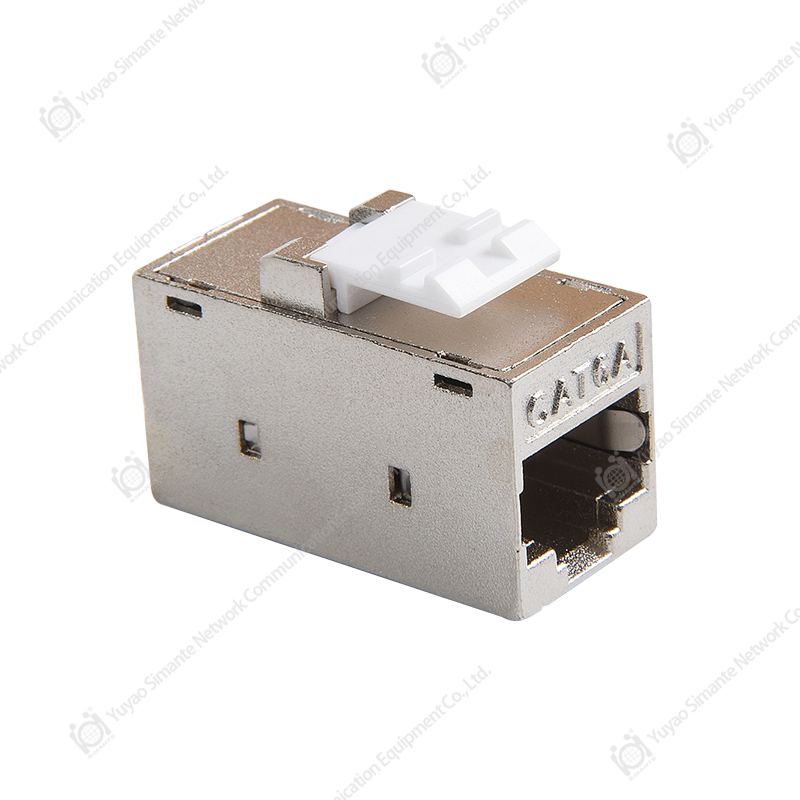
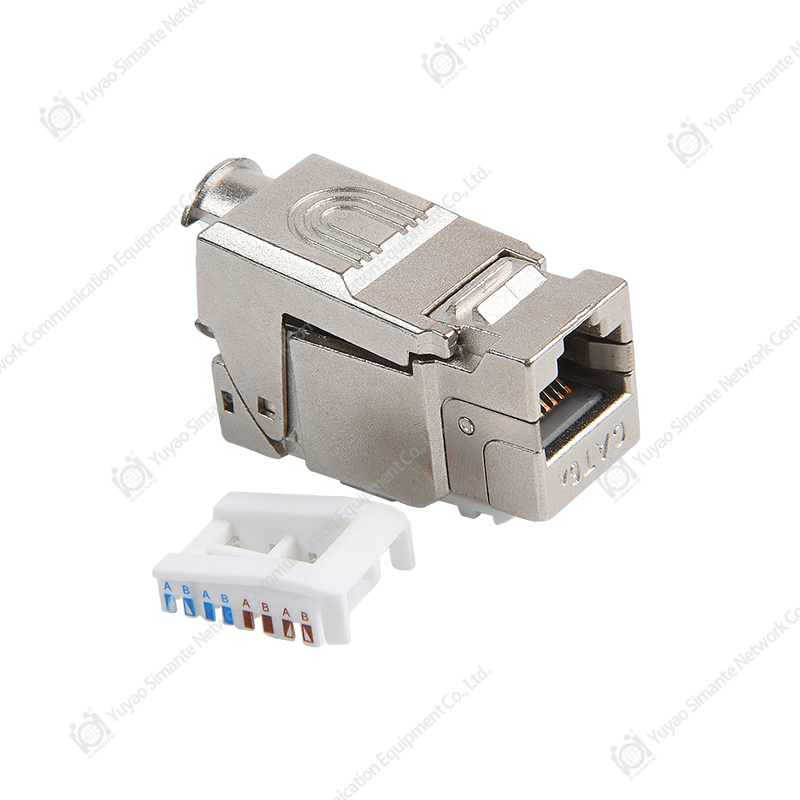
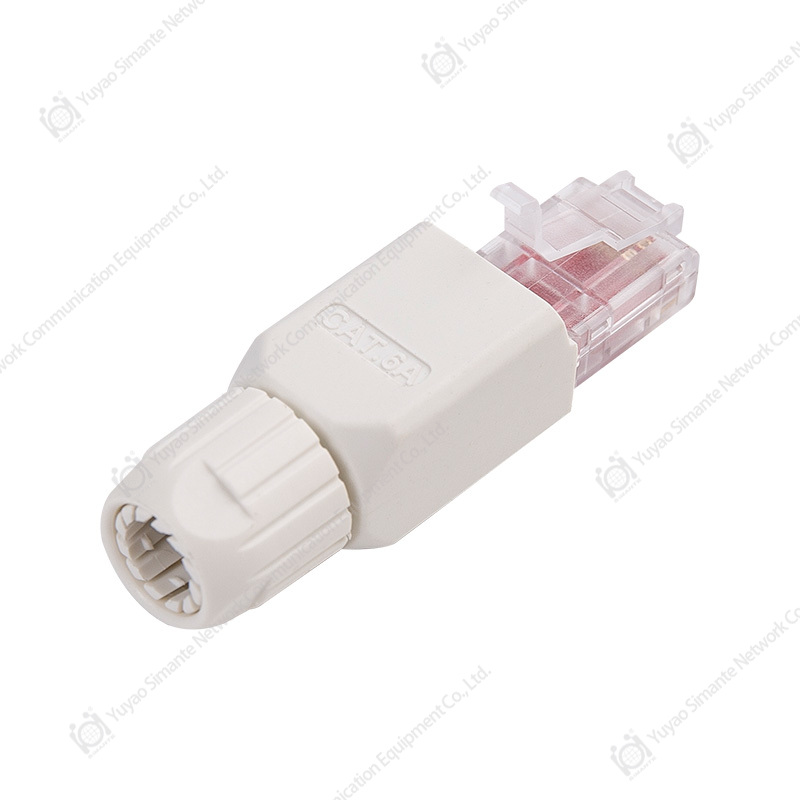
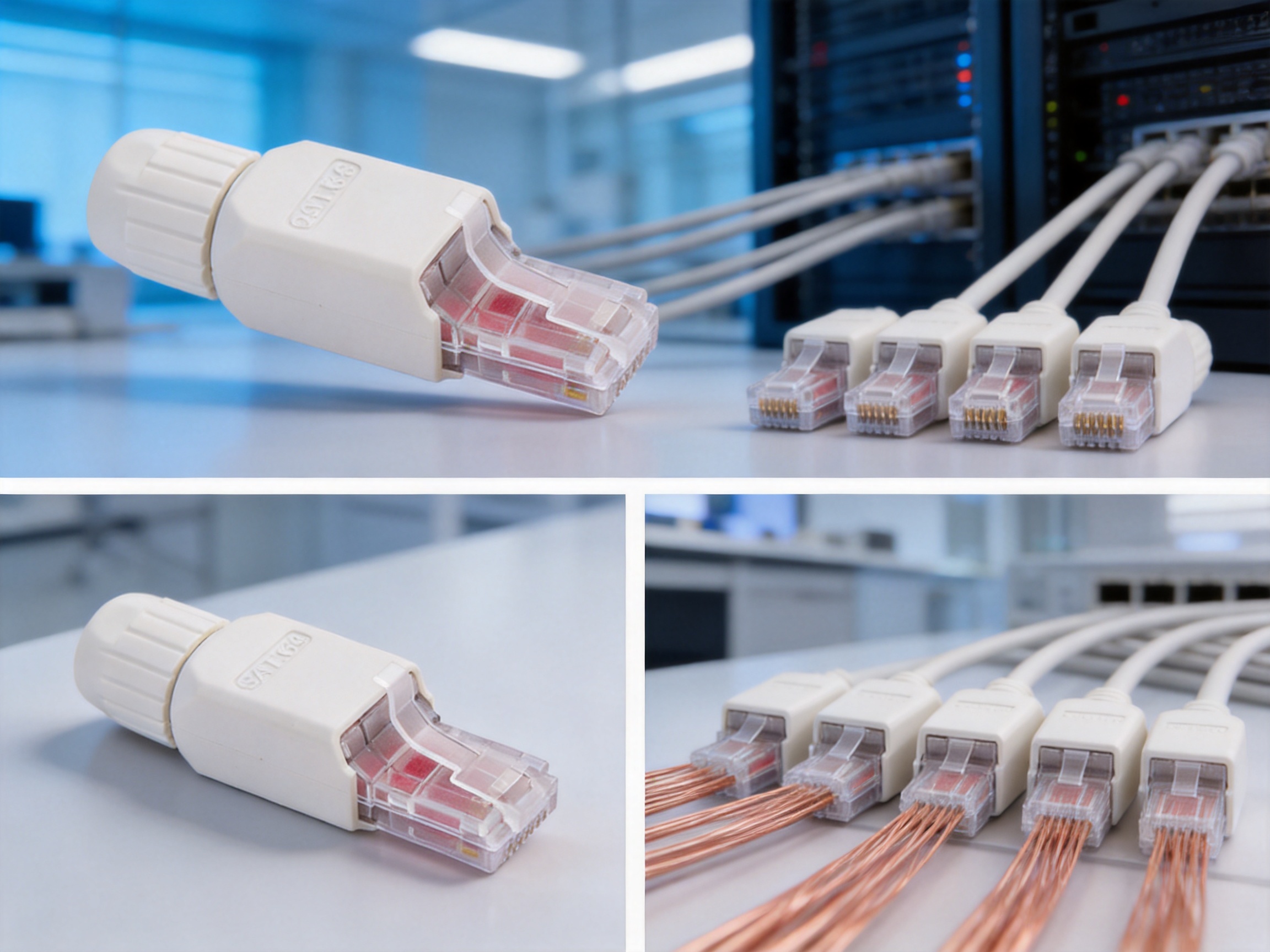
The SMT-3020T8C8 is categorized as a male connector within a product portfolio that serves both copper and fiber structured cabling systems. In practical applications, a male connector is used to establish a plug-in connection between a cable assembly and a compatible socket, jack, panel, equipment interface, or other communication component. It must be manufactured with sufficient dimensional accuracy to allow smooth insertion while maintaining firm contact during operation.
The product is identified by the model number SMT-3020T8C8. For purchasing, cataloging, and digital communication, it may also be referenced by the alias SMT3020T8C8. Maintaining a clear model identification system is important for distributors and engineering teams because network projects often include many similar-looking connector types. A precise model designation helps reduce ordering errors and simplifies inventory management.
The connector is intended for use as part of a broader structured cabling solution rather than as an isolated item. Its performance should therefore be evaluated together with the selected cable, termination method, mating interface, patching equipment, installation tools, and environmental conditions. When these elements are correctly matched, the connector can contribute to a stable and maintainable network infrastructure.
Core Product Functions
The principal function of the SMT-3020T8C8 is to provide a repeatable electrical and mechanical interface. The connector must guide the conductors into the correct positions, maintain contact pressure, prevent unwanted movement, and support reliable mating and unmating during the expected service life of the installation.
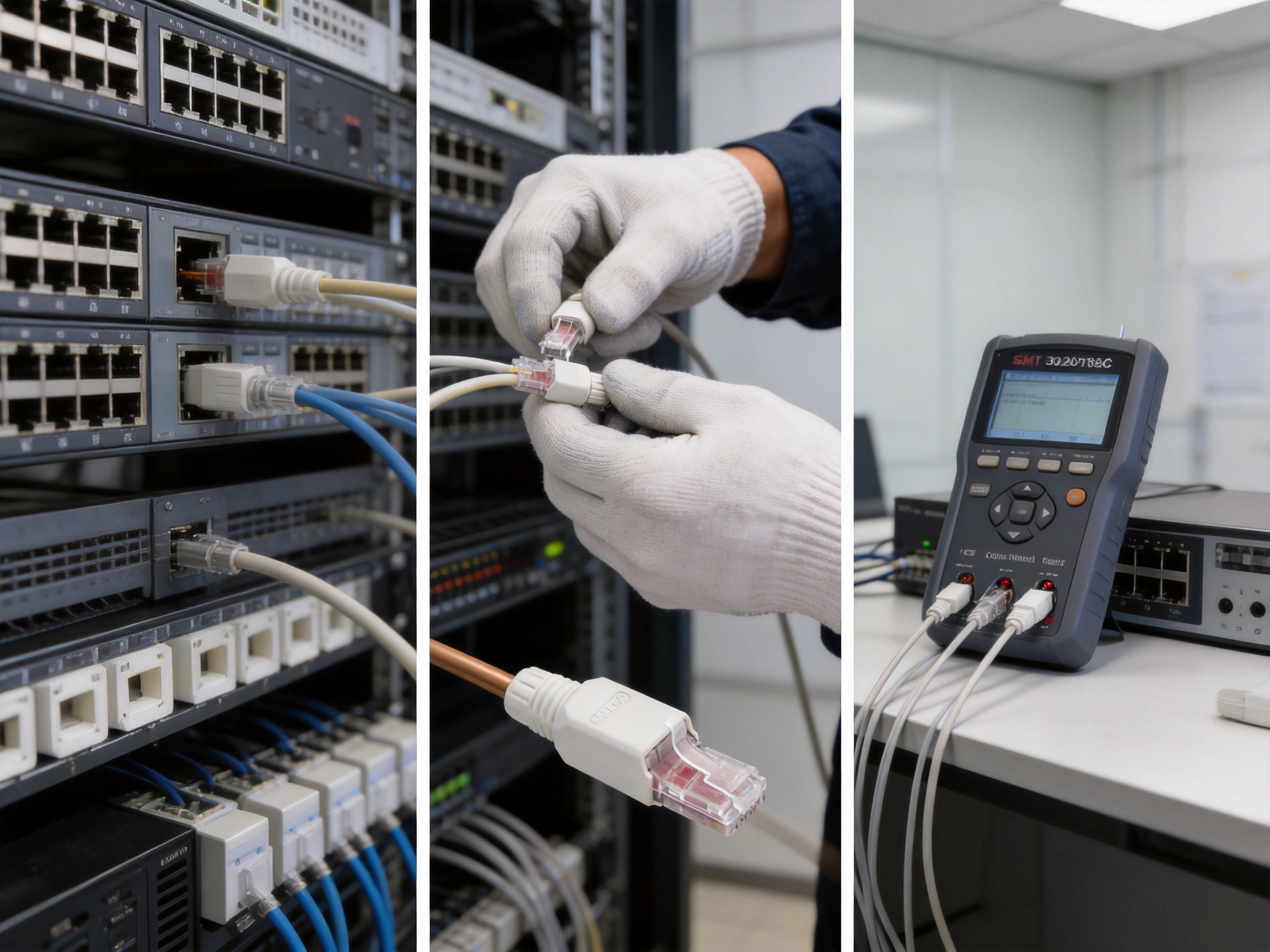
A professional connector also needs to support efficient field work. Installers may be required to complete hundreds or thousands of terminations in commercial buildings, data rooms, residential developments, manufacturing facilities, or communication cabinets. A component that is easy to handle, consistently formed, and compatible with standard installation procedures can reduce labor time and help produce more uniform results.
Another important function is system protection. The connector should help maintain the intended cable geometry and prevent excessive strain at the termination point. Correct strain management is particularly important because repeated bending, pulling, twisting, or accidental impact can gradually weaken a connection even when the initial installation appears satisfactory.
Why Connector Quality Matters in Structured Cabling
Structured cabling is a layered infrastructure. Horizontal cables, patch cords, connectors, jacks, patch panels, faceplates, cabinets, and active network equipment work together to transport data. A weakness at any connection point can affect the performance of the complete channel.
In a copper network, poor termination can increase contact resistance, create intermittent faults, produce impedance irregularities, or contribute to signal loss. Such problems may not always be immediately visible. A connection can look acceptable while still creating packet errors, reduced link speed, unstable connections, or difficult-to-diagnose performance issues.
Connector dimensions are also important. Small variations in the position of contacts, the shape of the housing, or the alignment of the mating interface can influence insertion force and connection stability. If the connector does not fit correctly, it may be difficult to install, may disengage during vibration, or may place unnecessary stress on the cable and equipment port.
For this reason, the SMT-3020T8C8 should be considered a precision network component rather than a low-value accessory. Its value comes from contributing to repeatable installation quality, reliable network operation, and reduced maintenance risk over the life of the cabling system.
Key Advantages of the SMT-3020T8C8
Stable Mechanical Connection
A dependable male connector must remain securely engaged after installation. The SMT-3020T8C8 is designed as a structured cabling component with attention to the relationship between housing geometry, contact arrangement, and mating stability. A properly formed housing helps guide the connector into the corresponding interface and reduces the possibility of misalignment.
Mechanical stability is especially valuable in areas where cables are frequently moved or where equipment is serviced regularly. Patch cabinets, office work areas, access points, industrial control environments, and communication rooms may all experience cable handling. A connector that maintains its position under normal use supports better network continuity and reduces unnecessary service calls.
Consistent Termination Results
Consistency is one of the most important differences between professional network components and poorly controlled alternatives. In a large project, the installer may use the same connector across many cable runs. If individual units vary in dimensions or assembly quality, termination results can differ from one connection to another.
Consistent molding, controlled assembly, and inspection procedures help the SMT-3020T8C8 provide a more uniform installation experience. This supports predictable insertion, repeatable cable positioning, and easier quality testing. Uniformity also assists project supervisors because fewer variations need to be investigated when testing completed links.
Support for Efficient Installation
Installation efficiency affects both project cost and system quality. When a connector is straightforward to handle and compatible with established termination workflows, installers can work more quickly without sacrificing accuracy. The SMT-3020T8C8 is suitable for professional users who require practical components for repeated field or factory assembly.
Efficient installation does not simply mean faster termination. It also means fewer rejected connections, less rework, lower material waste, and reduced interruption to other trades. In a commercial construction project, these benefits can be significant because network cabling is often installed under strict schedule and access constraints.
Appropriate for Professional Network Applications
The product is positioned for structured cabling and communication applications rather than casual, temporary use. This makes it relevant to network installers, distributors, system integrators, equipment manufacturers, and contractors that need repeatable components for professional projects.
Typical application environments may include office networks, commercial buildings, residential communication systems, equipment rooms, data communication cabinets, smart home installations, automation systems, and other locations requiring organized cable connectivity. Final application suitability should always be confirmed according to cable type, interface requirements, transmission category, installation environment, and applicable project specifications.
Integration with a Broader Product Portfolio
A supplier that provides several categories of cabling components can simplify procurement and system coordination. Yuyao Simante Network Communication Equipment Co., Ltd. produces products including keystone jacks, patch panels, wall face plates, data sockets, and other network communication components. This broader portfolio can help customers source related items from one experienced manufacturer.
Single-source or coordinated sourcing may reduce communication gaps between component suppliers. It can also make it easier to align product dimensions, packaging, quality documentation, color requirements, labeling, and delivery schedules. For distributors, a broader range can improve catalog organization and support complete solution sales rather than individual product transactions.
Comparison with Lower-Quality Alternatives
Many connectors appear similar when viewed from a distance, but differences in manufacturing control can become apparent during installation and operation. Lower-quality alternatives may use inconsistent plastic molding, less accurate contact positioning, weak strain support, or insufficient inspection. These deficiencies can create problems that are expensive to correct after the product has been installed.
One common weakness is dimensional inconsistency. If the connector housing is not accurately formed, mating force may vary significantly between units. Some pieces may be too tight, while others may fit loosely. Excessive insertion force can damage ports or make installation inconvenient. Insufficient retention can result in accidental disconnection or unreliable contact.
Another concern is poor material control. The housing material must be suitable for the intended operating conditions and production process. Inconsistent resin quality can affect molding stability, surface finish, strength, and dimensional retention. A manufacturer with controlled material sourcing and experienced injection molding operations is better positioned to maintain repeatable results.
Assembly quality also separates professional products from low-cost substitutes. Contacts and internal parts must be positioned correctly, and the completed connector should be inspected for defects such as deformation, contamination, incomplete molding, burrs, or misalignment. Even small defects can affect installation or service performance.
The SMT-3020T8C8 benefits from being produced by a company with dedicated engineering, technical, molding, and automatic assembly resources. Its advantages over uncontrolled alternatives therefore relate not only to the product design but also to the production system supporting that design.
| Evaluation Factor | SMT-3020T8C8 Approach | Potential Risk with Uncontrolled Alternatives |
|---|---|---|
| Dimensional consistency | Supported by established molding and inspection processes | Variable fit, insertion force, or retention |
| Installation efficiency | Designed for professional structured cabling workflows | More rework and longer termination time |
| Product identification | Clear model number and catalog alias | Ordering confusion among similar products |
| Manufacturing support | Engineering, technical, molding, and assembly resources | Limited process control and inconsistent batches |
| Project supply | Available from a manufacturer with a wider cabling portfolio | Need to coordinate several unrelated suppliers |
| Customization capability | OEM and ODM project experience | Limited ability to adapt packaging or specifications |
| Quality assurance | Performance testing and production management | Higher risk of undetected defects |
Manufacturing Strengths Behind the Product
Experienced Network Component Manufacturer
Yuyao Simante Network Communication Equipment Co., Ltd. has nearly 20 years of service experience in network cabling solutions and optical fiber products. Long-term participation in the communication equipment industry provides practical knowledge of product development, customer requirements, manufacturing challenges, and international supply expectations.
Experience is valuable because network components must satisfy several requirements at the same time. They need to be functional, dimensionally accurate, reasonably efficient to install, suitable for volume production, and adaptable to different project conditions. A manufacturer that has served customers over many years is more likely to have established processes for addressing these interconnected requirements.
Design and Development Capability
The company integrates design, development, sales, and service. This integrated structure can shorten communication between product engineering and customer-facing teams. It also allows information from field applications and customer feedback to be considered during product updates.
Product development is not limited to creating a housing or assembling a component. It involves reviewing the intended application, selecting suitable materials, defining dimensions, evaluating assembly methods, preparing tooling, organizing inspections, and confirming that the finished product can be produced consistently. An integrated manufacturer can manage these stages with greater coordination.
Engineering and Technical Personnel
The company has more than 10 engineers and over 30 full-time technical personnel. This technical foundation supports product development, production improvement, equipment operation, quality management, and manufacturing problem solving.
Technical staffing is particularly important for products made through injection molding and automatic assembly. Production conditions must be monitored and adjusted to control dimensional accuracy, appearance, cycle stability, and assembly performance. Experienced technical personnel can identify process variation earlier and help prevent recurring defects.
Injection Molding Resources
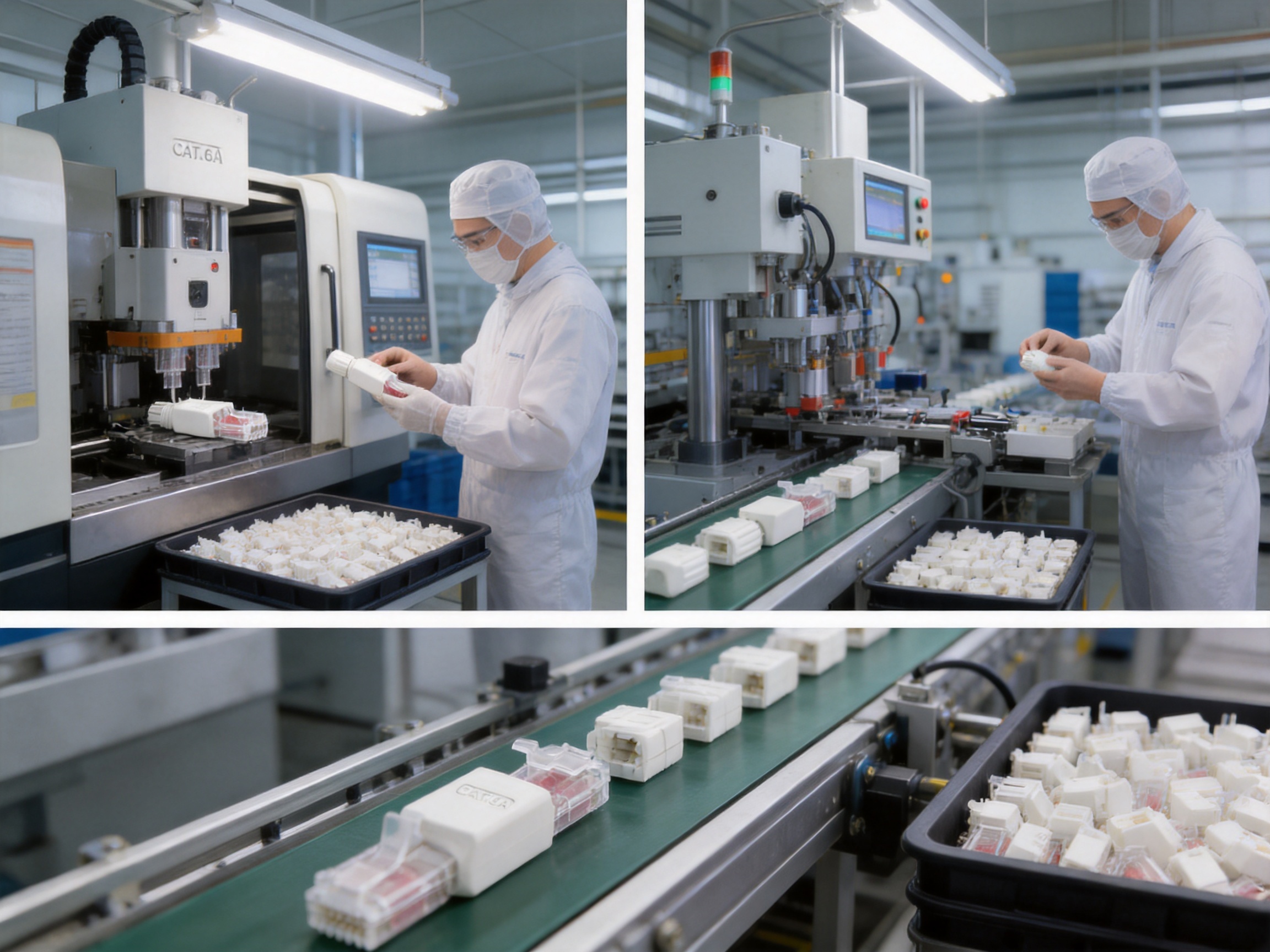
The factory operates fully automatic and semi-automatic injection molding equipment. It has 10 fully automatic injection molding machines and 20 semi-automatic injection molding machines. These resources provide flexibility for both higher-volume production and product ranges requiring different processing arrangements.
Injection molding is a critical process for connector housings. Mold design, temperature control, pressure, cooling, material flow, and cycle time all influence the final result. A stable process helps maintain the geometry required for accurate mating and consistent assembly.
Equipment capacity also supports production planning. Different models, colors, materials, and customer orders can be scheduled according to their volume and technical requirements. This is useful for standard products such as the SMT-3020T8C8 as well as for customized OEM and ODM projects.
Automatic Assembly Equipment
The factory has eight automatic installation machines in addition to its molding resources. Automated or semi-automated assembly can improve repeatability by controlling the positioning and installation of small components. It can also reduce variation caused by manual handling during high-volume production.
Automation does not eliminate the need for skilled personnel. Instead, it combines equipment capability with technical supervision, process setup, inspection, maintenance, and corrective action. When properly managed, automated assembly supports higher consistency and more stable output.
Production Capacity
The factory maintains an annual output of more than 9 million units across its production activities. This capacity is important for customers who require continuity of supply, scheduled deliveries, or support for large network infrastructure projects.
Production capacity should not be confused with quality by itself. High output is valuable only when supported by effective planning, process control, inspection, and traceability. The combination of multiple production lines, technical staff, molding equipment, automatic installation equipment, and quality procedures gives the manufacturer a foundation for supplying significant quantities while maintaining product consistency.
Quality Control and Performance Testing
Quality control begins before production. Product design, material selection, mold preparation, assembly planning, and work instructions all influence the condition of the final connector. By addressing quality at the design source, manufacturers can reduce the chance that defects will be introduced later in the process.
For the SMT-3020T8C8, relevant quality considerations include housing dimensions, contact position, surface condition, assembly completeness, mating behavior, retention, and visual appearance. Depending on the project, customers may also require specific electrical or mechanical tests. Test requirements should be agreed upon during technical communication and confirmed against the applicable cabling standards or customer specifications.
Incoming Material Management
Material quality affects molding and assembly performance. Incoming materials should be checked according to internal procedures before they are released to production. This may include verifying material identity, packaging condition, batch information, and other requirements relevant to the product.
Controlled material handling helps reduce variation between production batches. It also supports more reliable investigation if a question arises later about a particular shipment or manufacturing lot.
Process Inspection
Process inspection provides feedback while production is taking place. Instead of relying only on final inspection, manufacturers can monitor key points during molding, assembly, and packing. Early detection makes it easier to correct machine settings, replace worn tooling, or address operator and equipment issues.
For precision connectors, process inspection may focus on dimensions, alignment, component presence, molding integrity, and assembly position. The exact inspection plan depends on product design and customer requirements, but the general goal is the same: prevent variation from moving through the production process.
Final Inspection
Final inspection provides a last verification before shipment. It may include visual checks, dimensional sampling, functional evaluation, packaging review, and order confirmation. Final inspection is particularly important for export orders because the product may travel long distances and pass through several distribution stages before reaching the installer.
Good packaging protects connectors from dust, impact, moisture, and deformation during storage and transportation. Clear labeling helps customers identify the model, quantity, batch information, and other details needed for warehouse control.
Applications in Modern Cabling Projects
Commercial Buildings
Office buildings require structured cabling that can support computers, telephones, wireless access points, printers, security devices, and building management systems. A reliable male connector can be used in patching and equipment connection areas where repeated access and organized cable management are important.
Commercial installations often involve large quantities and strict documentation. The use of a clearly identified, consistently manufactured connector can simplify procurement and help installers maintain uniform work practices across floors or buildings.
Data and Communication Rooms
Communication rooms contain dense concentrations of patch panels, switches, servers, cable managers, and power equipment. Space is often limited, and technicians may need to connect or disconnect cables during maintenance. Components used in these environments should support stable mating and orderly cable routing.
The SMT-3020T8C8 can form part of a planned copper cabling assembly in cabinets and racks. Its suitability depends on the complete channel design, including cable category, patching hardware, equipment interfaces, and the performance requirements specified by the project.
Residential and Smart Home Systems
Modern homes increasingly include data networks, wireless access points, surveillance devices, entertainment systems, automation controls, and centralized communication equipment. Structured cabling makes these systems easier to manage and upgrade.
A professional connector can support neat and dependable connections in residential distribution boxes, wall outlets, and equipment locations. The same principles apply as in commercial projects: correct compatibility, careful installation, strain management, and testing are essential.
Automation and Industrial Equipment
Automation systems use communication networks to connect controllers, sensors, monitoring devices, and machines. These environments may expose connectors to vibration, repeated maintenance, dust, temperature changes, or electromagnetic interference. The connector should therefore be selected according to the equipment design and environmental conditions.
The SMT-3020T8C8 may be considered for suitable communication assemblies where its mechanical and electrical characteristics match the application. For harsh industrial environments, engineers should verify enclosure protection, temperature range, vibration requirements, shielding needs, and relevant industry standards before approval.
OEM and ODM Equipment
Equipment manufacturers often need network connectors that can be incorporated into their own products or sold under a private label. The supplying factory’s OEM and ODM experience can support requests involving packaging, labeling, color, product configuration, documentation, production volume, or other project-specific requirements.
OEM and ODM projects require early technical communication. Customers should provide drawings, target quantities, application details, quality standards, packaging expectations, and delivery schedules. The manufacturer can then evaluate tooling, production, testing, and documentation requirements.
Installation and Handling Recommendations
Confirm Compatibility Before Installation
Before using the SMT-3020T8C8, installers should confirm that the connector matches the intended cable and mating interface. Compatibility should include conductor arrangement, cable diameter, cable construction, transmission requirements, and the design of the corresponding socket or equipment port.
Visual similarity is not sufficient to establish compatibility. Two connectors may have comparable external shapes while differing in internal arrangement, conductor support, contact design, or performance category. Technical data and project documentation should always take priority over appearance.
Prepare the Cable Carefully
Cable preparation should follow the recommended stripping length, conductor arrangement, and termination procedure. Excessive removal of the outer jacket can reduce strain support and expose the conductors unnecessarily. Excessive untwisting can also affect the intended electrical performance of twisted-pair cable.
Installers should use suitable tools and keep the cable end clean. Damaged conductors, uneven trimming, contamination, or incorrect sequencing can result in poor termination even when the connector itself is manufactured correctly.
Control Cable Bend and Pulling Force
During installation, the cable should not be sharply bent near the connector. A smooth bend radius helps protect the conductors and reduces mechanical stress on the termination. Pulling force should be applied to the cable in accordance with the cable manufacturer’s recommendations rather than to the connector or its small retention features.
After termination, cable routing should prevent the connector from carrying the weight of unsupported cable. Cable management accessories can help keep connections organized and reduce long-term stress.
Test Completed Connections
Every completed link should be tested using equipment appropriate to the project requirement. Basic continuity testing can identify open circuits, short circuits, reversed conductors, or incorrect wiring. More advanced certification testing may be needed for higher-performance structured cabling systems.
Testing should be performed after installation and again after significant changes to patching or equipment. Test records provide useful evidence of installation quality and can simplify future troubleshooting.
Procurement and Project Selection
When selecting the SMT-3020T8C8 for a project, purchasing teams should review more than the unit price. Total value includes manufacturing consistency, installation labor, failure risk, delivery reliability, technical support, packaging, and the supplier’s ability to provide related components.
Important procurement questions include the required quantity, target delivery date, packaging format, labeling requirements, cable compatibility, test documentation, applicable standards, and whether the product is intended for a standard or customized project. Buyers should also clarify whether samples are available for evaluation before placing a large order.
For distribution customers, model identification and inventory continuity are especially important. The product name and alias should be recorded consistently in enterprise resource planning systems, catalogs, quotations, purchase orders, and warehouse labels. Clear product records reduce the risk of mixing similar items.
For contractors and system integrators, it is useful to evaluate the connector together with the rest of the structured cabling system. If the project includes jacks, patch panels, faceplates, and data sockets, sourcing coordinated components may simplify documentation and support.
Supplier Service and International Support
Yuyao Simante Network Communication Equipment Co., Ltd. serves customers in Europe, Australia, Africa, the Middle East, and Southeast Asia. Experience in international markets requires attention to communication, documentation, packaging, production scheduling, export procedures, and customer service.
International customers may have different expectations concerning labeling, carton specifications, inspection procedures, product colors, technical files, and delivery terms. A manufacturer familiar with export business can help clarify these requirements during the quotation and order stages.
The company also undertakes OEM and ODM projects. This is useful for customers who need products adapted to a particular brand strategy, application, market, or equipment design. Custom work may involve changes to appearance, packaging, identification, tooling, production quantity, or documentation. Technical feasibility and commercial conditions should be confirmed before development begins.
Direct communication with the supplier can help customers obtain product information, project support, and order coordination. The company’s listed contact information includes the email address ting@smartyy.com and telephone numbers +86-13958305758 and +86-574-62495827.
Environmental and Operational Considerations
Network components may be installed in a wide range of locations. Indoor office environments are generally more controlled than industrial rooms, outdoor cabinets, transportation facilities, or construction areas. The selected connector should be evaluated according to the actual conditions of use.
Relevant factors can include temperature, humidity, dust, vibration, ultraviolet exposure, chemical contact, cable movement, and the frequency of maintenance access. If the connector is to be used in a demanding environment, the complete assembly may require additional protection such as an enclosure, strain relief, sealing system, or environmental-rated housing.
Storage conditions are also important. Connectors should be kept in clean, dry areas and protected from crushing, excessive heat, direct sunlight, and contamination. Proper warehouse rotation and packaging control help preserve product condition before installation.
Responsible manufacturing also includes efficient use of materials, reduction of production waste, preventive maintenance, and stable process control. A well-organized factory can improve resource efficiency while maintaining the output required by customers.
Technical Communication for Customized Projects
Customization should be based on clear technical information. Customers requesting a modified version of the SMT-3020T8C8 or a related connector should provide application drawings, mating component information, cable specifications, operating environment, required quantity, quality expectations, and target delivery schedule.
Useful information may include connector dimensions, locking or retention requirements, color, material preferences, contact configuration, labeling, packaging, and testing requirements. If the product will be incorporated into an assembled cable or equipment product, customers should also provide assembly details and expected mechanical loads.
The manufacturer can then assess whether the request can be fulfilled using an existing platform, modified tooling, or a new design. Existing production resources may shorten development time when the requested product shares materials, equipment, or processes with established products.
Prototype approval is recommended before mass production. Samples allow the customer to evaluate fit, cable preparation, assembly procedure, equipment compatibility, appearance, and performance. Any changes should be documented before production release.
Maintenance and Lifecycle Value
A connector’s lifecycle value includes the period from procurement through installation, operation, maintenance, and replacement. A low-cost connector that causes repeated faults or rework may create higher total expenses than a more consistently manufactured product.
The SMT-3020T8C8 can support lifecycle value by contributing to repeatable installation and stable network connections. Clear model identification can simplify future replacement, while a manufacturer with a wider product range may help customers maintain consistent components across network expansions.
During maintenance, technicians should avoid unnecessary bending, twisting, or pulling. Connections should be inspected if a cable has been crushed, sharply bent, exposed to abnormal force, or repeatedly disconnected. Damaged connectors should be replaced rather than returned to service without evaluation.
Network documentation should record cable routes, termination locations, equipment connections, test results, and product references. Good documentation reduces troubleshooting time and helps ensure that replacement components are correctly selected.
Why the SMT-3020T8C8 Is a Practical Choice
The SMT-3020T8C8 combines the practical requirements of a professional male connector with the manufacturing resources of an experienced network component supplier. Its value is based on more than its function as a plug-in interface. It is supported by design capability, molding capacity, automatic installation equipment, technical personnel, quality management, international supply experience, and OEM and ODM service.
Compared with poorly controlled alternatives, a professionally manufactured connector can provide more predictable dimensions, more consistent installation behavior, better project coordination, and lower risk of rework. These advantages become increasingly important as cabling systems grow in scale and as network performance requirements become more demanding.
The product is suitable for customers seeking a dependable connector for copper structured cabling applications and related communication assemblies. Final selection should always consider the complete system and the requirements of the intended application. When correctly matched, installed, tested, and maintained, the SMT-3020T8C8 can serve as a reliable connection component in commercial, residential, automation, and equipment-level network projects.
Frequently Asked Questions
What is the SMT-3020T8C8?
The SMT-3020T8C8 is a male connector identified by the model number SMT-3020T8C8. It is intended for use in network communication and structured cabling applications. The model may also be listed under the alias SMT3020T8C8.
Who manufactures the product?
The product is manufactured by Yuyao Simante Network Communication Equipment Co., Ltd., a Chinese manufacturer of network cabling solutions and optical fiber products.
What types of projects can use this connector?
Potential applications include structured cabling, commercial networks, communication rooms, residential data systems, smart home installations, automation equipment, and OEM or ODM communication assemblies. Compatibility must be confirmed for each specific project.
Does the connector work with every network cable?
No. Connector selection depends on cable construction, conductor arrangement, cable diameter, transmission requirements, and the mating interface. Customers should confirm technical compatibility before ordering or installation.
Why is manufacturing consistency important?
Consistent dimensions and assembly quality help provide predictable insertion, retention, cable positioning, and termination results. In large projects, consistency can reduce rework and simplify testing.
What manufacturing equipment supports production?
The factory operates fully automatic and semi-automatic injection molding machines, automatic installation equipment, and multiple production lines. It also has engineering and technical personnel supporting production and quality improvement.
Can the manufacturer support OEM and ODM orders?
Yes. The company undertakes OEM and ODM projects. Customers should provide application details, drawings, quantities, packaging requirements, and other technical information for evaluation.
How should the connector be installed?
Installers should follow the appropriate termination procedure, prepare the cable carefully, maintain conductor arrangement, avoid excessive untwisting, control bend radius, prevent strain on the connector, and test the completed connection.
What testing should be performed after installation?
At minimum, the completed connection should be checked for continuity and correct wiring. Projects with higher performance requirements may require certification testing using equipment suitable for the specified cabling category and standard.
Can customers request samples?
Sample evaluation is recommended for projects with special cable types, custom requirements, or large quantities. Customers should contact the manufacturer to confirm sample availability, specifications, and evaluation arrangements.
What information should be included in a quotation request?
A quotation request should include the model number, required quantity, delivery location, target schedule, cable and interface information, packaging requirements, labeling needs, testing expectations, and whether OEM or ODM customization is required.
How can customers contact the manufacturer?
Customers may contact the manufacturer by email at ting@smartyy.com or by telephone at +86-13958305758 and +86-574-62495827. The company address is No. 2, Fumin Road, Moushan Town, Yuyao, Ningbo City, Zhejiang, China.
Conclusion
The SMT-3020T8C8 male connector is a practical component for professional network communication and structured cabling systems. Its importance lies in providing a stable, repeatable interface that supports the performance of the complete cable channel. Accurate molding, controlled assembly, appropriate material management, and effective inspection all contribute to the reliability expected from a professional connector.
Manufactured by Yuyao Simante Network Communication Equipment Co., Ltd., the product is supported by nearly two decades of industry experience, a dedicated engineering and technical team, multiple injection molding machines, automatic installation equipment, substantial annual production capacity, international export experience, and OEM and ODM capabilities.
For distributors, contractors, installers, system integrators, and equipment manufacturers, the SMT-3020T8C8 offers a useful combination of product consistency, manufacturing support, supply capability, and application flexibility. By selecting the correct cable and mating interface, following proper installation procedures, testing completed links, and maintaining clear product documentation, customers can use this connector as part of a dependable and scalable cabling solution.
References
1. Manufacturer-provided product information for the SMT-3020T8C8 male connector.
2. Manufacturer-provided company information for Yuyao Simante Network Communication Equipment Co., Ltd.
3. General principles of structured cabling design, installation, testing, and administration.
4. General engineering practices for injection molding, automatic assembly, dimensional inspection, and production quality control.
5. General installation practices for copper network cabling, cable termination, strain management, and connectivity testing.