Español
 عربى
 русский
Content
- 1 1. The Role of a Faceplate in Structured Cabling
- 2 2. Product Overview: SMT-4326AP-86-4P
- 3 3. Main Advantages of a Four-Port Configuration
- 4 4. Compatibility with Copper and Fiber Cabling Systems
- 5 5. Mechanical Design Considerations
- 6 6. Manufacturing Process and Quality Control
- 7 7. Manufacturing Capacity and Supply Reliability
- 8 8. Advantages Over Generic Competing Faceplates
- 9 9. Installation Guidance
- 10 10. Applications Across Different Environments
- 11 11. Purchasing and Specification Checklist
- 12 12. Packaging, Logistics, and Project Coordination
- 13 13. Sustainability and Lifecycle Value
- 14 14. Maintenance and Replacement
- 15 15. Why Manufacturer Experience Matters
- 16 16. OEM and ODM Opportunities
- 17 17. Frequently Asked Questions
- 17.1 Q1: What is an 86-type faceplate?
- 17.2 Q2: How many connections can the SMT-4326AP-86-4P support?
- 17.3 Q3: Can all four ports be used for data?
- 17.4 Q4: Can copper and fiber modules be used on the same faceplate?
- 17.5 Q5: Is the faceplate suitable for indoor office use?
- 17.6 Q6: Why choose four ports instead of one or two?
- 17.7 Q7: Does the faceplate itself determine network speed?
- 17.8 Q8: What should be checked before ordering?
- 17.9 Q9: Can the product be used in an OEM project?
- 17.10 Q10: How should the installed outlet be tested?
- 17.11 Q11: What causes a faceplate to look uneven after installation?
- 17.12 Q12: Why is manufacturing capacity important for a standard faceplate?
- 18 18. Conclusion
- 19 References
- 20 Product: SMT-4326AP-86-4P 86 type 4 port face plate
Modern buildings depend on reliable communications infrastructure. Offices, educational facilities, healthcare environments, hotels, retail stores, residential developments, and industrial sites all require organized points for data, voice, security, automation, and multimedia services. Although active equipment such as switches, routers, wireless access points, and servers receives much of the attention, the passive cabling infrastructure determines how efficiently those systems can be installed, maintained, and expanded.
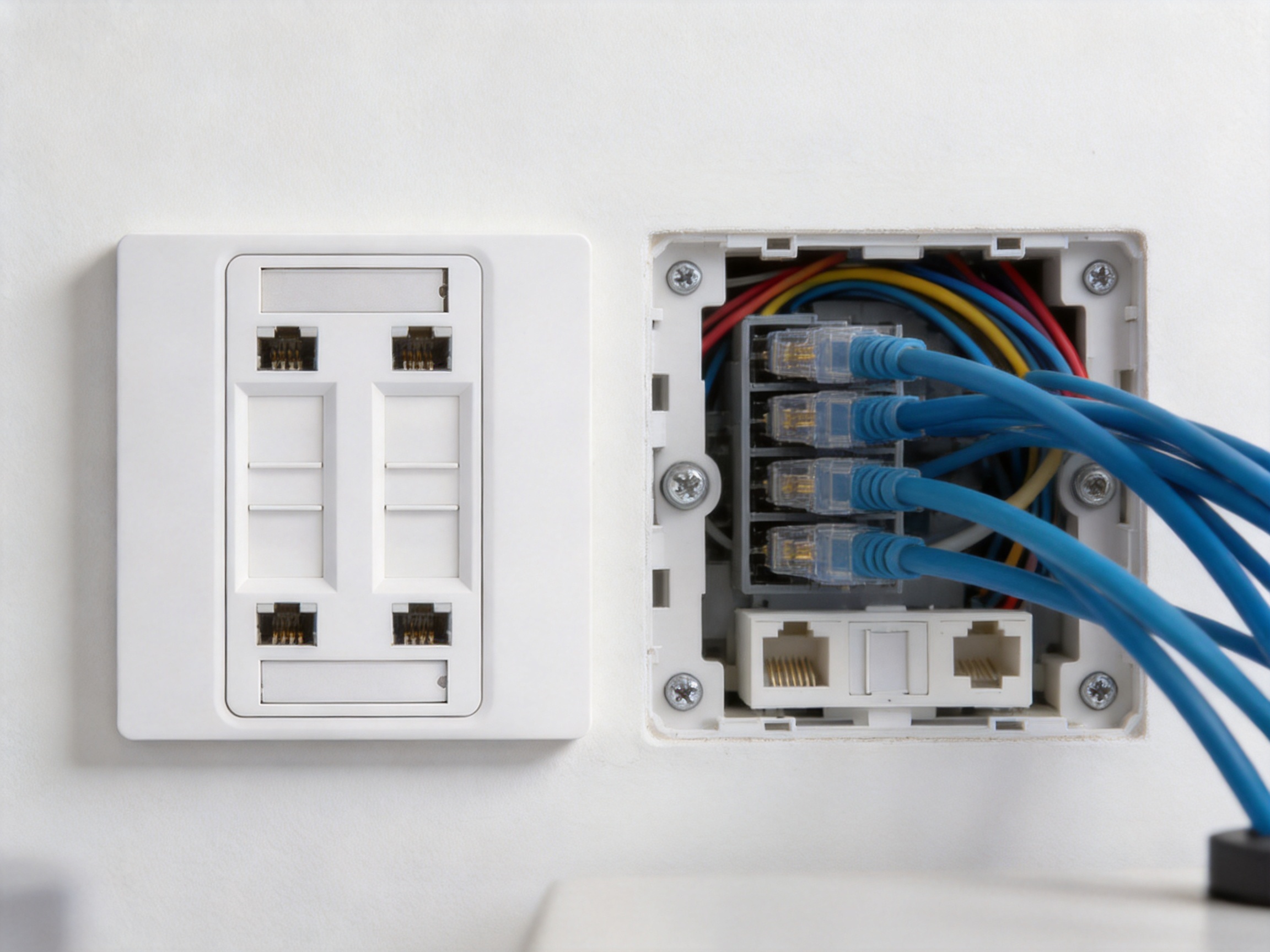
A wall faceplate is a small but important part of that infrastructure. It provides the visible connection point between horizontal cabling and user equipment while protecting and organizing modular network outlets. The SMT-4326AP-86-4P 86 type 4 port face plate is designed for installations that require multiple connections in a compact wall-mounted format. With four ports, an 86-type footprint, compatibility with modular connection components, and a clean professional appearance, it supports practical deployment in copper and fiber structured cabling systems.
This article examines the design, application value, manufacturing strengths, installation considerations, and purchasing advantages of a four-port 86-type faceplate. It also explains why a well-designed faceplate can improve cabling consistency, simplify future expansion, and deliver better long-term value than low-cost products with inconsistent dimensions or weak mechanical performance.
1. The Role of a Faceplate in Structured Cabling
Structured cabling is built around predictable organization. A complete system commonly includes equipment racks, patch panels, horizontal cables, work-area outlets, wall boxes, cable managers, and modular connection hardware. Each component has a different role, but all must work together mechanically and electrically.
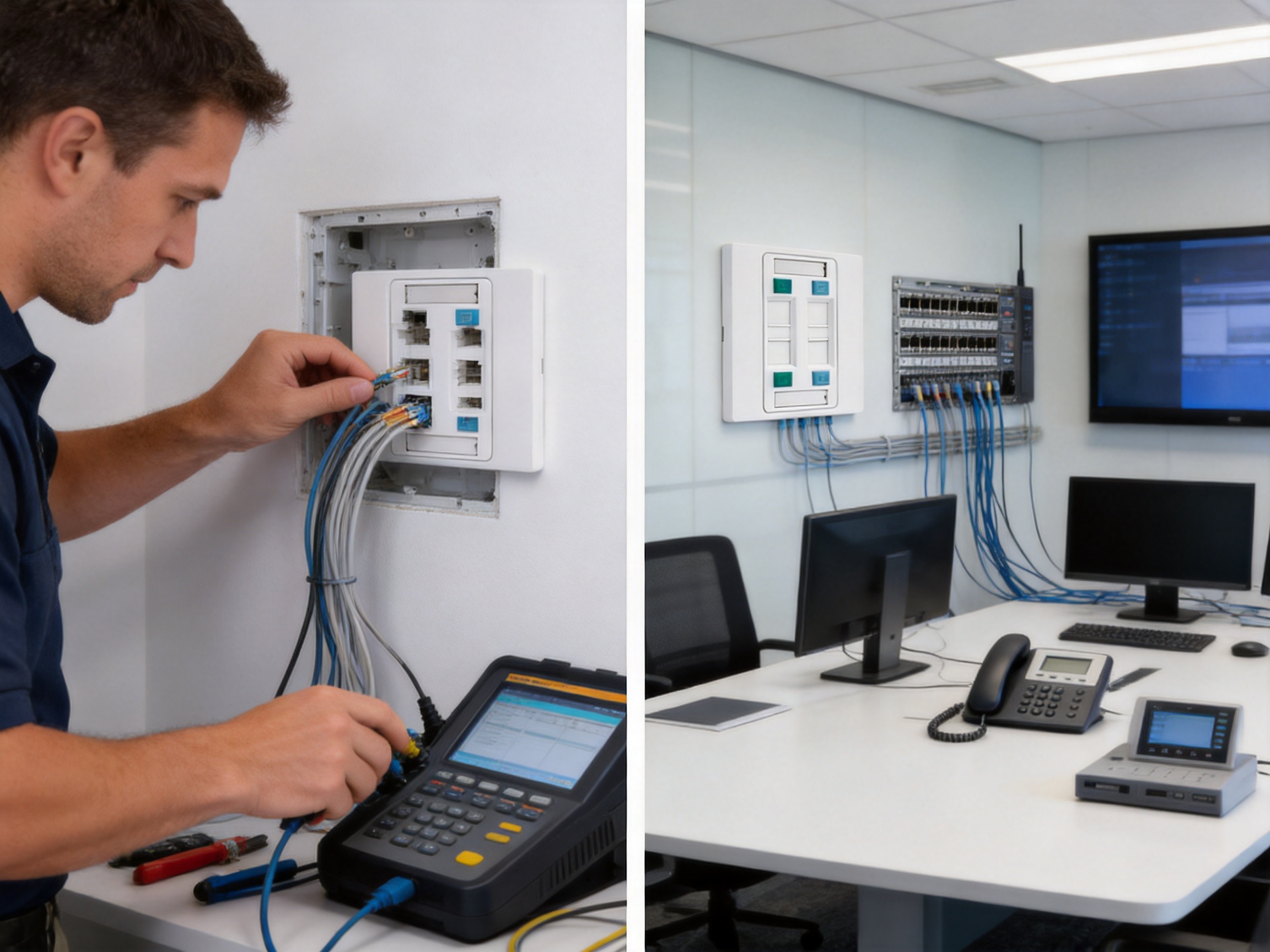
The faceplate is installed at the user end of the permanent link. It covers the wall opening, supports one or more modular outlets, and presents a neat interface for patch cords or equipment cables. In a typical office, the faceplate may serve computers, IP phones, printers, wireless access points, conference systems, or building management equipment. In a residence, it may be used for network, telephone, television, or smart-home connections.
A faceplate also provides protection. Without a suitable cover, the wall box and termination area may be exposed to dust, impact, accidental pulling, and physical damage. A properly fitted faceplate helps keep the connection modules aligned and reduces the chance that users will handle the termination directly.
The number of ports is an important design decision. A single-port outlet may be suitable for a simple room, but it can become restrictive when a user needs separate voice and data services, multiple network devices, or future expansion. A four-port configuration provides additional capacity without requiring a large multi-gang installation.
2. Product Overview: SMT-4326AP-86-4P
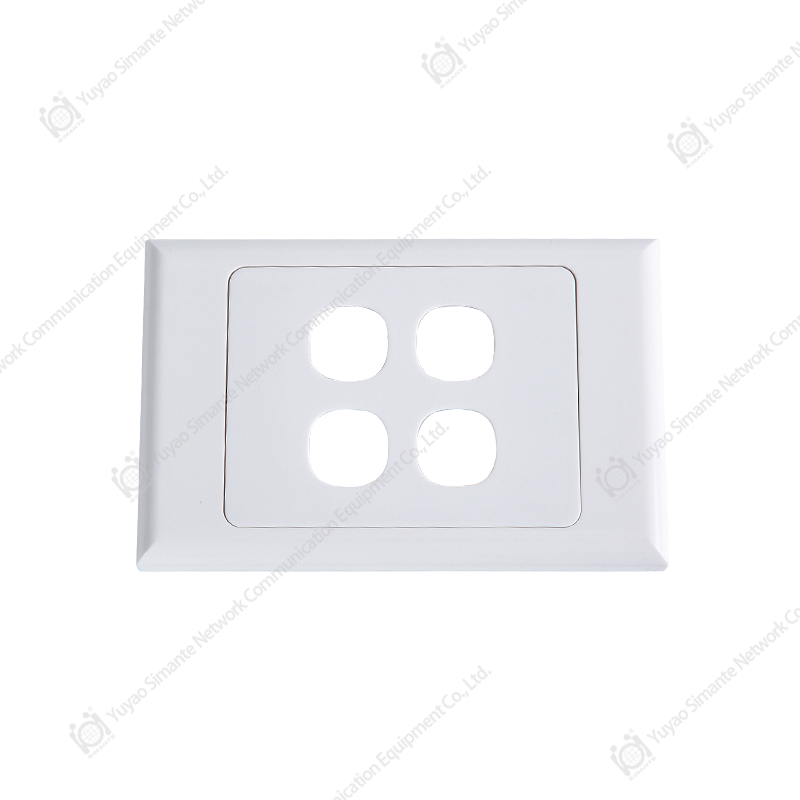
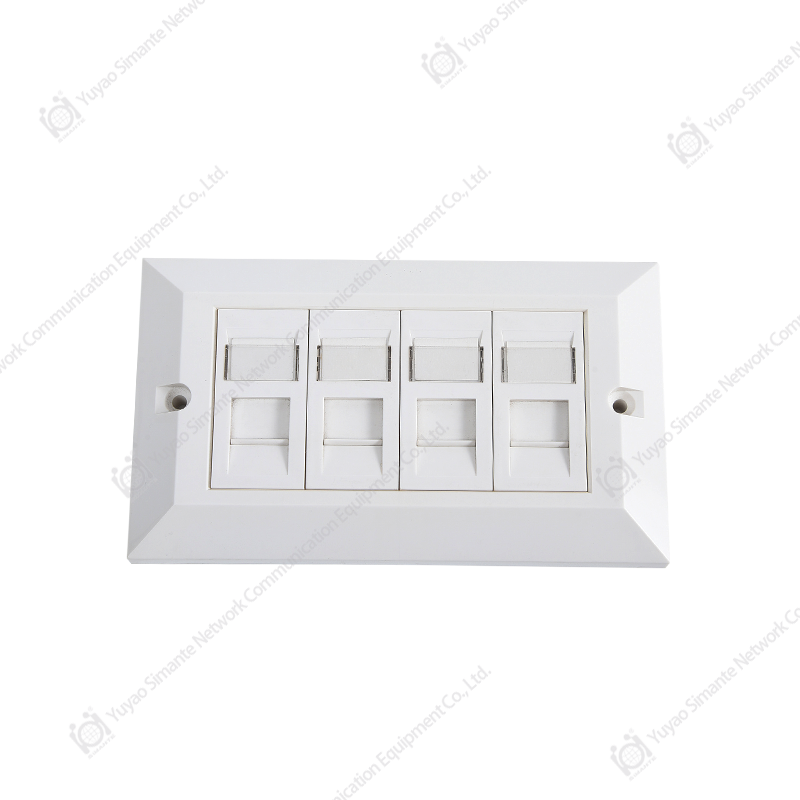
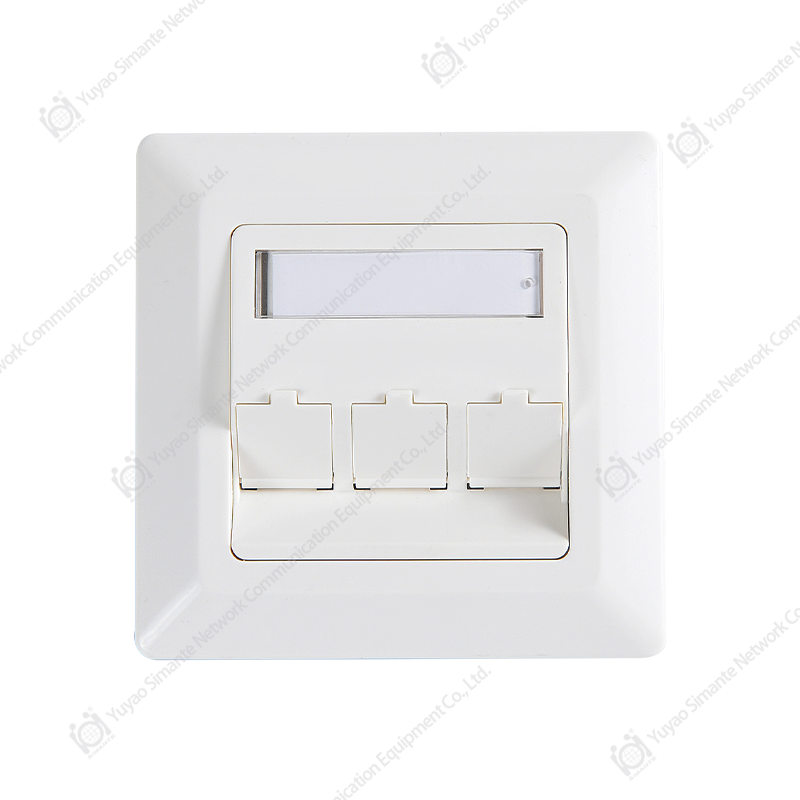
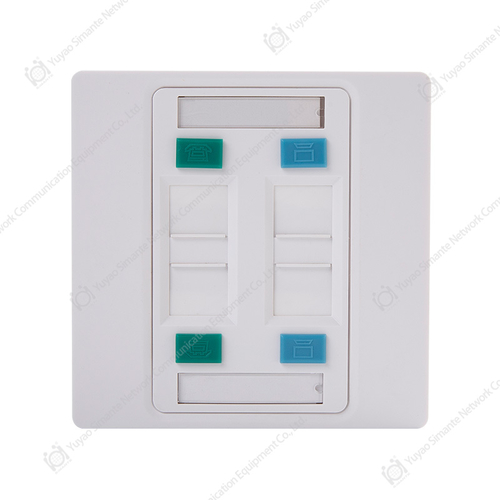
The SMT-4326AP-86-4P is an 86-type four-port faceplate designed for structured cabling applications. Its product category is a 4 Port Faceplate, and its four modular positions allow installers to create a compact outlet serving several communication functions.
The 86-type format is widely used in wall-mounted electrical and communication installations. The designation generally refers to the nominal square form associated with common wall boxes and mounting arrangements. For an installer, this standardized format can simplify project planning because it fits familiar installation practices and avoids the need for unusual wall preparation.
The faceplate is particularly suitable for copper and fiber system components when used with compatible modular outlets. Depending on the selected inserts, the same faceplate concept can support data outlets, telephone modules, fiber adapters, audio or other low-voltage communication interfaces. The flexibility comes from separating the outer plate from the internal connection modules.
Its four-port arrangement offers a balance between capacity and space efficiency. Compared with a single- or dual-port faceplate, it provides more service points at one location. Compared with a larger custom wall assembly, it can reduce visual clutter and simplify installation in environments where wall space is limited.
The faceplate is intended for professional network cabling, smart-home installations, communication rooms, commercial interiors, and other projects where consistent appearance and dependable mechanical fit are important. Its application value is not limited to the initial installation. A well-organized four-port outlet also makes later service changes easier because technicians can identify and access multiple connections at one location.
SMT-4326AP-86-4P 86 type 4 port face plate
3. Main Advantages of a Four-Port Configuration
3.1 Higher Connection Density
The most direct advantage of a four-port faceplate is connection density. Four outlets allow several services to be delivered through one compact wall location. For example, a workstation may need two network connections, one voice connection, and one spare outlet. A conference room may require separate connections for a display, control system, access point, and future equipment.
Higher density can reduce the number of wall plates needed in a project. This may simplify the appearance of the room and reduce the amount of wall-box coordination required during construction. It can also help installers plan cable routes more efficiently because several cables can terminate in a single organized area.
3.2 Better Support for Future Expansion
Network requirements change over time. A room that initially needs one data connection may later require a second computer, IP telephone, printer, security device, or wireless infrastructure connection. Installing only the minimum number of ports can result in additional construction work later.
A four-port faceplate provides reserve capacity. Not every port must be populated on the first day. An installer can terminate the connections required for immediate use and leave additional positions available for future activation. This approach helps reduce future wall modifications and can lower the total cost of ownership.
3.3 Clearer Service Separation
Multiple ports can be assigned to different services. Labels or identification windows may be used to distinguish data, voice, security, automation, or other circuits. When connections are clearly separated, maintenance personnel can perform testing and replacement with less risk of disturbing unrelated services.
Service separation is especially valuable in commercial buildings, where several departments or systems may share the same physical infrastructure. It also supports orderly documentation. Port numbers can correspond to patch-panel positions, cable identifiers, room numbers, or network switch ports.
3.4 Improved Room Appearance
End users see the faceplate every day. A clean, symmetrical outlet contributes to the perceived quality of an installation. A properly aligned four-port plate can look more professional than several mismatched single-port outlets installed at different heights or positions.
A consistent faceplate design is useful for offices, hotels, schools, hospitals, and residential developments where every room should follow the same visual standard. Uniform outlets also make future maintenance less noticeable because replacement components can match the original installation.
4. Compatibility with Copper and Fiber Cabling Systems
The product is positioned within a broader copper and fiber structured cabling component range. Copper cabling remains widely used for Ethernet, telephone, building automation, and many low-voltage applications. Fiber cabling is increasingly important for high-bandwidth backbones, long-distance links, data centers, and environments with electromagnetic interference.
A faceplate does not determine the transmission performance of the entire link by itself. Performance depends on the cable, connector, termination quality, bend management, patch cords, installation technique, and testing process. However, the faceplate provides the physical platform that holds the selected modular components in the correct position.
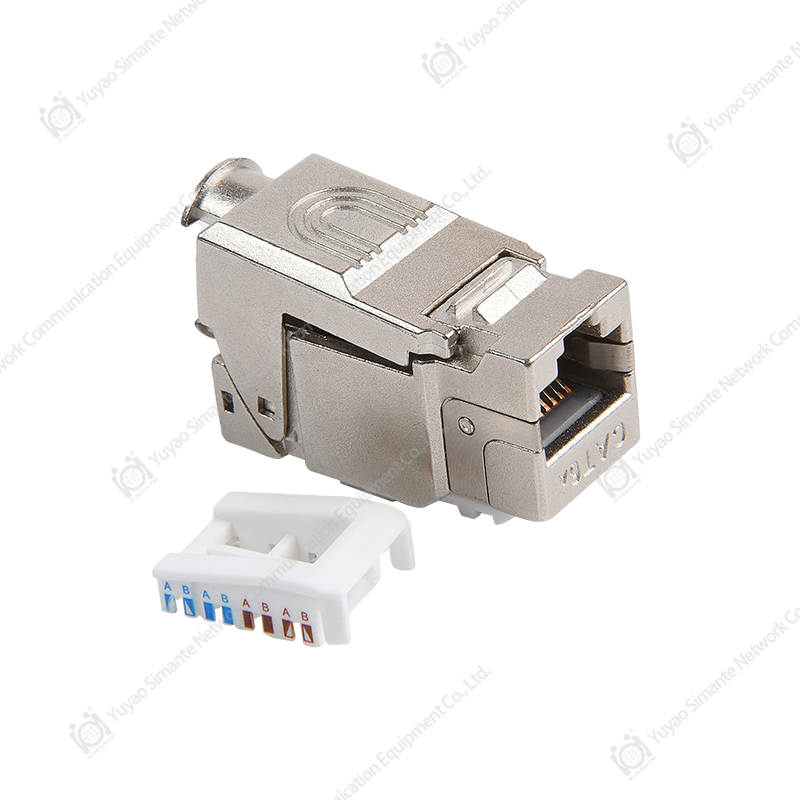
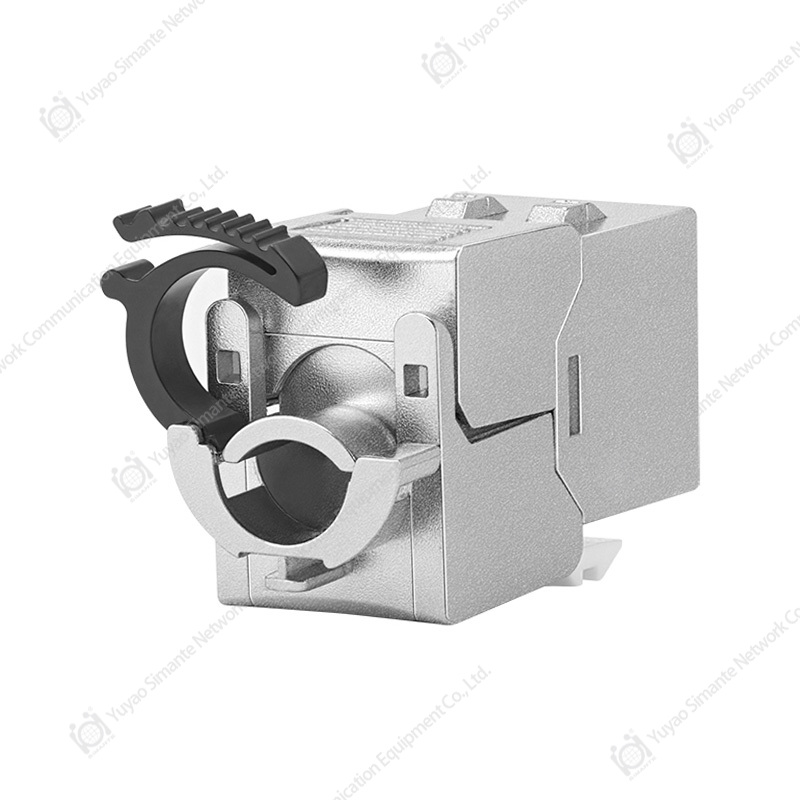
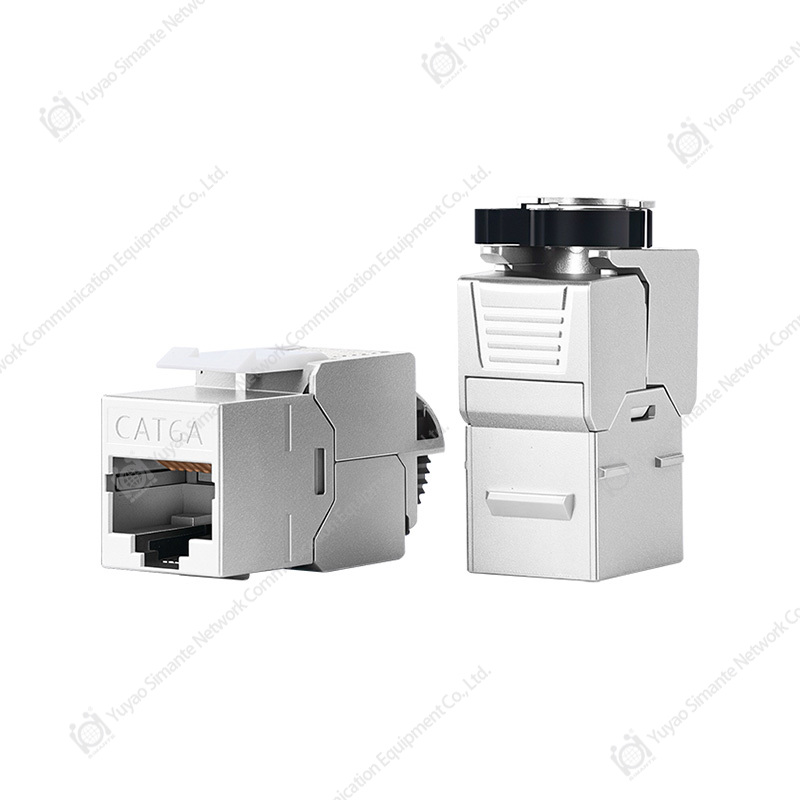
For copper systems, a compatible modular jack can be installed in each port. The jack may be selected according to the required category, shielding arrangement, wiring scheme, and application. For fiber systems, a compatible adapter or fiber outlet module may be used where the faceplate design and insert dimensions support that configuration.
This modular concept is valuable for distributors and system integrators because it allows one faceplate family to support different project requirements. The external appearance can remain consistent while the internal connection modules vary according to the specification.
4.1 Copper Application Examples
In an office, four modular copper jacks can support workstations, IP phones, printers, wireless access points, and other Ethernet equipment. In a hotel room, the faceplate may support a desk data outlet, television or media connection, telephone, and spare network port. In a classroom, it may connect a teacher’s computer, display equipment, access point, and control system.
In a smart-home environment, copper modules can be used for network equipment, security systems, intercoms, automation panels, or other low-voltage services. The exact connection type should be selected by the system designer according to electrical performance and installation standards.
4.2 Fiber Application Examples
Fiber modules can be useful in locations that require optical connectivity, electrical isolation, high bandwidth, or long-distance transmission. Examples include communications rooms, laboratory spaces, industrial buildings, education campuses, and specialized media facilities.
Fiber installation requires careful attention to connector type, adapter compatibility, bend radius, cleaning, and protection from excessive mechanical stress. The faceplate serves as the organized endpoint, while the internal fiber management solution must protect the cable and maintain the required optical performance.
5. Mechanical Design Considerations
A faceplate must perform more than an aesthetic function. It must maintain its shape during installation, support modular inserts, align with the wall box, and resist ordinary handling throughout the service life of the installation.
Dimensional consistency is one of the most important mechanical qualities. If the external dimensions or mounting points vary from unit to unit, installers may experience gaps, tilted plates, difficult screw alignment, or uneven contact with the wall. Consistent molding and inspection help reduce these problems.
The port openings should hold compatible modules securely. A loose module may move when a patch cord is inserted or removed, placing stress on the cable termination. A properly designed opening provides stable support while still allowing trained technicians to remove or replace the insert when necessary.
The plate should also provide an appropriate balance between rigidity and practical installation flexibility. Excessive flexibility can make the product appear weak or cause visible deformation. Excessive brittleness can increase the risk of cracking during handling or screw tightening. Material selection, mold design, and process control all influence this balance.
Mounting areas should be designed to work with the intended wall box and screw arrangement. Installers benefit when the plate can be positioned quickly and secured without unusual tools. The best results are achieved when the wall box is level, the cables are organized, and the faceplate is tightened evenly without over-torquing.
6. Manufacturing Process and Quality Control
The performance of a faceplate is strongly influenced by the manufacturing process. A professional producer must control raw materials, mold condition, injection parameters, assembly accuracy, visual quality, and final inspection.
6.1 Product Design and Engineering
Manufacturing begins with design engineering. The product must be developed around the required footprint, port arrangement, insert retention, mounting structure, appearance, and installation environment. Engineers consider wall-box compatibility, material behavior, dimensional tolerances, and user handling.
Design review is important because a small weakness in a mounting point or port opening can affect many units after mass production begins. A mature research and development process identifies these issues before tooling is finalized. This reduces rework and supports stable production.
Engineering teams may also review customer requirements for color, labeling, packaging, port configuration, and private-label production. This is especially important for OEM and ODM projects where the product must meet a distributor’s market specifications while remaining manufacturable at a consistent quality level.
6.2 Injection Molding
Plastic faceplates are commonly produced through injection molding. In this process, prepared material is heated and injected into a precision mold. After cooling, the molded part is ejected, inspected, and prepared for subsequent assembly.
Injection molding offers repeatability and efficient production for large quantities. However, the quality of the final part depends on many variables, including material preparation, melt temperature, injection pressure, cooling time, mold condition, gate design, and cycle control.
Modern automatic and semi-automatic injection molding equipment can support stable output while reducing variation caused by manual handling. Automatic machines can maintain consistent cycle conditions, while skilled operators monitor the process and respond to abnormalities.
Proper mold maintenance is equally important. Wear, contamination, or damage to mold surfaces can create flash, short shots, sink marks, dimensional variation, or surface defects. Regular cleaning and inspection help protect the appearance and fit of the faceplate.
6.3 Automated Assembly
After molding, products may pass through trimming, insert installation, labeling, inspection, and packing. Automated or semi-automatic assembly equipment can improve positioning consistency and production efficiency.
Automation is particularly useful for repetitive operations such as installing components, checking the presence of parts, or preparing standardized packaging. It does not eliminate the need for skilled personnel. Instead, it allows technical employees to focus on process supervision, quality verification, equipment adjustment, and continuous improvement.
6.4 Inspection and Testing
Quality control should cover both appearance and function. Visual inspection may check for scratches, contamination, discoloration, flash, deformation, incomplete molding, and inconsistent surface finish. Dimensional inspection verifies the product footprint, mounting positions, port openings, and component fit.
Mechanical checks may include insert retention, screw-hole alignment, resistance to ordinary handling, and assembly integrity. Where the faceplate is supplied with modular communication components, additional electrical or optical tests may be required for the complete assembly.
Testing requirements vary by project and product configuration. A responsible supplier should be able to discuss the relevant inspection plan with the customer and provide appropriate documentation when required. Consistent records support traceability and help identify trends before they become large-scale issues.
7. Manufacturing Capacity and Supply Reliability
For distributors, contractors, and system integrators, product quality is only one part of supplier value. Delivery reliability, production capacity, customization ability, and communication are also important.
The manufacturer described in the supplied company information operates multiple regular and customization production lines, including automatic and semi-automatic injection molding equipment and automatic installation machines. Such a production structure is designed to support both standard products and project-specific requirements.
A reported annual output of more than nine million units indicates the ability to serve recurring orders and larger distribution programs. Production capacity can be especially important when a construction project requires the same faceplate across many rooms or buildings. A stable source reduces the risk of mixing products with different dimensions, colors, or surface finishes.
Capacity should not be judged solely by the number of machines. It also depends on material planning, mold availability, maintenance systems, workforce organization, quality control, packaging, and shipment coordination. A mature supplier coordinates these areas so that production volume does not undermine consistency.
More than ten engineers and over thirty full-time technical personnel are identified in the supplied company information. A technical team of this kind can support product development, process improvement, tooling coordination, quality analysis, and customer-specific engineering work.
8. Advantages Over Generic Competing Faceplates
Many faceplates appear similar at first glance. However, differences in engineering, material quality, dimensional accuracy, process control, and support can become apparent during installation and long-term use.
8.1 More Predictable Installation
A well-controlled 86-type faceplate is easier to install because its dimensions and mounting points are consistent. Installers can prepare wall boxes and cable lengths with greater confidence. This reduces time spent correcting misalignment, trimming openings, or replacing parts that do not fit correctly.
Generic products with inconsistent dimensions may create small but costly problems across a large project. One poorly fitting plate may be manageable, but repeated adjustments across hundreds of rooms can significantly increase labor costs.
8.2 Better Modular Support
The four-port structure provides practical flexibility for compatible inserts. A faceplate that securely holds modules helps prevent movement, uneven gaps, and accidental stress on terminations. This is an advantage over products that use loose or poorly supported inserts.
Modularity also makes the outlet easier to adapt. If a project changes from a basic data service to a mixed data-and-fiber arrangement, a compatible insert may be changed without replacing the entire wall plate, subject to the system design and compatibility requirements.
8.3 More Professional Appearance
Surface quality and visual consistency matter in visible installations. A professional faceplate should maintain a uniform appearance across a project. Stable molding and controlled finishing help limit color variation, surface marks, and edge irregularities.
This advantage is particularly important in hospitality, commercial interiors, and premium residential projects. The faceplate is part of the room’s finished appearance, and poor-quality visible hardware can reduce the perceived quality of the entire installation.
8.4 Better Support for Custom Projects
Standard products are appropriate for many applications, but some projects require special colors, labels, packaging, port layouts, or branding arrangements. A manufacturer with design, molding, and assembly capabilities can evaluate these needs more effectively than a trading company with no direct production control.
OEM and ODM capability can help customers develop a product suited to local market preferences or a particular project specification. The feasibility of any customization depends on order quantity, tooling requirements, technical limitations, and approval procedures.
8.5 Stronger Long-Term Supply Continuity
When a faceplate is used across multiple projects, replacement availability becomes important. A supplier with established production lines and export experience may be better positioned to maintain the same product family over time. This supports extensions, repairs, and phased construction.
Supply continuity also reduces the risk that a future replacement will have a different appearance or incompatible dimensions. Buyers should still confirm product revision control, material specifications, packaging, and availability before placing a long-term program order.
9. Installation Guidance
Successful installation begins with correct planning. The installer should confirm the wall-box type, plate dimensions, module compatibility, cable routing, service identification, and required finish height before termination begins.
9.1 Prepare the Wall Box
The wall box should be securely fixed and positioned at the required height. It should be level and sufficiently recessed or projected so that the faceplate sits flat against the finished wall surface. A damaged, loose, or badly positioned box can prevent even the best faceplate from appearing correctly installed.
9.2 Manage the Cable Slack
Each cable should have enough service slack for termination and future maintenance. Excessive slack should not be forced behind the plate because it can place pressure on the modules or create a bulge. The cable should be routed with appropriate bend control and separated from sources of excessive heat or electrical interference where necessary.
9.3 Terminate the Modular Inserts
Compatible modules should be terminated according to their instructions and the selected wiring or connection standard. For copper outlets, the conductor arrangement must be consistent at both ends of the link. For fiber modules, connector cleanliness, bend radius, and strain relief are essential.
Termination should be performed with the correct tools. Improvised methods can damage contacts, reduce mechanical retention, or create performance problems that are difficult to diagnose after the faceplate is installed.
9.4 Label the Ports
Each port should be identified according to the project documentation. Labels may include room numbers, outlet numbers, service types, or patch-panel references. Clear identification saves time during commissioning and future maintenance.
9.5 Secure the Faceplate
After the modules are installed and tested, the faceplate should be positioned carefully and secured with compatible screws. Tightening should be even and firm, but excessive force should be avoided. Over-tightening may distort the plate, damage the wall box, or affect the alignment of the modular inserts.
9.6 Test the Completed Outlet
Testing should be completed after installation. Copper links may be checked for wire mapping, continuity, length, insertion loss, return loss, and other parameters required by the project. Fiber links may require inspection, polarity verification, continuity testing, and optical-loss measurement.
The faceplate itself is not a substitute for link certification. It is one part of the assembled channel or permanent link, and the entire system should be tested according to the relevant project requirements.
10. Applications Across Different Environments
10.1 Office Buildings
Open-plan offices often require flexible connectivity at desks, meeting areas, reception counters, and shared equipment zones. A four-port faceplate can support multiple outlets without occupying excessive wall space. Spare ports can accommodate future workstation changes or new services.
10.2 Hotels and Hospitality Facilities
Guest rooms require a clean appearance and convenient access to communication services. Faceplates may be installed near desks, beds, televisions, and service areas. A uniform four-port design can help maintain consistent room standards while supporting data, telephone, media, and future connectivity needs.
10.3 Schools and Universities
Educational environments frequently change their technology requirements. Classrooms, laboratories, libraries, and administrative offices may need connections for computers, displays, wireless systems, security equipment, and building controls. Additional ports provide useful flexibility when room layouts or teaching systems change.
10.4 Healthcare Facilities
Healthcare installations require careful planning, documentation, and maintenance. Communication outlets may support administrative networks, nurse-call systems, medical equipment networks, and other low-voltage services, depending on the facility design. Products should be selected and installed according to applicable healthcare and building requirements.
10.5 Smart Homes and Residential Buildings
Residential users increasingly expect reliable network access in living rooms, bedrooms, studies, media rooms, and utility areas. A four-port faceplate can support home networking, entertainment systems, security devices, automation interfaces, and spare capacity for future upgrades.
10.6 Industrial and Commercial Sites
Factories, warehouses, retail spaces, and logistics centers may require local connections for terminals, cameras, access control, automation panels, and wireless infrastructure. In these environments, the installation design must consider dust, vibration, temperature, impact, and electromagnetic conditions. The faceplate should be used within the environmental limits of the selected product and modular components.

11. Purchasing and Specification Checklist
Before purchasing a four-port 86-type faceplate, buyers should evaluate the complete application rather than selecting solely by appearance or price.
| Evaluation Item | Questions to Confirm | Why It Matters |
|---|---|---|
| Format | Does the plate match the required 86-type wall box and mounting arrangement? | Correct format reduces installation problems and visible gaps. |
| Port Capacity | Are four modular positions sufficient for current and future services? | Proper capacity helps avoid later wall modifications. |
| Module Compatibility | Which copper, fiber, or other modular inserts fit the openings? | Compatibility determines system flexibility and replacement options. |
| Material and Finish | Is the surface suitable for the intended indoor environment and project appearance? | Material quality affects durability and visual consistency. |
| Dimensional Control | Are product dimensions and mounting tolerances controlled? | Consistency improves installation speed and replacement compatibility. |
| Testing | What inspections are performed before shipment? | Documented inspection supports stable quality and project confidence. |
| Customization | Can the supplier support colors, labels, packaging, or special configurations? | Customization may be needed for branded or large-scale projects. |
| Supply Capacity | Can the supplier maintain delivery for repeat or high-volume orders? | Reliable supply supports construction schedules and future expansion. |
| Technical Support | Can engineers assist with compatibility and application questions? | Technical communication helps prevent specification errors. |
12. Packaging, Logistics, and Project Coordination
Faceplates are lightweight but can be damaged by poor handling. Packaging should protect the visible surface, mounting edges, and modular openings from scratching, dust, and deformation. Products should be packed in a way that supports counting, warehouse organization, and batch traceability.
For large projects, packaging labels may include product model, quantity, production batch, customer reference, or installation area. Clear packaging information helps distributors and contractors organize materials before delivery to the work site.
Project coordination should include lead-time confirmation, sample approval, production scheduling, inspection requirements, and shipping arrangements. If customization is requested, the buyer should approve drawings, color samples, labels, and packaging details before mass production.
Export experience is valuable because international orders may involve different documentation, carton markings, pallet requirements, and delivery terms. A supplier familiar with overseas markets can help reduce avoidable logistics problems, although the buyer remains responsible for confirming local import, building, and installation requirements.
13. Sustainability and Lifecycle Value
The environmental value of a faceplate is related not only to the material used but also to service life, replacement frequency, packaging, and adaptability. A durable product that remains in service for many years can reduce the need for repeated manufacturing and disposal.
Modular construction can also support lifecycle efficiency. If a connection type changes, replacing an insert may be more practical than replacing the complete faceplate, provided the new module is compatible. Spare ports can delay the need for additional wall work when users require more connections.
Efficient production reduces material waste and improves resource utilization. Injection molding processes should be managed to control rejected parts, excess material, energy consumption, and rework. Manufacturing teams can improve efficiency through stable process parameters, preventive maintenance, and careful quality planning.
Buyers should request information about material specifications, packaging practices, recycling considerations, and product durability when these issues are important to the project. Sustainability requirements differ by market and building program, so they should be included in the original specification rather than considered only after production.
14. Maintenance and Replacement
Once installed, a faceplate normally requires little routine maintenance. Users should avoid pulling cables at sharp angles or placing excessive force on the ports. Dust and surface contamination can be removed with suitable dry or slightly damp cleaning methods, following the recommendations for the material and connected equipment.
During maintenance, technicians should identify the port and service before disconnecting a patch cord. If a module becomes damaged, the technician should replace it with a compatible component and retest the link. The faceplate should also be checked for cracks, loose screws, deformation, or signs of impact.
Replacement is easier when the original product model, port layout, color, and supplier information have been recorded. Project documentation should include outlet locations, cable identifiers, module types, and test results. Good records help preserve system reliability over many years.
15. Why Manufacturer Experience Matters
A faceplate may look simple, but reliable production requires coordinated expertise in product design, plastics engineering, mold development, injection molding, automated assembly, inspection, packaging, and customer service. A manufacturer with long-term experience is more likely to recognize the relationship between these stages.
The supplied company information describes nearly two decades of service in network cabling solutions and optical fiber products. It also identifies a business structure integrating design, development, sales, and service. This integrated model can shorten communication paths between the customer and the production team.
In practical terms, integrated manufacturing allows customer feedback to reach engineers and process personnel more directly. If a buyer reports an installation issue, the supplier can investigate whether the cause relates to mold dimensions, insert retention, packaging, assembly, or application instructions.
Experience in Europe, Australia, Africa, the Middle East, and Southeast Asia also indicates familiarity with varied export markets and customer expectations. International experience does not replace project-specific verification, but it can support more effective communication and documentation for overseas buyers.
16. OEM and ODM Opportunities
Distributors and project suppliers may require products that differ from standard catalog items. OEM projects can involve customer packaging, labels, colors, or product identification. ODM projects may involve more extensive cooperation in design, tooling, configuration, and product development.
A four-port faceplate is a suitable platform for customization because the basic structure can be adapted to different market needs while preserving a familiar installation format. Possible project discussions may include surface color, logo placement, port identification, insert compatibility, packaging quantities, and documentation.
Customization should be managed through a formal process. The customer and manufacturer should confirm technical drawings, material requirements, tolerances, appearance standards, sample approval, tooling ownership, minimum order quantity, and change-control procedures. This protects both parties and helps ensure that the final product matches the approved specification.
17. Frequently Asked Questions
Q1: What is an 86-type faceplate?
An 86-type faceplate is a wall-mounted outlet plate based on a commonly used square installation format. It is designed to work with compatible wall boxes and modular communication inserts. Exact dimensions and mounting details should be confirmed with the product drawing and local installation requirements.
Q2: How many connections can the SMT-4326AP-86-4P support?
The faceplate has four modular ports. The actual services depend on the inserts installed, such as copper data jacks, telephone modules, fiber adapters, or other compatible communication components.
Q3: Can all four ports be used for data?
In many installations, all four ports can be configured for data if compatible modules are selected. The cable category, jack specification, wiring method, and testing requirements should be confirmed before installation.
Q4: Can copper and fiber modules be used on the same faceplate?
This depends on the mechanical compatibility of the selected modules and the product design. A project should confirm insert dimensions, retention features, cable management requirements, and the space needed for fiber bend control before using a mixed configuration.
Q5: Is the faceplate suitable for indoor office use?
It is intended for structured cabling applications such as offices, commercial buildings, residential projects, and other suitable environments. The installer should verify environmental conditions, local codes, and the specifications of the selected modular components.
Q6: Why choose four ports instead of one or two?
Four ports provide greater connection density and reserve capacity. They can support multiple services at one location, simplify future expansion, and reduce the need for additional wall plates.
Q7: Does the faceplate itself determine network speed?
No. Network performance depends on the complete link, including cable, connectors, termination, patch cords, installation quality, and testing. The faceplate provides the physical support for the modular connection components.
Q8: What should be checked before ordering?
Buyers should confirm the 86-type format, four-port layout, compatible inserts, material and finish, mounting details, packaging, production lead time, inspection requirements, and any customization needs.
Q9: Can the product be used in an OEM project?
The supplied company information indicates support for OEM and ODM projects. Specific customization options, order quantities, tooling requirements, lead times, and approval procedures should be discussed with the manufacturer.
Q10: How should the installed outlet be tested?
The completed outlet should be tested as part of the full permanent link or channel. Copper systems may require wire-map and performance testing, while fiber systems may require connector inspection, continuity checks, polarity verification, and optical-loss testing.
Q11: What causes a faceplate to look uneven after installation?
Common causes include an unlevel wall box, incorrect box depth, uneven screw tightening, excessive cable slack, incompatible modules, or a damaged plate. Proper preparation and controlled installation help prevent these issues.
Q12: Why is manufacturing capacity important for a standard faceplate?
Large projects may require thousands of identical units and future replacement stock. Stable production capacity helps maintain consistent dimensions, appearance, quality, and delivery across multiple orders.
18. Conclusion
The SMT-4326AP-86-4P 86 type 4 port face plate is a practical component for structured cabling installations that require multiple organized connection points in a compact wall format. Its four-port configuration supports higher connection density, service separation, future expansion, and a cleaner finished appearance.
Its value depends on more than the number of openings. Dimensional consistency, modular compatibility, mechanical stability, surface quality, manufacturing control, inspection, packaging, and supply continuity all contribute to the success of the finished installation.
For copper and fiber structured cabling projects, a properly selected faceplate provides a dependable interface between the permanent cabling system and the user environment. When combined with compatible modules, correct termination, suitable labeling, and complete link testing, it helps create an organized and maintainable network outlet.
The manufacturing capabilities described in the supplied materials, including engineering resources, injection molding equipment, automated installation systems, multiple production lines, testing practices, export experience, and OEM or ODM support, provide a strong foundation for standard and customized projects. Buyers should still confirm technical details for each application, but a professionally manufactured four-port 86-type faceplate can deliver meaningful advantages over inconsistent generic alternatives.
As buildings continue to add networked devices, automation systems, security equipment, and high-bandwidth services, flexible passive infrastructure becomes increasingly important. A four-port faceplate is a small component, yet it can contribute significantly to installation efficiency, visual quality, serviceability, and long-term system adaptability.
References
1. Supplied product information for the SMT-4326AP-86-4P 86 type 4 port face plate.
2. Supplied company information concerning network cabling solutions, optical fiber products, production capability, engineering resources, and OEM or ODM services.
3. ANSI/TIA-568 series, Generic Telecommunications Cabling for Customer Premises.
4. ISO/IEC 11801 series, Information Technology — Generic Cabling for Customer Premises.
5. General principles of injection molding process control, dimensional inspection, and molded-part quality assurance.
6. General installation practices for copper and fiber structured cabling systems, including labeling, termination, bend management, and link testing.