Español
 عربى
عربى русский
Content
- 1 Product Overview
- 2 Core Application: Fiber to the Desktop
- 3 Key Product Features
- 4 Technical and Functional Summary
- 5 Advantages Over Common Competing Faceplates
- 6 Installation and Maintenance Benefits
- 7 Role in a Complete Fiber System
- 8 Manufacturing Strength Behind the Product
- 9 Advanced Injection Molding and Product Consistency
- 10 Quality Control and Testing Philosophy
- 11 OEM and ODM Support
- 12 Why the 86 Type Format Matters
- 13 Material and Environmental Performance
- 14 Packaging, Storage, and Logistics Value
- 15 Use Cases and Deployment Scenarios
- 16 How the Product Supports Long-Term Network Value
- 17 Comparison with Ordinary Terminal Solutions
- 18 Q&A Section
- 18.1 What is the SMT-4307SC-1P used for?
- 18.2 Why is the 86 type design important?
- 18.3 What advantage does the embedded face frame provide?
- 18.4 How does the product protect optical fiber?
- 18.5 Why is the detachable nameplate useful?
- 18.6 What material is used for the faceplate?
- 18.7 Does the product meet environmental standards?
- 18.8 What temperature range can the product handle?
- 18.9 How is the product packaged?
- 18.10 What manufacturing strengths support this product?
- 19 Conclusion
- 20 References
- 21 Product: SMT-4307SC-1P 86 Type Flat Faceplate Fit For SC Connector,1 Port
In modern structured cabling, the final connection point is just as important as the backbone infrastructure that supports it. A fiber optic network may include high-grade cable, precision adapters, well-designed distribution frames, and carefully planned cable routes, but the user terminal must still deliver reliability, safety, convenience, and a clean installation appearance. The SMT-4307SC-1P 86 Type Flat Faceplate fit for SC connector, 1 port, is designed for this exact purpose: to provide a compact, professional, and dependable optical fiber access point for fiber-to-the-desktop and similar terminal applications.
This product belongs to the fiber series and is intended for use in home, office, work-area, and terminal environments where optical fiber needs to be safely brought to a user-facing outlet. It is an 86 type flat faceplate designed to fit an SC connector and provide one port for fiber connection. Its value is not limited to appearance; it also supports the practical requirements of fiber management, including bend-radius protection, redundant fiber storage, secure port identification, convenient installation, and durable long-term use.
As network bandwidth demand continues to increase, optical fiber is no longer limited to building backbones, equipment rooms, or carrier facilities. It is increasingly deployed closer to users, desks, smart workstations, control terminals, security systems, and intelligent buildings. In these environments, a faceplate must perform more than a decorative function. It must protect the fragile fiber core, organize the cable route, make maintenance easier, and support neat structured cabling standards. The SMT-4307SC-1P addresses these needs through a rational internal-space design, a screwless embedded face frame, high-quality ABS engineering plastic, and a user-friendly identification area.
SMT-4307SC-1P 86 Type Flat Faceplate Fit For SC Connector,1 Port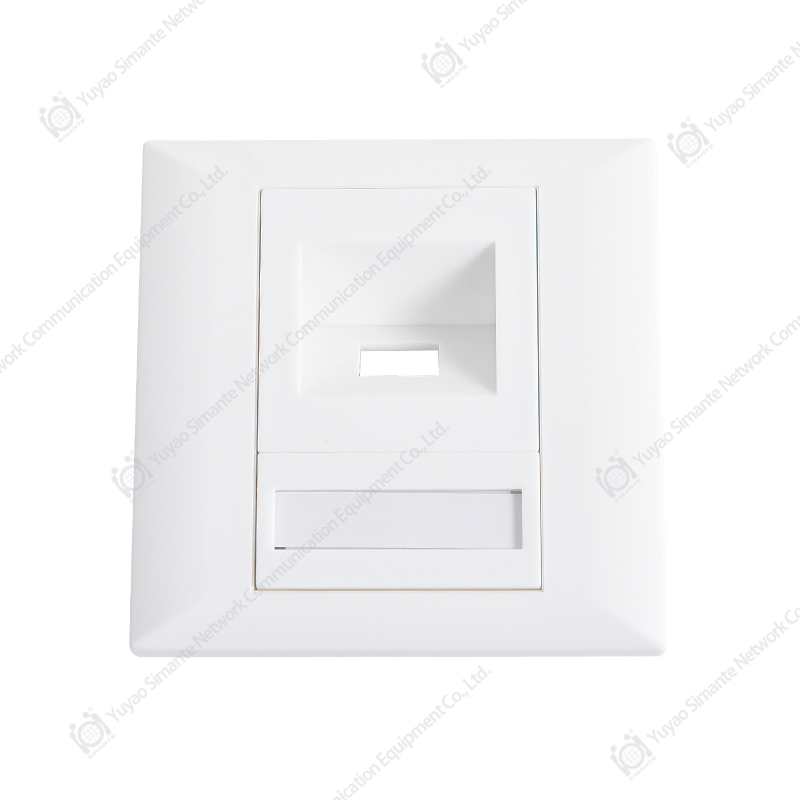
Product Overview
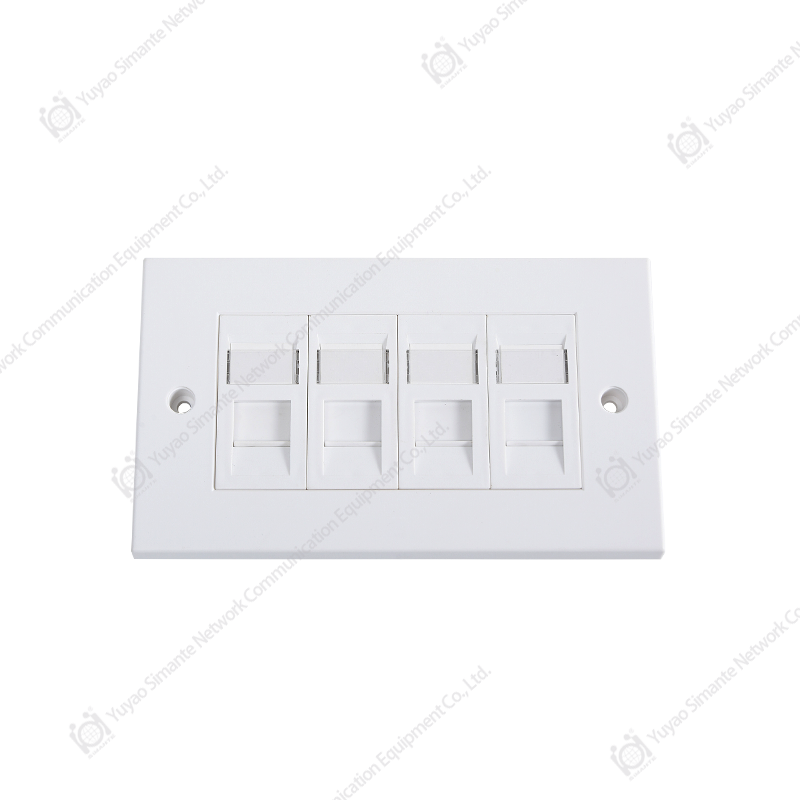
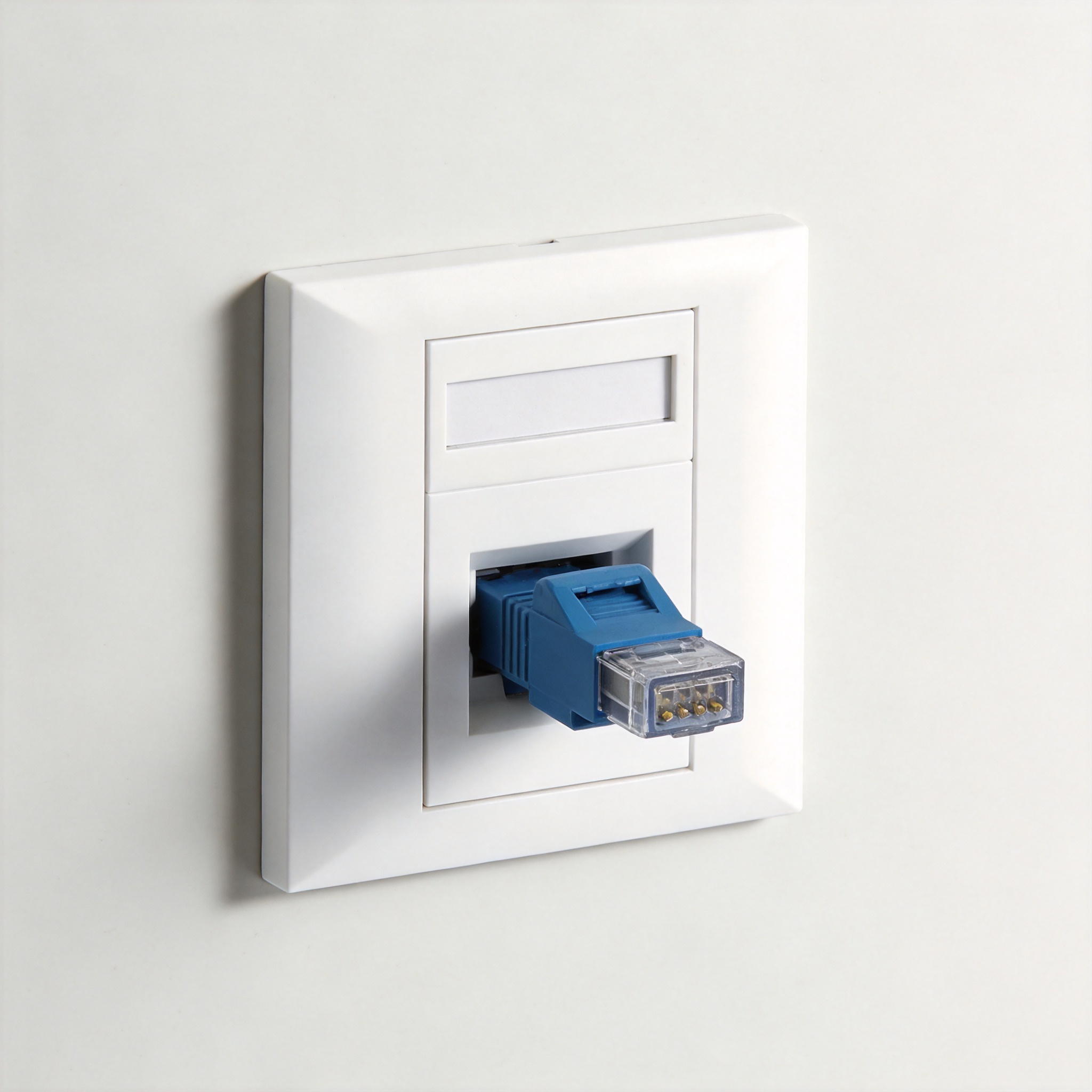
The SMT-4307SC-1P is an 86 type flat optical fiber faceplate designed for one SC connector port. The 86 type format is widely used in wall outlets and terminal boxes, making the faceplate suitable for many residential, commercial, and light industrial cabling environments. Its flat appearance helps create a clean installation surface, while its embedded face frame hides visible screws and delivers a neat, integrated look after installation.
The product is built for fiber-to-the-desktop applications, often abbreviated as FTTD. In an FTTD system, optical fiber is routed directly to a user work area instead of stopping at an intermediate copper conversion point. This architecture can reduce signal degradation, increase bandwidth capacity, and support future-proof network expansion. However, because optical fiber has specific handling requirements, the terminal outlet must protect the cable from excessive bending, accidental pulling, compression, and contamination. The SMT-4307SC-1P is therefore designed with reasonable internal space and an appropriate curvature path so that the incoming and outgoing fibers can be protected.
The product also supports port management by providing a larger front identification space and a detachable nameplate. For installers, facility managers, and network technicians, clear labeling is essential. It reduces troubleshooting time, helps prevent wrong-port connections, and makes future upgrades easier. In large buildings, campus networks, smart homes, data cabling systems, and office environments, the value of good identification is often realized during maintenance, when fast and accurate port recognition becomes critical.
Another important feature is material selection. The faceplate uses high-quality ABS engineering plastic, selected for its anti-collision performance, impact resistance, and resistance to deformation. A terminal faceplate is exposed to daily physical contact, installation pressure, cleaning, and sometimes accidental impact. Inferior plastics may crack, yellow, warp, or fail to hold components securely. ABS engineering plastic helps the product maintain mechanical stability and appearance over time.
Core Application: Fiber to the Desktop
Fiber to the Desktop is one of the most important trends in high-performance cabling. Traditional structured cabling systems often use copper twisted-pair cabling from the telecommunications room to the work area. Copper remains highly useful in many environments, but optical fiber has clear advantages where high bandwidth, long transmission distance, electromagnetic immunity, and future expansion are priorities. In an FTTD architecture, the faceplate becomes the visible and accessible fiber termination point, connecting the user area to the larger optical network.
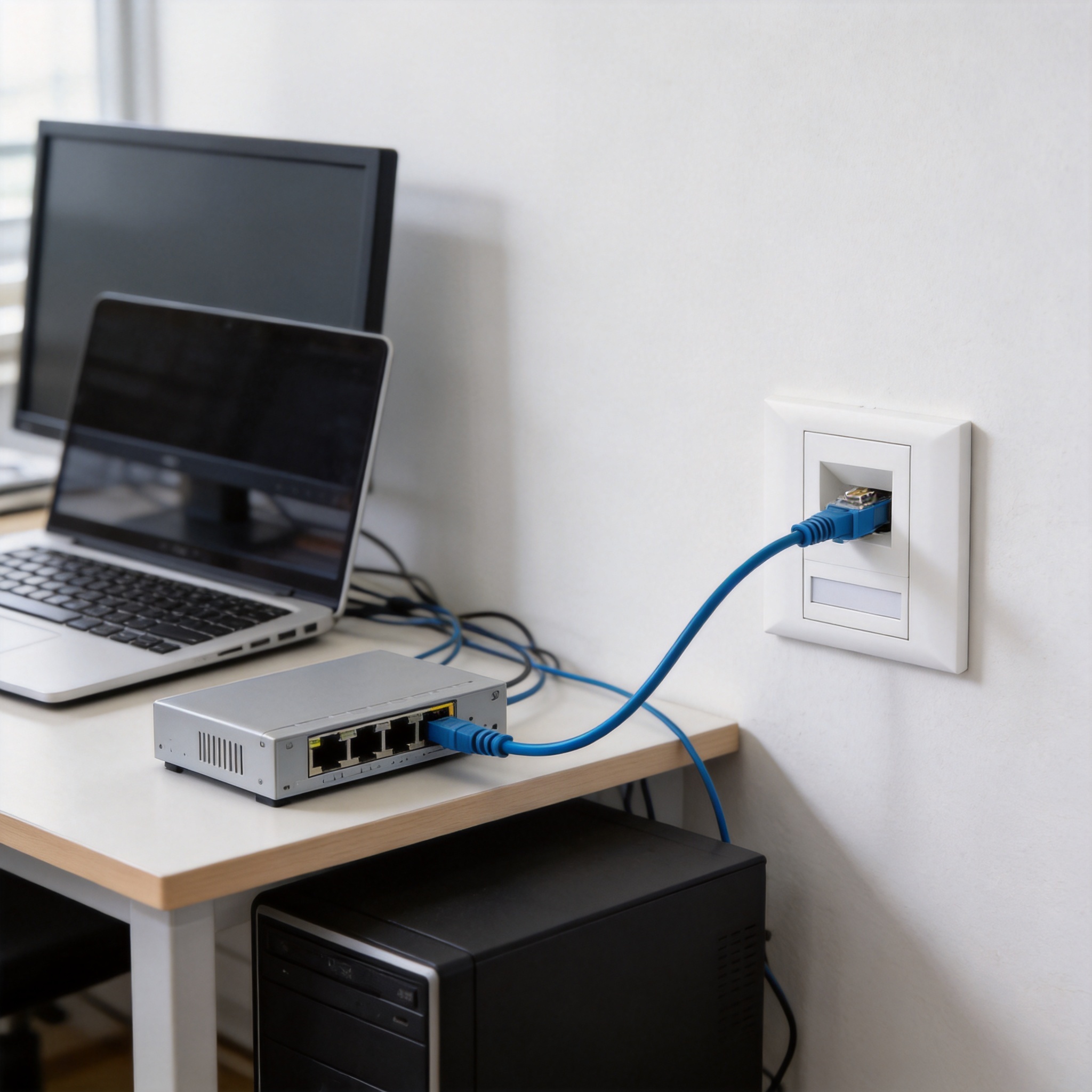
The SMT-4307SC-1P supports this architecture by offering a practical terminal solution for one SC port. The SC connector is widely used in optical networks because of its push-pull structure, stable performance, and convenient handling. A faceplate that is designed specifically to fit an SC connector provides a secure and organized connection interface. It helps ensure that the connector is positioned properly, that the fiber is protected behind the outlet, and that the user has a clean access point for plugging in compatible optical patch cords.
In many office and smart-building projects, installation teams must balance performance with appearance. A fiber outlet may be located in a meeting room, workstation area, education facility, medical office, control room, or residential smart home environment. Exposed screws, poorly aligned parts, and bulky terminal boxes can reduce visual quality and make the installation look unfinished. The embedded face frame of this product eliminates visible screws on the surface, improving appearance while also making installation and disassembly easier.
For fiber systems, correct bend radius is a fundamental requirement. If optical fiber is bent too sharply, optical loss may increase, the fiber may become damaged, and long-term network reliability may be affected. The SMT-4307SC-1P is designed with reasonable internal space and appropriate curvature to protect the incoming and outgoing fibers. It also allows inventory of a small quantity of redundant fiber. This is valuable during installation and maintenance because extra fiber length can provide flexibility for re-termination, adjustment, or repositioning.
Key Product Features
The SMT-4307SC-1P combines several practical design features in a compact terminal product. These features are not isolated details; together they create a faceplate that is easier to install, easier to manage, more durable in daily use, and better suited for professional cabling standards.
Embedded Face Frame with No Visible Screws
The embedded face frame is one of the most visible advantages of the product. In many basic fiber faceplates, exposed screws remain visible after installation. While this may be acceptable in purely functional utility spaces, it is less desirable in offices, homes, hotels, schools, and public areas. A screwless-looking surface gives the installation a cleaner and more modern appearance.
The hidden-screw design also supports easier installation and disassembly. When maintenance is required, technicians can access the faceplate structure without damaging the surface or affecting the surrounding wall finish. This makes the product suitable for projects where long-term serviceability is important.
Larger Front Identification Space
Port identification is often underestimated during initial installation, but it becomes essential during operation. The SMT-4307SC-1P provides a larger front identification space, making it convenient to mark the port clearly. This helps installers, IT staff, and building managers identify the connection quickly.
The product is also equipped with a detachable nameplate. A detachable label area is more flexible than a permanent mark because network assignments may change. During moves, additions, changes, and upgrades, the nameplate can be adjusted to reflect the new port identity. This feature improves port management and reduces the risk of incorrect connections.
High-Quality ABS Engineering Plastic
The faceplate uses high-quality ABS engineering plastic. ABS is valued in network accessories because it offers good impact resistance, dimensional stability, and processability. For a wall faceplate, these qualities are important because the product must remain firm, visually stable, and resistant to everyday contact.
Compared with lower-grade plastic products, ABS engineering plastic is less likely to deform under normal operating conditions. It also helps the faceplate resist collision and impact. This supports a longer service life and reduces the likelihood of replacement caused by cracking, loosening, or surface damage.
ROHS-Compliant Environmental Requirements
The product is designed to meet ROHS standards. ROHS compliance is important for customers who need products that align with environmental and hazardous-substance restrictions. In international procurement, building projects, and OEM or ODM supply chains, environmental compliance is often a requirement rather than an option.
By meeting ROHS requirements, the SMT-4307SC-1P can be more easily adopted in markets where environmental responsibility and regulatory compliance are expected. This is especially valuable for contractors, distributors, and system integrators serving customers in regions with strict product requirements.
Wide Operating Temperature Range
The product supports environmental performance across a temperature range from -25 degrees Celsius to +70 degrees Celsius. This range allows the faceplate to function in various indoor environments and some protected or semi-controlled spaces where temperature changes may occur.
Stable environmental performance helps maintain product reliability over time. A faceplate that becomes brittle in cold conditions or deforms under heat can compromise cable protection and user safety. The specified temperature range provides confidence for use in diverse installation conditions.
Technical and Functional Summary
| Item | Specification or Feature | Practical Value |
|---|---|---|
| Product type | 86 type flat optical fiber faceplate | Suitable for standard wall outlet and terminal installation environments |
| Connector compatibility | SC connector | Supports widely used optical fiber connection interface |
| Port count | 1 port | Ideal for single-user, single-link, or dedicated fiber terminal applications |
| Application | Fiber to the Desktop and work-area fiber access | Brings optical fiber directly to the user terminal |
| Frame design | Embedded face frame with no visible surface screws | Improves appearance and supports convenient installation and removal |
| Identification | Larger front marking space with detachable nameplate | Makes port management and future updates easier |
| Material | High-quality ABS engineering plastic | Provides anti-collision, impact-resistant, and deformation-resistant performance |
| Environmental compliance | Meets ROHS standards | Supports environmentally responsible procurement and international market needs |
| Temperature performance | -25 degrees Celsius to +70 degrees Celsius | Maintains reliability across a broad range of installation conditions |
| Packaging | Special blister bag, cardboard box, accessories included | Protects product during storage, transport, and distribution |
Advantages Over Common Competing Faceplates
In the market for optical fiber terminal accessories, many products may appear similar at first glance. A faceplate can look simple, and buyers may assume that any low-cost model will perform adequately. However, the difference between an ordinary faceplate and a well-designed fiber terminal product becomes clear during installation, maintenance, and long-term use. The SMT-4307SC-1P offers several advantages over many competing products.
Better Appearance for Visible Installations
Many low-cost faceplates use exposed screws and a basic external frame. This may create a rough or unfinished appearance, especially in modern interiors. The SMT-4307SC-1P uses an embedded face frame so that no screws are visible on the surface. This makes it more suitable for commercial offices, smart homes, conference rooms, hotels, education facilities, and customer-facing spaces where appearance matters.
A clean surface also makes the product easier to integrate with other wall-mounted devices. In structured cabling projects, network outlets, electrical outlets, smart-control panels, and communication sockets are often installed in visible locations. A neat flat faceplate helps maintain visual consistency.
Improved Port Management
Some competing faceplates have very limited labeling space or no convenient label holder at all. This can cause confusion after installation. If the port cannot be labeled clearly, technicians may waste time tracing connections or may accidentally disconnect the wrong line.
The larger front identification space and detachable nameplate of the SMT-4307SC-1P improve port management. The label can be updated when network assignments change, and the front space makes the information easy to read. This advantage becomes especially important in buildings with many outlets or in installations where future network modifications are expected.
Fiber Protection Through Internal Space Design
Optical fiber is sensitive to bending. A faceplate that does not provide enough internal space can force the fiber into a tight bend, increasing attenuation and raising the risk of damage. Some generic faceplates are designed mainly for appearance or low cost, not for correct fiber routing.
The SMT-4307SC-1P is described as having a reasonable internal-space design. It is intended to complete access and port output while meeting fiber bend-radius requirements. This improves safety for the fiber core and supports stable transmission performance. In FTTD applications, where the terminal point may be frequently accessed or located near users, this protection is essential.
Durability from Better Material Selection
Low-grade plastics may deform, crack, or lose surface quality over time. A deformed faceplate can affect connector alignment and may create pressure on the fiber inside. The use of high-quality ABS engineering plastic helps the SMT-4307SC-1P resist collision, impact, and deformation.
This makes the product more reliable in daily environments where accidental knocks, repeated cleaning, or user contact may occur. A durable terminal product reduces replacement frequency and supports a lower long-term ownership cost.
Compliance and Market Readiness
ROHS compliance gives the product an advantage for international projects and environmentally conscious procurement. Many buyers, especially distributors and system integrators, prefer components that already satisfy recognized environmental standards. Products without such compliance may face limitations in certain markets or customer specifications.
The SMT-4307SC-1P is designed to meet ROHS standards, making it easier to include in structured cabling projects requiring responsible material control.
Installation and Maintenance Benefits
For installers, a good faceplate should be simple to mount, simple to open when service is needed, and forgiving enough to support clean cable management. The SMT-4307SC-1P is designed with these practical requirements in mind. Its embedded frame enables easy installation and disassembly, while its internal space allows incoming and outgoing fibers to be handled properly.
The detachable nameplate is also important during installation. Technicians can complete the physical installation first and then apply final labeling based on the network plan. If the network plan changes during commissioning, the label can be updated without replacing the entire faceplate.
The product packaging supports installation efficiency as well. Each product is placed into a special blister bag and then into a cardboard box, with accessories included. A label indicating the model and quantity is attached to the carton. Organized packaging reduces confusion during project deployment and helps installers confirm product types and quantities on site.
Regular packing quantities are designed for distribution and project handling. The standard arrangement includes 10 boxes per box, 20 pieces per box, and 200 pieces per box. This helps contractors, wholesalers, and project managers plan procurement and inventory more easily.
Storage requirements are clearly defined. Packaged products should be stored in a warehouse where the ambient temperature is between -5 degrees Celsius and +30 degrees Celsius, the relative humidity is not more than 70 percent, and the surrounding air contains no acid, alkali, or other corrosive gases. The storage period is three years. These instructions support product quality before installation and help distributors maintain reliable stock.
Role in a Complete Fiber System
The SMT-4307SC-1P is a terminal product, but it should be understood as part of a complete fiber system. In a structured cabling environment, the optical pathway may include fiber cable, patch panels, adapters, splice closures, distribution boxes, patch cords, and terminal faceplates. The final outlet must be compatible with the overall cabling design and must protect the optical link at the user end.
Because the product is designed for SC connector use, it can fit into many common optical network configurations. SC connectors are widely used in telecommunications, local area networks, passive optical networks, and data cabling systems. A one-port outlet is particularly useful where a dedicated fiber connection is required, such as a workstation, a security device, a media terminal, a control system, or a smart home node.
The faceplate also supports a small amount of redundant fiber storage. This may seem minor, but it can be valuable. During installation, a small reserve length allows technicians to route and terminate the fiber more comfortably. During future maintenance, the reserve can help if the connector needs to be reworked. Without sufficient internal allowance, a damaged end may require more complex cable replacement.
In high-quality fiber systems, attention to such details helps reduce service interruptions. The faceplate protects the final transition from hidden cabling to user-accessible connection. When this point is stable, labeled, and mechanically protected, the entire network becomes easier to manage.
Manufacturing Strength Behind the Product
The quality of a small cabling component depends heavily on the manufacturer’s production capability, engineering knowledge, process control, and testing mindset. Yuyao Simante Network Communication Equipment Co., Ltd. is a professional manufacturer of network cabling solutions and optical fiber products, integrating design, development, sales, and service. The company has nearly 20 years of service experience and focuses on meeting customer needs through technical expertise and value-oriented communication.
For products like the SMT-4307SC-1P, manufacturing stability begins at the design source. The company has a mature research and development system, helping ensure that product quality is considered before mass production begins. This design-led approach is important because a fiber faceplate must meet dimensional, mechanical, installation, and cable-protection requirements. A product that is poorly designed cannot be fully corrected by production control alone.
The company has more than 10 engineers and over 30 full-time technical personnel who contribute to quality improvement and product updates. This technical team supports ongoing product development and helps respond to changing market demands. In the structured cabling industry, standards, customer requirements, and application scenarios continue to evolve. A strong engineering team helps the manufacturer maintain relevance and improve product details over time.
Production capability is another important strength. The factory operates 10 regular and customized production lines, 10 fully automatic injection molding machines, 20 semi-automatic injection molding machines, and 8 automatic installed machines. These resources support stable and efficient production of plastic and cabling components. For a product using ABS engineering plastic, injection molding quality is particularly important because it affects dimensional precision, surface appearance, mechanical strength, and fit.
The company maintains a stable annual output of more than 9 million units. This production scale indicates the ability to serve distributors, project buyers, OEM customers, ODM customers, and large structured cabling projects. High output also requires process repeatability. For faceplates, repeatability means consistent color, shape, fit, port alignment, and installation feel across batches.
The company’s main products include keystone jacks, patch panels, wall face plates, data sockets, and other structured cabling components. This broad product portfolio supports both copper and fiber systems. Because network projects often require multiple component types from the same supply chain, a manufacturer with experience across categories can better understand how terminal products fit into complete systems.
Advanced Injection Molding and Product Consistency
The SMT-4307SC-1P relies on precision plastic molding to achieve its form, fit, and function. Injection molding is not simply a matter of shaping plastic. It requires careful control of raw material, mold design, injection temperature, pressure, cooling, dimensional stability, surface finish, and post-molding inspection. A faceplate must look good on the wall, but it must also maintain accurate internal geometry for adapter fitting, frame installation, and fiber routing.
Fully automatic injection molding machines improve production consistency by reducing variation caused by manual operation. They can maintain stable molding cycles, consistent pressure, and repeatable part formation. Semi-automatic machines add flexibility for varied production needs, custom orders, and different product configurations. The combination of fully automatic and semi-automatic equipment allows the factory to balance scale and customization.
Automatic installed machines further support assembly efficiency. For structured cabling accessories, assembly quality affects how components fit together and how easily installers can use them. A stable assembly process reduces loose parts, misalignment, and inconsistent user experience. This is especially important for products with removable frames or nameplates.
High-quality ABS engineering plastic also requires appropriate processing. If molding parameters are poorly controlled, plastic parts may warp, shrink unevenly, show surface defects, or become dimensionally unstable. The manufacturer’s production equipment and technical personnel help manage these risks. As a result, the faceplate can deliver the intended anti-collision, impact-resistant, and deformation-resistant performance.
Quality Control and Testing Philosophy
Product quality in structured cabling is measured not only by appearance but also by consistency, compliance, durability, and ease of use. Yuyao Simante Network Communication Equipment Co., Ltd. positions itself in the high-end market and therefore places higher requirements on product quality. The company strictly manages production and aims to meet customers’ comprehensive testing requirements through good performance testing.
For a faceplate such as the SMT-4307SC-1P, quality control may involve checking material quality, dimensions, surface finish, frame fit, nameplate function, connector compatibility, packaging condition, and environmental performance. Each of these elements contributes to the final customer experience. A faceplate that is slightly warped may be difficult to mount. A label holder that does not fit securely may cause management problems. A weak plastic surface may crack under impact. Consistent inspection helps prevent these issues.
The company’s mature research and development system supports quality stability from design. This means that functional requirements such as bend-radius protection, redundant fiber allowance, and installation convenience are considered during product development. When design and production are aligned, the final product is more likely to meet practical field requirements.
The company also serves international markets, including Europe, Australia, Africa, the Middle East, and Southeast Asia. Export experience encourages attention to packaging, compliance, documentation, and customer-specific requirements. Different markets may have different expectations for labeling, packaging, environmental compliance, and project standards. A manufacturer with export experience is better positioned to support global buyers.
OEM and ODM Support
Many cabling buyers require more than standard products. Distributors may need private-label packaging. System integrators may need specific colors, accessories, labeling styles, or carton markings. Project customers may need customized packaging, and the product note indicates that customer-specified packaging can be used. OEM and ODM capability is therefore an important strength behind the SMT-4307SC-1P.
OEM support allows customers to source products manufactured to their brand or packaging requirements. ODM support goes further by involving design and development services. With an engineering team, technical personnel, multiple production lines, and injection molding capability, the company can support customization while maintaining manufacturing control.
For buyers, this reduces supply-chain complexity. Instead of working with separate design firms, mold suppliers, assembly factories, and packaging providers, customers can cooperate with a manufacturer that understands structured cabling products and has the production base to support them. This can shorten development cycles and improve communication efficiency.
Why the 86 Type Format Matters
The 86 type format is common in many wall-mounted electrical and communication installations. A faceplate using this format can fit familiar installation patterns and support standardized building layouts. This makes the SMT-4307SC-1P practical for contractors who need efficient deployment in homes, offices, schools, and commercial buildings.
A standard format also makes replacement and future upgrades easier. If a project already uses 86 type boxes or wall openings, an 86 type fiber faceplate can be integrated more smoothly. This reduces installation difficulty and helps maintain visual alignment with other wall outlets.
The flat faceplate design further contributes to a modern appearance. Bulky terminal boxes may be acceptable in equipment rooms, but user-facing work areas often require low-profile solutions. The SMT-4307SC-1P provides a neat front surface while still allowing internal fiber protection.
Material and Environmental Performance
ABS engineering plastic is widely used in communication accessories because it provides a practical balance of strength, toughness, processability, and surface quality. For the SMT-4307SC-1P, ABS contributes to anti-collision and impact-resistant performance. This matters because a wall faceplate may be touched, bumped, cleaned, or exposed to installation stress throughout its service life.
Resistance to deformation is also important. A deformed faceplate can affect the alignment of the SC adapter and may create uneven pressure on internal fibers. It can also reduce the visual quality of the installation. By using quality ABS material and controlled production processes, the product is designed to remain stable in normal use.
The temperature range from -25 degrees Celsius to +70 degrees Celsius provides confidence for use across many environments. Although most faceplates are installed indoors, temperature changes can still occur in storage areas, equipment-adjacent spaces, unconditioned rooms, or buildings in different climates. A broad environmental range helps the product maintain performance under varied conditions.
ROHS compliance adds another layer of value. Buyers increasingly expect communication products to meet environmental standards. This is not only about regulation but also about corporate responsibility and long-term market acceptance. Products that meet such standards are easier to specify in professional projects.
Packaging, Storage, and Logistics Value
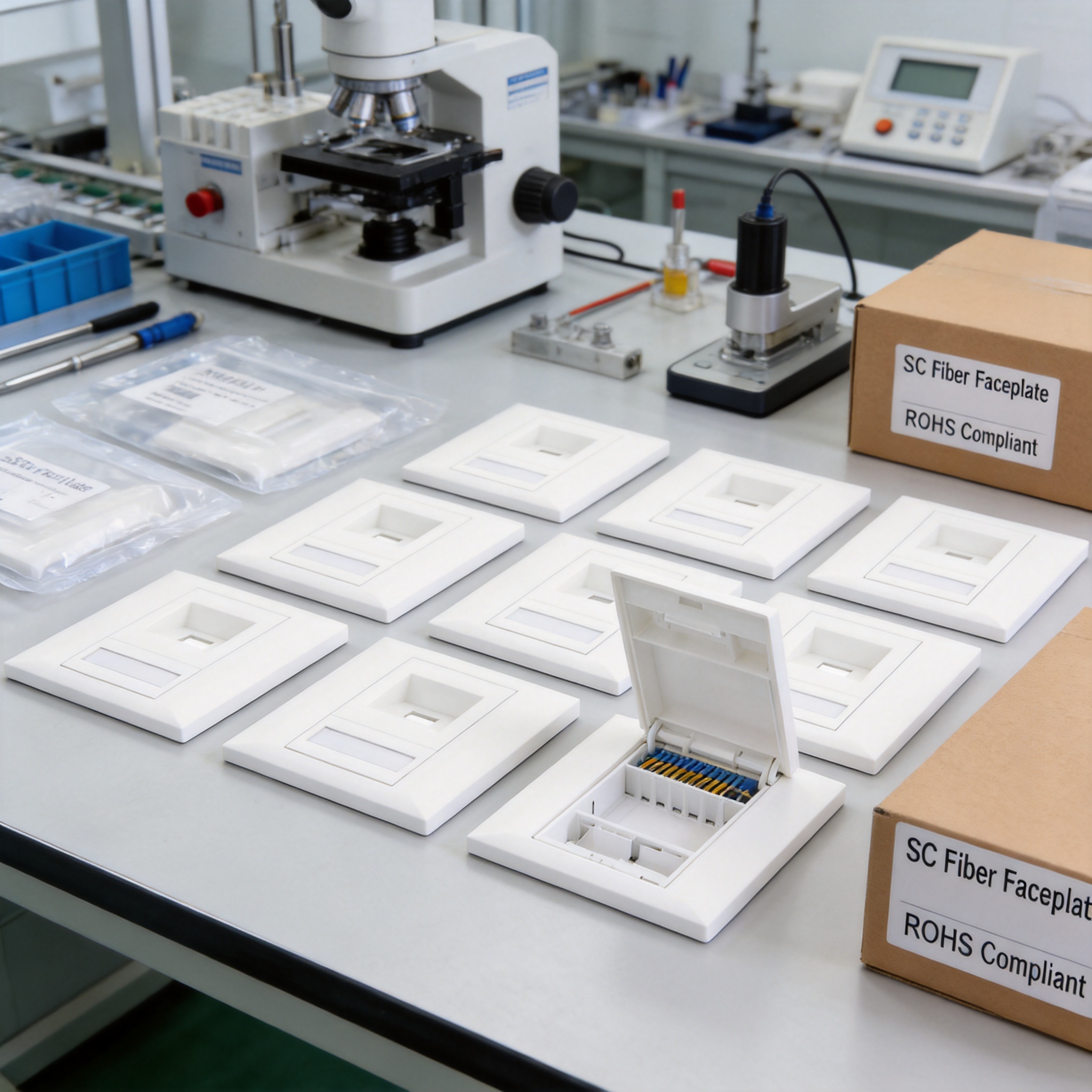
Packaging may seem secondary compared with product design, but in real projects it plays a major role in quality preservation. The SMT-4307SC-1P is placed into a special blister bag and then into a cardboard box. Product accessories are placed at the same time, and a label indicating the model and quantity is pasted on the upper left corner of the front of the carton.
This organized packaging protects the faceplate from scratches, dust, and handling damage before installation. It also helps warehouses and job sites identify the correct model quickly. For distributors and contractors handling many cabling components, clear labeling reduces picking errors and improves work efficiency.
The recommended storage environment is also clearly defined. Products should be stored where the ambient temperature is from -5 degrees Celsius to +30 degrees Celsius, relative humidity is not more than 70 percent, and the surrounding air contains no acid, alkali, or other corrosive gases. The storage period is three years. These details show that product quality is considered not only during manufacturing but also throughout distribution and storage.
Use Cases and Deployment Scenarios
The SMT-4307SC-1P can be used in a wide range of fiber access scenarios. In office buildings, it can provide a dedicated fiber port at a workstation or meeting room. In smart homes, it can support high-speed optical access for media, networking, or control systems. In schools and training facilities, it can provide reliable fiber access for high-bandwidth learning environments. In automation and control applications, it can serve as a clean and protected fiber terminal point.
Because it is a one-port faceplate, it is especially suitable for dedicated single-link applications. Not every location needs multiple fiber ports. A single SC port is often sufficient for one device, one workstation, one optical network terminal, or one dedicated communication line. The one-port design keeps the faceplate simple and compact while still providing professional fiber management.
In renovation projects, the screwless-looking design can improve the appearance of upgraded network outlets. When older copper-based or low-grade communication plates are replaced with fiber-ready outlets, the SMT-4307SC-1P helps create a modern finish. In new construction, it can be planned as part of a structured cabling layout from the beginning.
How the Product Supports Long-Term Network Value
A cabling system is a long-term investment. Cables are often installed inside walls, ceilings, floors, and conduits, making replacement costly. The terminal components should therefore support long service life, easy maintenance, and adaptability. The SMT-4307SC-1P contributes to long-term network value in several ways.
First, it protects the fiber at the user terminal. The final outlet is a common point of stress because it is accessible to users and technicians. By supporting proper bend radius and providing internal space, the faceplate helps protect the optical link.
Second, it improves maintenance through labeling. Clear port identification reduces troubleshooting time and helps avoid errors. In a building with many network points, this can save significant labor over the life of the system.
Third, it maintains appearance. A durable ABS surface and hidden-screw design help the installation remain neat even after long use. This is important in customer-facing or high-visibility spaces.
Fourth, it supports compliance and professional procurement. ROHS compliance, defined packaging, and manufacturer export experience make the product suitable for international supply chains and standardized projects.
Comparison with Ordinary Terminal Solutions
An ordinary terminal solution may provide only the minimum function of holding a connector. It may have limited internal space, visible screws, weak labeling, low-grade plastic, or inconsistent molding. Such products may appear acceptable at the time of purchase but can create problems later. Installation may be slower, labels may be unclear, the faceplate may crack, or the fiber may be poorly protected.
The SMT-4307SC-1P is positioned as a more complete solution. It addresses appearance, installation, identification, material quality, environmental performance, and fiber management. This integrated approach makes it more valuable than a basic faceplate, especially for projects where reliability and professionalism matter.
The manufacturer’s production capability further strengthens this advantage. A well-designed product requires stable manufacturing to deliver the same quality across many units. With multiple production lines, automatic and semi-automatic injection molding machines, automatic installed machines, and experienced technical personnel, the company can support consistent supply.
Q&A Section
What is the SMT-4307SC-1P used for?
The SMT-4307SC-1P is used as an optical fiber terminal faceplate for one SC connector port. It is suitable for fiber-to-the-desktop, work-area fiber access, smart home communication points, office networks, and other structured cabling applications where a clean and protected fiber outlet is needed.
Why is the 86 type design important?
The 86 type format is widely used in wall-mounted outlet systems. This makes the product easier to integrate into common installation environments and helps maintain consistency with other wall plates and terminal devices.
What advantage does the embedded face frame provide?
The embedded face frame hides visible screws on the surface, creating a cleaner and more modern appearance. It also supports convenient installation and disassembly, which is useful for maintenance and future network changes.
How does the product protect optical fiber?
The faceplate has a reasonable internal-space design that supports the required bending radius of optical fiber. It protects incoming and outgoing fibers and allows a small amount of redundant fiber to be stored inside, helping reduce stress and improving maintainability.
Why is the detachable nameplate useful?
The detachable nameplate makes port identification easier. It allows technicians or network managers to label the fiber port clearly and update the label when network assignments change.
What material is used for the faceplate?
The product uses high-quality ABS engineering plastic. This material provides anti-collision performance, impact resistance, and resistance to deformation, making it suitable for long-term use in terminal environments.
Does the product meet environmental standards?
Yes. The product is designed to meet ROHS standards, supporting environmentally responsible procurement and helping satisfy requirements in many professional and international markets.
What temperature range can the product handle?
The product has an environmental performance range from -25 degrees Celsius to +70 degrees Celsius, allowing it to work reliably across many indoor and protected installation conditions.
How is the product packaged?
The product is placed into a special blister bag and then into a cardboard box. Accessories are included, and the carton is labeled with the product model and quantity to support organized storage and distribution.
What manufacturing strengths support this product?
The manufacturer has nearly 20 years of industry service experience, more than 10 engineers, over 30 full-time technical personnel, 10 regular and customized production lines, 10 fully automatic injection molding machines, 20 semi-automatic injection molding machines, and 8 automatic installed machines. These strengths support stable quality, customization, and large-scale production.
Conclusion
The SMT-4307SC-1P 86 Type Flat Faceplate fit for SC connector, 1 port, is a compact but highly practical component for modern optical fiber terminal applications. It combines a clean embedded face frame, convenient front identification, detachable nameplate, high-quality ABS engineering plastic, ROHS compliance, broad temperature performance, and fiber-friendly internal space. These features make it especially suitable for FTTD systems and other structured cabling environments where appearance, reliability, and maintainability are important.
Compared with ordinary faceplates, the product offers stronger practical value. It does not simply provide a place to mount a connector; it supports fiber protection, port management, long-term durability, and professional installation quality. Its ability to protect bending radius and store a small amount of redundant fiber makes it particularly relevant for optical fiber systems, where cable handling directly affects transmission reliability.
The manufacturing background further enhances the product’s credibility. Yuyao Simante Network Communication Equipment Co., Ltd. brings nearly 20 years of experience, a mature research and development system, engineering support, advanced injection molding capability, automatic assembly resources, and stable high-volume production. With experience in copper and fiber structured cabling components, export markets, and OEM and ODM projects, the company is equipped to support both standard product supply and customized customer requirements.
For contractors, distributors, network integrators, and project owners, choosing the right fiber terminal faceplate can reduce installation issues, improve maintenance efficiency, and strengthen the long-term value of a cabling system. The SMT-4307SC-1P provides a professional answer to these needs, offering a reliable user-terminal solution for the continuing expansion of fiber-based networks.
References
International Electrotechnical Commission. Optical Fibre Interconnecting Devices and Passive Components: Basic Test and Measurement Procedures.
Telecommunications Industry Association. Generic Telecommunications Cabling for Customer Premises.
International Organization for Standardization and International Electrotechnical Commission. Information Technology: Generic Cabling for Customer Premises.
European Union. Restriction of Hazardous Substances Directive Technical Guidance.
Fiber Optic Association. Fiber Optic Installation and Testing Reference Guide.
Structured Cabling Industry Handbook. Work Area Outlets, Fiber Termination, and Cable Management Practices.