Español
 عربى
عربى русский
Content
- 1 Designed for the Demands of Structured Cabling Installation
- 2 Key Product Features and Practical Benefits
- 3 Advantages Over Ordinary Competing Crimp Tools
- 4 Role in Copper and Fiber System Workflows
- 5 Manufacturing Strength Behind the Product
- 6 Quality Control and Testing Philosophy
- 7 Application Scenarios for Professional Users
- 8 Ergonomics, Storage, and Field Practicality
- 9 Material and Finish: Why They Matter
- 10 Integration with a Complete Structured Cabling Product Portfolio
- 11 OEM and ODM Support for Global Customers
- 12 How the SMT-310 Supports Installation Quality
- 13 Buyer Considerations and Value Proposition
- 14 Maintenance and Best-Use Recommendations
- 15 Q&A Section
- 15.1 What is the SMT-310 Black Oxidized Durable Crimp Tool used for?
- 15.2 What makes the tool durable?
- 15.3 Why is the black oxide finish important?
- 15.4 How does the guide for operation help users?
- 15.5 What is the purpose of the additional locker?
- 15.6 Is the tool suitable for long working days?
- 15.7 How does this product compare with low-cost competing tools?
- 15.8 Who manufactures the product?
- 15.9 Can the product be supplied for OEM or ODM projects?
- 15.10 What types of customers can benefit from this crimp tool?
- 16 Conclusion
- 17 References
- 18 Product: SMT-310 Black Oxidized Durable Crimp Tool
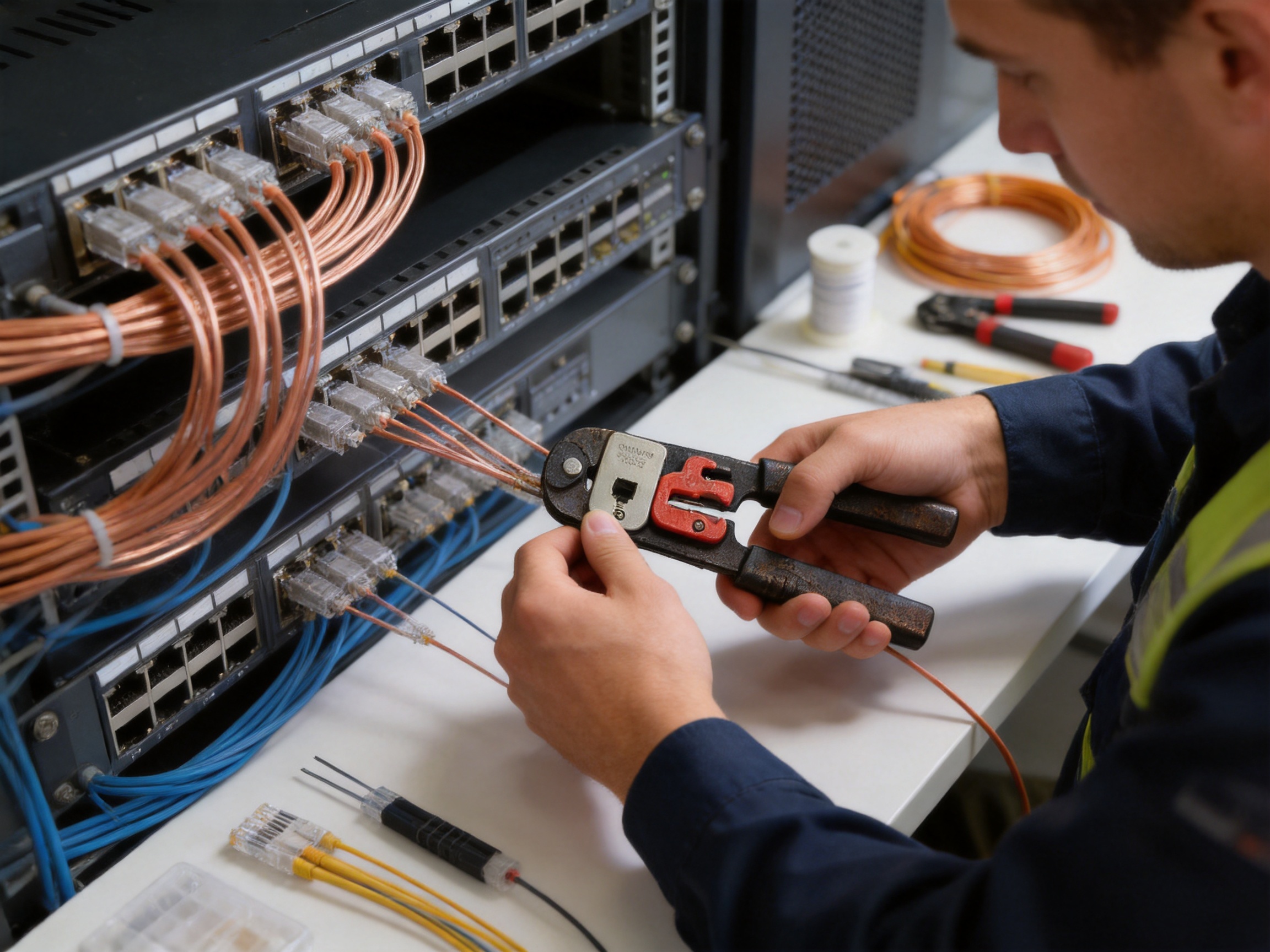
In structured cabling, every connection is only as dependable as the tool used to create it. A cable may be manufactured to a high standard, a connector may be selected correctly, and the installation plan may be carefully designed, but if the crimping process is inconsistent, the whole communication channel can suffer. The SMT-310 Black Oxidized Durable Crimp Tool is designed for technicians, installers, system integrators, and maintenance teams who need a practical, strong, and easy-to-use hand tool for copper and fiber-related cabling environments. As part of the Tools Series, it supports the installation workflow behind data cabling systems, network communication projects, smart building infrastructure, and integrated low-voltage systems.
SMT-310 Black Oxidized Durable Crimp Tool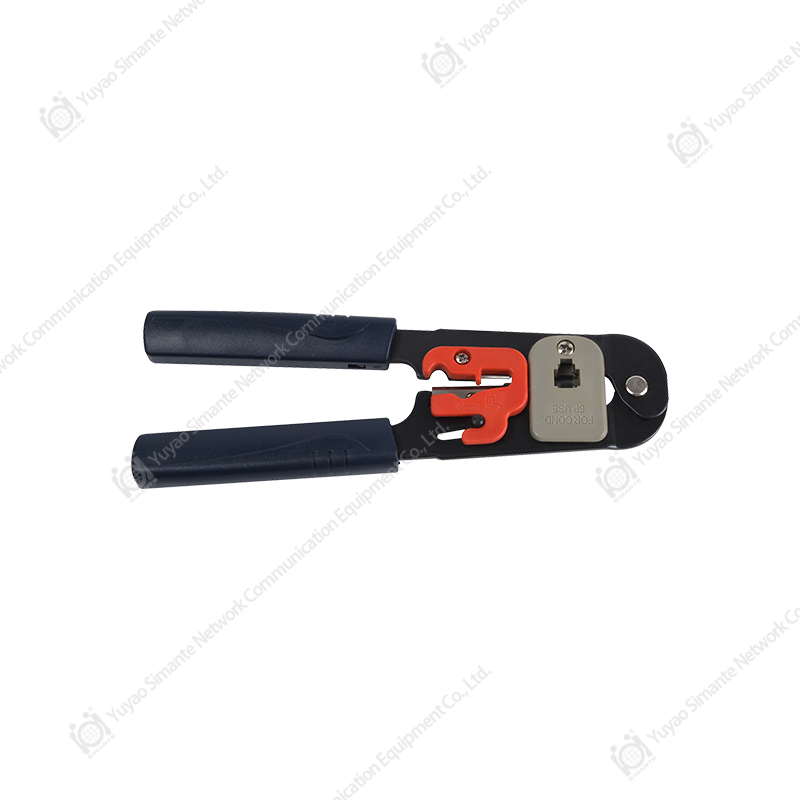
This crimp tool is built around a hardened steel frame with a black oxide finish. The structure is intended to provide dependable strength while remaining lightweight enough for frequent field use. It is described as a deluxe type tool with a guide for operation, helping users achieve more controlled handling during repeated tasks. An additional locker is also included for storage after work, improving tool protection, safety, and organization when the tool is not in use. These features make the tool suitable for professional environments where reliability, convenience, and long service life are all important.
The product is offered by Yuyao Simante Network Communication Equipment Co., Ltd., a manufacturer focused on network cabling solutions and optical fiber products. The company integrates design, development, sales, and service, with nearly two decades of experience in the structured cabling field. Its product portfolio includes keystone jacks, patch panels, wall face plates, data sockets, tools, and other components widely used in communication networks and smart infrastructure. This manufacturing background gives the SMT-310 crimp tool a strong practical context: it is not simply a generic hand tool, but part of a broader cabling ecosystem supported by engineering knowledge, production capacity, and application experience.
Designed for the Demands of Structured Cabling Installation
Structured cabling work requires accuracy, repeatability, and durability. Installers often work in construction sites, data rooms, office buildings, residential projects, telecommunications cabinets, and industrial control environments. Tools are frequently transported, stored in tool bags, used repeatedly during long working days, and exposed to dust, handling impact, and changing jobsite conditions. A crimp tool that feels loose, weak, or poorly aligned can slow installation and increase the risk of poor termination quality. The SMT-310 is designed to address these practical challenges through a strong frame, protective surface treatment, guided operation, and convenient locking storage.
The hardened steel frame is one of the most important characteristics of the product. Steel provides the mechanical foundation required for crimping pressure and structural stability. Hardening improves resistance to deformation and helps the tool retain its shape during repeated use. This matters because crimping is not a decorative operation; it depends on controlled pressure and consistent positioning. When a tool body bends or wears prematurely, the quality of each crimp can become less predictable. By using a hardened frame, the SMT-310 is intended to provide the robust support needed for repeated field installation and workshop use.
The black oxide finish adds another level of value. Black oxide treatment is often used on metal tools to improve surface appearance and provide a degree of protection against corrosion and wear. It also reduces glare, giving the tool a professional, low-reflection look. In a working environment where tools are handled daily, a surface finish is more than an aesthetic choice. It contributes to long-term usability, helps protect the underlying metal, and supports the impression of a serious, purpose-built installation tool. Compared with low-cost tools that use thin paint or inconsistent plating, a black oxide finish can offer a more durable and refined surface.
Lightweight design is also central to the user experience. A crimp tool must be strong enough to perform reliably, but if it is too heavy, it can increase fatigue during long periods of installation. The SMT-310 balances durability with manageable handling. This makes it suitable for installers who may need to complete many terminations in a single project. Better ergonomics and reduced fatigue can improve concentration, and better concentration often leads to fewer mistakes. In professional cabling work, fewer mistakes mean less rework, lower labor cost, and a more stable final network.
Key Product Features and Practical Benefits
| Feature | Technical Meaning | Practical Benefit for Users |
|---|---|---|
| Hardened steel frame | Strong structural body designed to resist deformation during repeated use | Supports consistent crimping performance and longer tool service life |
| Black oxide finish | Surface treatment that improves appearance and helps protect the metal surface | Enhances durability, reduces visible wear, and gives the tool a professional look |
| Lightweight construction | Balanced material design for strength without unnecessary bulk | Reduces hand fatigue during long installation tasks |
| Deluxe type with guide | Operational guide supports better positioning and controlled handling | Improves ease of use and helps technicians work more consistently |
| Additional locker | Integrated locking function for storage after work | Improves safety, protects the tool, and supports organized transport |
| Tools Series product | Part of a broader structured cabling product range | Fits naturally into copper and fiber network installation workflows |
Advantages Over Ordinary Competing Crimp Tools
Many competing crimp tools on the market are designed primarily to meet a low purchase price. While budget tools may appear acceptable at first glance, their limitations often become visible during repeated use. Common issues include soft metal frames, poor alignment, uncomfortable handling, inconsistent finishing, loose pivots, and weak storage locks. These problems may not be obvious in a product photo, but they can affect real installation quality. The SMT-310 is positioned as a more dependable option by focusing on the fundamentals that matter most: frame strength, surface durability, usability, and storage convenience.
The hardened steel frame gives the SMT-310 an advantage over tools made with lower-grade or insufficiently treated metal. In crimping, frame rigidity is critical. A soft frame can flex under pressure, resulting in uneven force transfer. This can lead to terminations that look complete but do not achieve the best mechanical contact. Over time, frame deformation can also make the tool uncomfortable or unreliable. A hardened steel frame helps maintain tool geometry and offers a more secure feel in the hand, especially for technicians who depend on the tool every day.
The black oxide finish also distinguishes the product from many basic alternatives. Some low-cost tools use painted surfaces that chip easily, exposing the metal beneath and making the tool look worn after limited use. Others use inconsistent finishes that may feel rough or become discolored. The black oxide treatment of the SMT-310 supports a cleaner, more durable surface. For professional installers, the appearance of tools can also influence customer confidence. A clean, well-finished tool communicates that the technician is prepared, organized, and attentive to quality.
The guide for operation is another important advantage. A crimping tool is not only about squeezing force; it is also about correct positioning and repeatable motion. The deluxe guide design helps users operate the tool more confidently, especially when tasks must be repeated many times. In comparison, tools without clear guidance may require more user adjustment and may increase the chance of misalignment. For experienced installers, a guide can make work faster. For less experienced users, it can make the learning process easier and reduce avoidable errors.
The additional locker for storage after work may seem like a simple feature, but it has real value in daily use. A tool that cannot be locked neatly can open inside a tool bag, damage nearby accessories, or expose sharp or shaped metal edges. It can also take up more space. The locker helps keep the crimp tool closed when not in use, making transport safer and storage more organized. Competitors sometimes overlook this detail, but technicians who carry tools from site to site understand how useful it can be.
Another competitive advantage is the product’s connection to a manufacturer that understands complete cabling systems. The SMT-310 is supplied by a company that also produces many structured cabling components. This matters because tool design benefits from knowledge of the products it supports. A company involved in keystone jacks, patch panels, wall plates, data sockets, copper systems, and fiber systems has a clearer view of installation challenges than a supplier focused only on generic hardware. This application knowledge helps shape practical product decisions.
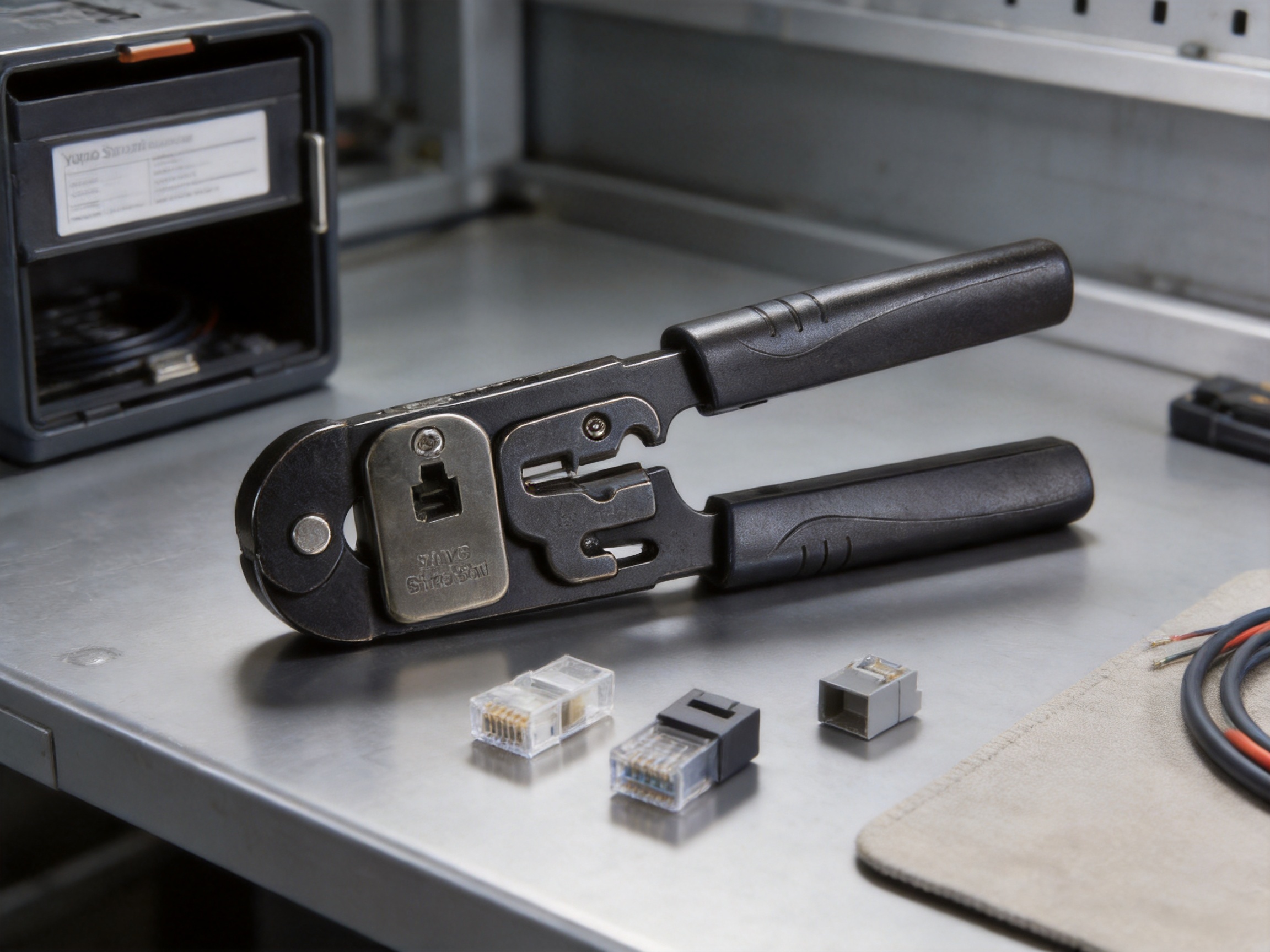
Role in Copper and Fiber System Workflows
Although crimping is often associated most directly with copper cabling, a reliable tool is valuable in broader copper and fiber system projects. Modern communication infrastructure frequently combines copper network links, fiber backbone cabling, data outlets, patch panels, cabinets, and accessories. Installation teams need tools that can move smoothly across different parts of the project. The SMT-310 is part of a Tools Series associated with both copper and fiber structured cabling environments, making it relevant for contractors who handle mixed infrastructure projects.
In a copper structured cabling workflow, termination quality has a direct relationship with network performance. Poor mechanical contact can contribute to intermittent connectivity, unstable transmission, or difficult troubleshooting. A stable crimping tool helps reduce the risk of unreliable terminations. While cable category, connector quality, and testing procedures remain essential, the tool used during assembly can influence the final outcome. A durable crimp tool supports repeatability, and repeatability is one of the foundations of professional cabling work.
In fiber-related environments, the tool may be used as part of a larger set of installation tools, accessories, and support equipment. Fiber systems often require careful handling, clean work habits, and organized tool storage. The SMT-310’s locker and robust finish support these expectations by helping technicians maintain an orderly toolkit. Even when the tool is not used directly on fiber components, its reliability contributes to the efficiency of teams that manage integrated network installations.
Network projects also require speed without sacrificing quality. Contractors often operate under deadlines, and installation teams may need to complete many connection points before testing and handover. A tool that is difficult to use can slow progress and increase fatigue. The deluxe guide of the SMT-310 helps simplify the user’s operation, while the lightweight design supports longer working sessions. These features make the tool suitable for both scheduled installations and maintenance tasks.
Manufacturing Strength Behind the Product
Yuyao Simante Network Communication Equipment Co., Ltd. has nearly 20 years of service experience in network cabling solutions and optical fiber products. This long-term involvement in the industry provides more than market familiarity; it creates accumulated understanding of product performance, installation habits, customer expectations, and quality control. The company’s experience supports the SMT-310 by placing it within a mature manufacturing and service system rather than treating it as an isolated accessory.
The company integrates design, development, sales, and service. This integrated model is important because feedback can move more efficiently between customers, engineers, production teams, and support personnel. When technicians report installation preferences or quality expectations, the information can influence future development and process improvement. A company that only trades finished goods may not have the same ability to adjust product details. By maintaining design and development capabilities, the manufacturer can support ongoing product refinement.
The company has more than 10 engineers and over 30 full-time technical personnel. This professional team contributes to product development, quality improvement, customization, and technical support. For tools and structured cabling components, engineering knowledge is essential. Product dimensions, material selection, surface treatment, user handling, and durability all require technical judgment. The SMT-310 benefits from being produced within an organization that values engineering input and technical problem solving.
The factory operates 10 regular and customization production lines. This combination of standard and customized manufacturing capacity gives the company flexibility. Standard production lines support stable output for regular products, while customization lines help meet specific OEM and ODM requirements. For international customers, this flexibility is valuable because different markets may require packaging differences, labeling preferences, project-specific supply arrangements, or coordinated product sets. The ability to provide customized solutions strengthens the overall product offering.
The company’s production base includes fully automatic injection molding machines, semi-automatic injection molding machines, and various automatic installed machines. Although the SMT-310 itself is a steel-frame hand tool, it belongs to a product ecosystem that includes many molded and assembled cabling products. Advanced equipment supports consistency, efficiency, and production stability across the company’s portfolio. This manufacturing environment helps ensure that tools and accessories can be supplied alongside core cabling components in a dependable manner.
With an annual output of more than 9 million units across its production operations, the company demonstrates strong manufacturing capacity. High output requires organized production planning, material management, quality control, and delivery coordination. For buyers of structured cabling products, supplier capacity matters. A reliable tool is important, but reliable availability is also important. Contractors, distributors, and project buyers need products that can be supplied consistently and supported over time.
The company is based on serving the high-end market, which results in higher requirements for product quality. This orientation is important for the SMT-310 because professional users are usually more concerned with long-term performance than with the lowest possible price. A crimp tool is a daily-use item. If it fails prematurely or produces inconsistent work, the hidden cost can exceed the initial savings of a cheaper tool. A high-quality manufacturing philosophy supports better value over the product’s service life.
Quality Control and Testing Philosophy
Quality in structured cabling tools and components must be built into the process from the beginning. Final inspection is useful, but it cannot fully compensate for poor material selection or weak process control. The manufacturer’s mature research and development system helps guarantee quality stability at the design source. This means quality thinking begins before mass production, during the stages of product design, material evaluation, tooling, and process planning.
For a crimp tool such as the SMT-310, quality considerations include frame strength, operating smoothness, surface treatment, dimensional accuracy, guide function, locking reliability, and overall handling. Each detail contributes to the user’s perception of quality and to the tool’s performance in the field. A hardened steel frame must be formed and treated correctly. A black oxide finish must be applied consistently. The guide must support operation without creating unnecessary resistance. The locker must hold the tool securely for storage without making it inconvenient to open when needed.
The company also emphasizes meeting customers’ comprehensive testing requirements through performance testing. In the cabling industry, testing expectations can vary by customer, market, and project type. Some buyers require visual inspection, operational checks, packaging review, material verification, durability evaluation, or compatibility assessment with related components. The ability to respond to these requirements is a major supplier advantage. It gives customers greater confidence when selecting products for professional distribution or project installation.
Strict production management is another important factor. Manufacturing quality depends on repeatability. A product may perform well in a sample but fail to remain consistent during large-scale production if the process is not controlled. Strict management helps maintain stable results from batch to batch. For buyers ordering tools, jacks, panels, plates, or other network components, this consistency reduces risk and simplifies planning.
Quality control also affects brand reputation in export markets. The company maintains stable export volume in Europe, Australia, Africa, the Middle East, and Southeast Asia. These markets include diverse installation standards, customer expectations, climates, and project environments. Maintaining export stability suggests that the company can adapt to international requirements and provide products that meet practical market needs. The SMT-310 benefits from this export-oriented manufacturing discipline.
Application Scenarios for Professional Users
The SMT-310 is suitable for a wide range of users involved in network infrastructure. Cabling contractors can use it during building installations, office network upgrades, campus cabling projects, and system expansions. Maintenance technicians can keep it in service kits for repairs, replacements, and troubleshooting. System integrators can include it in toolkits for smart home, automation, and low-voltage system installation. Distributors can offer it as part of a complete structured cabling product range.
In office network projects, technicians often perform repeated termination tasks across multiple work areas. The lightweight build of the SMT-310 helps reduce fatigue, while the guide supports controlled operation. The storage locker is useful when moving between floors, rooms, or jobsite zones. A tool that stores compactly and safely helps installers maintain efficiency during busy project schedules.
In data room or equipment cabinet work, space may be limited, and organization is critical. A durable, neatly finished crimp tool can be stored alongside cable testers, cutters, strippers, labels, and other accessories. The black oxide finish helps the tool maintain a professional appearance, while the steel frame supports long-term use. Reliability is especially important in data environments where poor connections may cause downtime or service issues.
In smart home and automation projects, installers often work with multiple system types, including network cabling, control wiring, equipment interfaces, and wall-mounted outlets. A versatile and dependable tool supports the practical workflow of these mixed installations. Because the manufacturer also supplies wall face plates, data sockets, and related cabling products, the SMT-310 can be sourced as part of a broader installation solution.
For OEM and ODM buyers, the tool can be considered within a customized product offering. The company’s manufacturing system supports both regular and customization production lines, allowing it to work with customers who require private-label solutions, project-based supply, or coordinated tool-and-component packages. This is a meaningful advantage for distributors who want to build a consistent product portfolio under their own market strategy.
Ergonomics, Storage, and Field Practicality
A professional crimp tool must be comfortable enough for repeated use. Ergonomics is not only about soft grips or appearance; it is about the full interaction between tool weight, balance, handle movement, guide function, and user control. The SMT-310’s lightweight and durable design supports field practicality by reducing unnecessary strain while maintaining the strength needed for installation tasks.
Fatigue is an often underestimated factor in cabling quality. During long installation days, tired hands and reduced attention can result in inconsistent workmanship. A tool that feels heavy, awkward, or unstable can increase fatigue. By using a lightweight yet durable construction, the SMT-310 helps technicians maintain better control throughout repeated operations. Better control supports cleaner work and more consistent results.
The deluxe guide for operation contributes to handling confidence. A guide can help the user position the tool correctly and complete the action more smoothly. This is especially useful when work must be completed quickly or when technicians must operate in tight spaces. A guided operation design can reduce hesitation and make the crimping process feel more predictable.
Storage is another practical concern. Tools are commonly carried in bags, cases, carts, or vehicle compartments. Without a locking function, a crimp tool may remain open, take up more space, or catch on other items. The SMT-310 includes an additional locker for storage after work. This feature supports safety and organization, helping the tool remain closed and protected when not in use. It also reflects attention to the full working cycle: not only operation, but also transport, storage, and long-term care.
Material and Finish: Why They Matter
The material and finish of a crimp tool strongly influence its service life. Hardened steel provides a stable mechanical base. It resists deformation better than softer materials and supports the pressure involved in crimping tasks. This is important because a crimp tool must remain aligned over time. If the tool body loses shape, the user may experience inconsistent results or increased operating effort.
The black oxide finish contributes to durability and appearance. In professional tools, surface treatment helps protect the metal and improves the user’s perception of quality. A clean black finish can also make the tool look more refined than raw or roughly painted alternatives. While surface treatment alone does not define tool performance, it supports the overall durability package when combined with a properly hardened frame.
Compared with tools that rely on thin paint, the SMT-310’s black oxide finish is more suitable for users who need a durable working surface. Paint can chip under impact or abrasion, while poor-quality plating may peel or discolor. Black oxide offers a professional finish that aligns with the tool’s durable character. For distributors and professional users, this can reduce complaints related to appearance and early visible wear.
The material choice also affects user confidence. A tool that feels solid in the hand encourages technicians to work decisively. A tool that feels weak or poorly finished may cause hesitation or require extra checks. In installation work, confidence and repeatability are closely connected. The SMT-310’s steel frame and black oxide treatment support a dependable user experience.
Integration with a Complete Structured Cabling Product Portfolio
The value of the SMT-310 is strengthened by the manufacturer’s complete structured cabling product portfolio. Yuyao Simante Network Communication Equipment Co., Ltd. produces keystone jacks, patch panels, wall face plates, data sockets, and related products used in structured cabling, network communication, smart home, automation equipment, and other fields. A tool supplied within this ecosystem can be matched with the needs of installers who use these components every day.
For buyers, sourcing tools and components from a specialized manufacturer can simplify procurement. Instead of purchasing jacks from one supplier, panels from another, wall plates from a third, and tools from an unrelated source, customers can work with a company that understands the entire cabling environment. This can improve product coordination, reduce communication costs, and support more consistent quality expectations across the project.
The company’s experience in both copper and fiber systems also supports broader project requirements. Modern networks increasingly combine different media and connection points. A supplier with knowledge of both copper and optical fiber products can serve customers more comprehensively. The SMT-310 plays a supporting role in this larger solution by helping technicians complete field work efficiently and reliably.
For distributors, a complete portfolio also makes sales easier. The crimp tool can be offered alongside related cabling products as part of a professional installation set. For contractors, the benefit is practical convenience. For end users, the benefit is improved confidence that the tools and components are supplied by a company with specialized industry knowledge.
OEM and ODM Support for Global Customers
OEM and ODM capability is an important strength for international business. Many distributors and project suppliers want products that can match their own branding, packaging, documentation, or market positioning. Yuyao Simante Network Communication Equipment Co., Ltd. undertakes OEM and ODM projects, allowing customers to develop more customized solutions. This capability adds value to the SMT-310 because it can be supplied not only as a standard tool, but also as part of a tailored product program.
Customization may involve packaging design, product labeling, accessory combinations, or integration with other structured cabling products. The company’s regular and customization production lines support this flexibility. For customers serving different regions, customization can help products better meet local market preferences. For example, a distributor may want a complete set of cabling tools and components in unified packaging. A project supplier may require product documentation that matches a specific tender format. OEM and ODM support makes these approaches more realistic.
The company’s export experience also supports OEM and ODM customers. Markets in Europe, Australia, Africa, the Middle East, and Southeast Asia may have different purchasing habits and application priorities. A manufacturer familiar with international supply can better understand packaging durability, shipment coordination, batch consistency, and customer communication. This reduces risk for buyers who need long-term cooperation rather than one-time transactions.
For a tool such as the SMT-310, OEM and ODM capability may also help customers build a stronger professional product line. A durable black oxidized crimp tool with a hardened steel frame can serve as a dependable core item in a tool offering. When combined with the manufacturer’s other cabling components, it can become part of a complete installation solution.
How the SMT-310 Supports Installation Quality
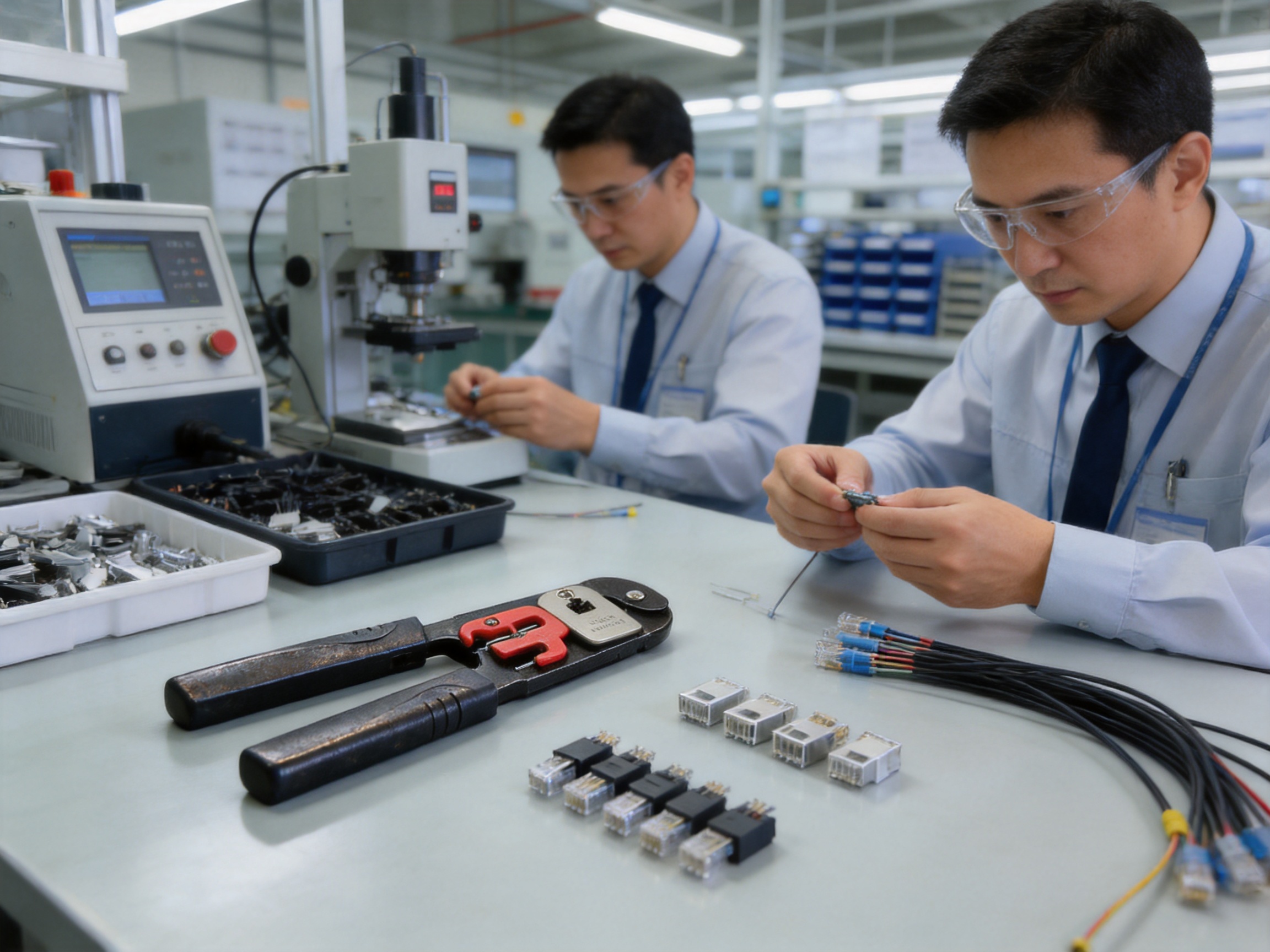
Installation quality depends on multiple factors: correct product selection, proper cable preparation, accurate termination, testing, labeling, and documentation. The SMT-310 contributes specifically to the termination and assembly stage. By providing a strong and durable crimping platform, it helps technicians perform work more consistently. Its guide supports controlled operation, and its lightweight design helps reduce fatigue during repeated use.
A reliable crimp tool can also reduce rework. Rework is costly because it consumes time, materials, and labor. It may also delay project handover. When terminations are completed correctly the first time, installers can move more efficiently to testing and final documentation. While no tool can replace proper training, a well-designed tool supports good technique and helps reduce avoidable errors.
The storage locker indirectly supports quality as well. A tool that is properly stored is less likely to be damaged. Damage to tool edges, moving parts, or alignment can affect performance. By helping the tool remain closed and organized after work, the locker contributes to tool care. Good tool care supports long-term reliability.
Professional installation teams often standardize their tools to improve consistency across workers. When multiple technicians use similar tools, training and workflow become easier. The SMT-310’s practical features make it suitable for standardization in installation teams. Its balance of durability, usability, and storage convenience supports daily field operations.
Buyer Considerations and Value Proposition
When selecting a crimp tool, buyers should look beyond the initial purchase price. A very cheap tool may cost less at the beginning, but if it wears quickly, feels uncomfortable, or causes inconsistent work, its total cost can be higher. The SMT-310 offers value through durability, ease of operation, professional finish, and manufacturing support. These qualities are especially important for users who work on network cabling projects regularly.
Distributors should consider how the tool fits into their product portfolio. A durable crimp tool can complement keystone jacks, patch panels, wall plates, data sockets, and other accessories. Offering tools alongside components can make the distributor more useful to contractors and installers. It also helps customers buy more of what they need from one source.
Contractors should consider tool reliability and technician comfort. A tool used daily must withstand repeated pressure and transport. The hardened steel frame supports long service life, while the lightweight design helps reduce fatigue. The guide improves usability, and the locker makes transport easier. Together, these features support a more efficient installation process.
Project buyers should consider supplier strength. A product is more dependable when backed by a manufacturer with engineering resources, production capacity, quality control, export experience, and service support. Yuyao Simante Network Communication Equipment Co., Ltd. provides these strengths through its technical team, production lines, equipment base, testing orientation, and international market experience.
Maintenance and Best-Use Recommendations
To get the best performance from the SMT-310, users should keep the tool clean and store it properly after each working session. The additional locker should be used to close the tool during transport and storage. This helps prevent accidental opening and reduces the chance of damage in a tool bag or case. Although the black oxide finish supports durability, the tool should still be protected from unnecessary moisture and harsh storage conditions.
Users should inspect the tool regularly for signs of damage, contamination, or abnormal movement. Any professional crimp tool should operate smoothly and maintain proper alignment. If the tool is dropped or subjected to unusual impact, it should be checked before further use. Regular inspection helps maintain installation quality and extends tool life.
Technicians should also follow correct cabling practices. A good tool works best when used with suitable connectors, properly prepared cables, and correct installation methods. Cable ends should be prepared carefully, and the crimping operation should be completed with steady pressure and proper positioning. The guide on the SMT-310 helps support this process, but user technique remains important.
For team environments, it is helpful to train all users in proper operation and storage. Standard procedures reduce variation and help protect tools. When technicians understand why the frame, finish, guide, and locker matter, they are more likely to handle the tool correctly. Good habits preserve product performance and improve project results.
Q&A Section
What is the SMT-310 Black Oxidized Durable Crimp Tool used for?
The SMT-310 is a professional crimp tool designed for structured cabling installation and related network communication work. It supports technicians working with copper and fiber system environments as part of a complete cabling workflow.
What makes the tool durable?
The tool uses a hardened steel frame, which provides strength and resistance to deformation during repeated use. Its black oxide finish also helps protect the metal surface and gives the tool a professional appearance.
Why is the black oxide finish important?
The black oxide finish improves surface durability and creates a clean, refined look. Compared with thin paint or inconsistent low-cost finishes, it better supports long-term professional use and reduces the appearance of early wear.
How does the guide for operation help users?
The guide supports more controlled handling and positioning during crimping. This can improve ease of use, reduce hesitation, and help technicians achieve more consistent results during repeated installation tasks.
What is the purpose of the additional locker?
The additional locker keeps the tool closed during storage after work. This improves safety, protects the tool, saves space, and helps technicians keep their toolkits organized.
Is the tool suitable for long working days?
Yes. The SMT-310 is designed to be lightweight while remaining durable. This balance helps reduce hand fatigue during repeated use, making it suitable for contractors and technicians who perform many terminations in a single project.
How does this product compare with low-cost competing tools?
Compared with many low-cost alternatives, the SMT-310 offers a stronger hardened steel frame, a more durable black oxide finish, guided operation, and a storage locker. These features support better service life, easier handling, and more professional field use.
Who manufactures the product?
The product is supplied by Yuyao Simante Network Communication Equipment Co., Ltd., a professional manufacturer of network cabling solutions and optical fiber products with nearly 20 years of industry experience.
Can the product be supplied for OEM or ODM projects?
Yes. The manufacturer undertakes OEM and ODM projects and operates both regular and customization production lines, supporting customers who need tailored product solutions, packaging, or coordinated cabling product programs.
What types of customers can benefit from this crimp tool?
Cabling contractors, network installers, maintenance technicians, system integrators, distributors, and OEM or ODM buyers can all benefit from the SMT-310. It is especially useful for professionals who require a durable and convenient tool for repeated structured cabling work.
Conclusion
The SMT-310 Black Oxidized Durable Crimp Tool is designed for practical reliability in structured cabling work. Its hardened steel frame provides the strength needed for repeated use, while the black oxide finish improves durability and professional appearance. The lightweight design supports long working sessions, the guide helps users operate more consistently, and the additional locker improves storage safety and organization. These features address real field requirements and give the tool clear advantages over many basic competing products.
The tool’s value is further strengthened by the manufacturing background of Yuyao Simante Network Communication Equipment Co., Ltd. With nearly 20 years of experience, a technical engineering team, multiple production lines, advanced equipment, quality-focused management, high annual output, and export experience, the company provides a strong foundation for dependable structured cabling products. The SMT-310 is not only a tool; it is part of a broader network cabling solution supported by manufacturing capability and industry knowledge.
For professional users, the right crimp tool can improve installation efficiency, reduce fatigue, support consistent workmanship, and lower the risk of rework. For distributors and project buyers, it offers a reliable product backed by a manufacturer with OEM and ODM flexibility. For network infrastructure projects, it contributes to the dependable completion of cabling tasks. In a market where many tools compete mainly on price, the SMT-310 stands out by focusing on durability, usability, and long-term value.
References
Bibliography Entry 1: Structured Cabling Installation Practices, Telecommunications Industry Training Materials.
Bibliography Entry 2: Network Cabling Systems and Field Termination Methods, Professional Low-Voltage Installation Guide.
Bibliography Entry 3: Hand Tool Materials and Surface Treatment Principles, Industrial Manufacturing Reference Manual.
Bibliography Entry 4: Quality Management in Communication Equipment Manufacturing, Production Engineering Review.
Bibliography Entry 5: Copper and Optical Fiber Network Infrastructure Applications, Data Communication Systems Handbook.