Español
 عربى
عربى русский
Content
- 1 Product Overview
- 2 Key Product Specifications
- 3 Design Advantages of the One-Port Format
- 4 Embedded Frame and Concealed Fixing
- 5 Spring-Type Dust-Proof Door
- 6 Port Identification and Label Management
- 7 Material Selection and Mechanical Durability
- 8 Environmental Performance and RoHS Considerations
- 9 Application Areas
- 10 Installation Considerations
- 11 Advantages Compared with Basic Faceplates
- 12 Manufacturing Capabilities and Quality Strengths
- 13 Design-to-Production Process
- 14 Quality Assurance and Testing Approach
- 15 Packaging, Storage, and Logistics
- 16 OEM, ODM, and Custom Project Support
- 17 Selection Guide for Project Buyers
- 18 Maintenance and Long-Term Use
- 19 Frequently Asked Questions
- 19.1 What is the SMT-4308-80F-1X designed for?
- 19.2 How many connectors can be installed?
- 19.3 Does the faceplate have visible screws?
- 19.4 What type of fixing hardware is used?
- 19.5 What is the purpose of the spring-type door?
- 19.6 Can the port be labeled?
- 19.7 What material is used for the faceplate?
- 19.8 What temperature range is specified?
- 19.9 Does the product meet environmental requirements?
- 19.10 How should the product be stored?
- 19.11 Is special packaging available?
- 19.12 Can the manufacturer support OEM or ODM projects?
- 19.13 Can the faceplate be used outdoors?
- 19.14 Does the faceplate itself determine network performance?
- 20 Conclusion
- 21 References
- 22 Product: SMT-4308-80F-1X One Port Germany Beveled Faceplate

Reliable structured cabling depends on more than cable performance alone. The quality of the termination point, the protection of the connector, the accuracy of the installation, and the long-term durability of the outlet all influence the stability and appearance of a network. A wall-mounted faceplate is therefore a small but important component in copper and fiber communication systems. It provides the visible interface between the concealed cabling infrastructure and the user’s equipment while protecting the installed connector from dust, impact, and accidental damage.
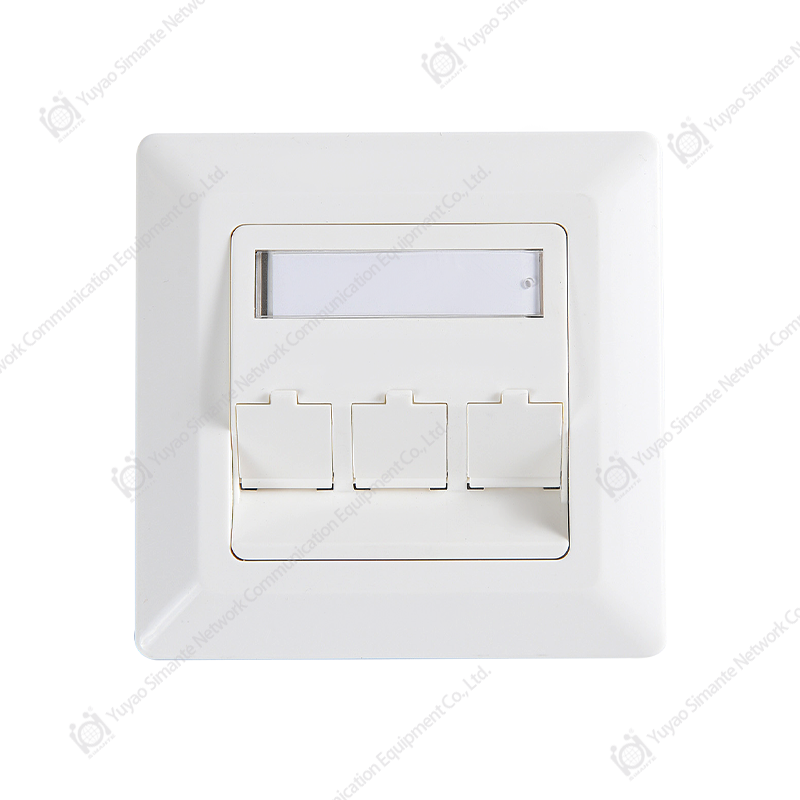
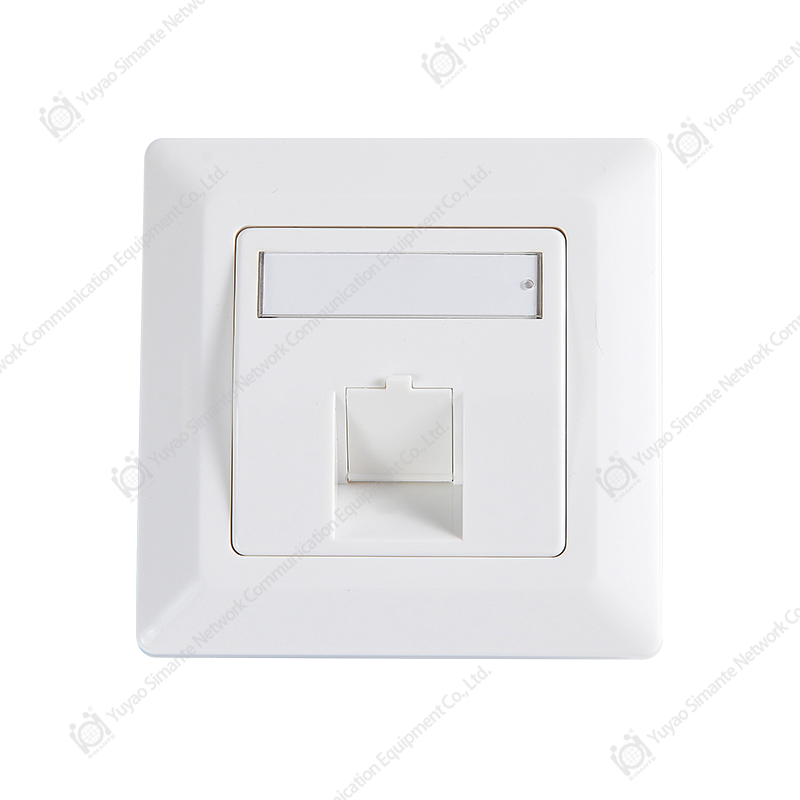
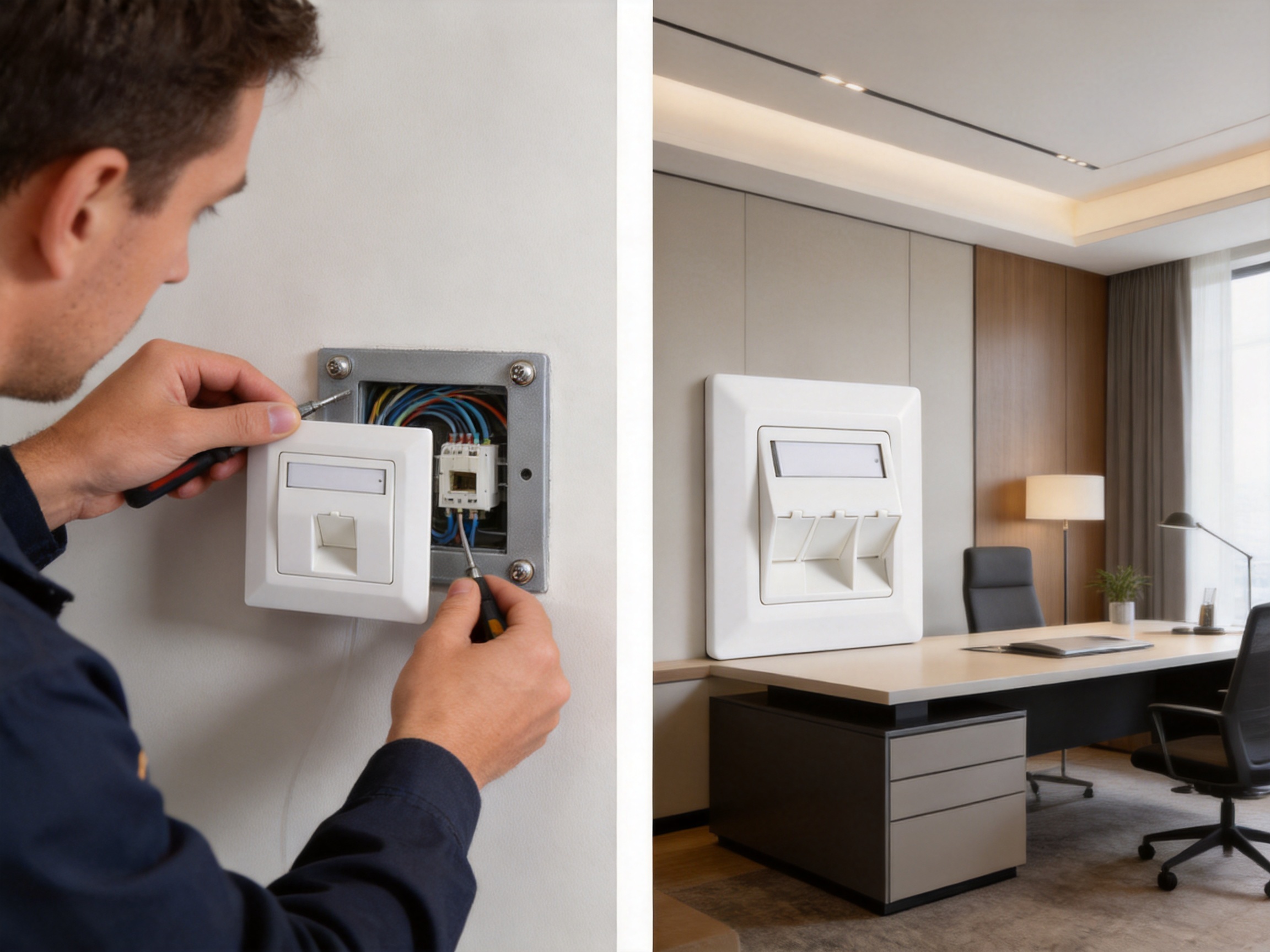
The SMT-4308-80F-1X One Port Germany Beveled Faceplate is designed for professional data, telephone, smart-home, automation, and general information outlet applications. It is a one-port wall faceplate compatible with Type 80 exposed and concealed back boxes. Its embedded frame, spring-type dust-proof door, detachable identification plate, robust ABS construction, and practical installation method make it suitable for projects that require a clean appearance and dependable daily performance.
Although a faceplate may appear simple, its design affects installation efficiency, port management, system protection, and the overall finish of a project. This product combines a compact one-port format with a beveled German-style appearance, concealed fixing, and compatibility with information and telephone modules using the Amp interface. It is intended for contractors, distributors, system integrators, structured cabling installers, electrical wholesalers, and OEM customers seeking a stable component for network infrastructure.
Product Overview
The SMT-4308-80F-1X is a wall-mounted faceplate designed to accommodate one information or telephone connector. It is common to Type 80 exposed and concealed back boxes and uses two standard M3.5 or M4 bolts. The one-port arrangement is particularly appropriate for locations where a single network, telephone, control, or service connection is required without occupying unnecessary wall space.
The faceplate is compatible with all information and telephone modules of the Amp interface. This compatibility provides flexibility during project planning because the installer can select the appropriate connector or module according to the application. Depending on the communication system, the outlet can serve as a termination point for structured copper cabling, a telephone connection, a control interface, or another compatible low-voltage communication service.
The product’s beveled face gives the outlet a neat and modern profile. The recessed embedded frame hides the mounting screws from view, creating a cleaner surface than a basic exposed-screw plate. This detail is important in offices, hotels, apartments, educational buildings, commercial interiors, and other locations where the appearance of the wall outlet matters as much as its basic function.
In addition to its visual advantages, the faceplate is designed for practical maintenance. The front dust-proof door helps protect the connector opening when the port is not in use. The logo window supports port identification, while the detachable logo plate allows labeling to be changed when the room layout, network assignment, or customer requirements change.
Key Product Specifications
| Item | Specification |
|---|---|
| Product model | SMT-4308-80F-1X |
| Product type | One-port wall-mounted faceplate |
| Product style | Germany beveled faceplate |
| Supported back boxes | Type 80 exposed or concealed back boxes |
| Module capacity | One compatible information or telephone connector |
| Interface compatibility | Amp interface information and telephone modules |
| Fasteners | Two standard M3.5 or M4 bolts |
| Main material | ABS engineering plastic |
| Protection feature | Spring-type dust-proof door |
| Identification feature | Front logo window and detachable logo plate |
| Environmental compliance | Designed to meet RoHS requirements |
| Operating temperature | -25 to +70 degrees Celsius |
| Regular packing quantity | 20 units per inner box and 200 units per carton, with ten inner boxes per carton arrangement as specified for regular packing |
Design Advantages of the One-Port Format
A one-port faceplate is an efficient solution when only one connector is required at a particular location. Installing a larger multi-port plate where only one service is needed can create unused openings, increase material costs, and reduce the visual consistency of a room. The SMT-4308-80F-1X provides a dedicated single-port solution that keeps the installation compact and purposeful.
One-port outlets are commonly used beside desks, in hotel rooms, residential rooms, security points, access-control locations, telephone positions, wall-mounted equipment areas, and smart-home control locations. They can also be useful in renovation projects where existing wall space is limited or where the customer wants each service clearly separated.
The smaller format can simplify cable management behind the wall plate. When the installer is working with a single module, there is more room to position the cable, organize the termination, and avoid unnecessary bending or crowding. This can help reduce installation time and make future inspection easier.
The one-port structure also supports modular project design. A contractor can use single-port plates in rooms requiring one connection and select multi-port products for locations requiring multiple connections. This approach allows the visible outlet configuration to match the actual service requirement instead of forcing a uniform plate size throughout the building.
Embedded Frame and Concealed Fixing
One of the product’s main design features is its embedded face frame. The fixing arrangement is designed so that screws are not visible on the front surface after installation. This creates a more refined appearance than a conventional plate with exposed fasteners.
Concealed fixing has practical benefits beyond appearance. Visible screws can collect dust around the screw head, become scratched during cleaning, or create an inconsistent appearance when different installers tighten them to different positions. By integrating the frame and covering the fixing points, the faceplate presents a more uniform finished surface.
The concealed design is especially useful in commercial and hospitality environments. Offices, hotels, serviced apartments, healthcare facilities, retail stores, and meeting rooms often require network outlets that blend into the interior. A clean faceplate can support the project’s architectural appearance while still providing access to the required communication service.
The embedded structure also supports installation and disassembly. A professional installer can position the plate, secure the specified bolts, and remove the visible frame when maintenance or module replacement is needed. This is useful when a connector must be inspected, a label must be changed, or an interior renovation requires the outlet to be temporarily removed.
Compared with basic faceplates that rely on exposed screws and a fixed front cover, this design offers a better balance between accessibility and appearance. It helps installers achieve a finished installation without adding complicated tools or special mounting procedures.
SMT-4308-80F-1X One Port Germany Beveled Faceplate
Spring-Type Dust-Proof Door
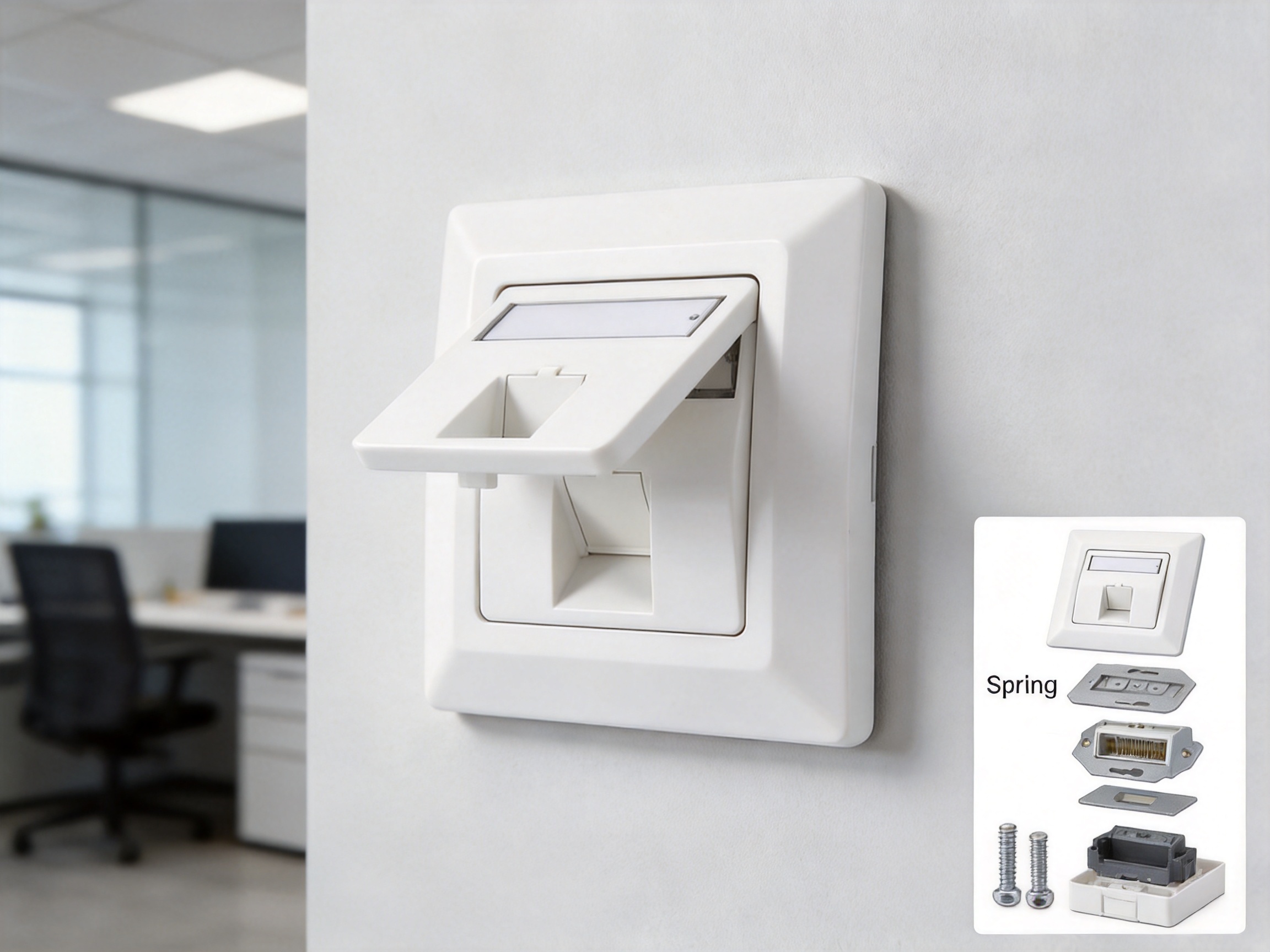
The front of the faceplate is equipped with a spring-type dust-proof door. When the connector is not in use, the door helps cover the opening and reduce the direct entry of dust and airborne particles. In busy indoor environments, this additional barrier can help keep the connector area cleaner between connection cycles.
Dust protection is important for network and communication outlets because contaminants can accumulate around the contact area, module opening, and cable plug. Although the faceplate is not a substitute for correct connector maintenance, a protective door can reduce unnecessary exposure during periods when the port is idle.
The spring mechanism allows the door to return toward its protective position after the cable is removed. This provides a convenient user experience because the cover does not need to be manually stored or repositioned separately. It also helps maintain a consistent appearance across multiple outlets in the same installation.
The door is useful in offices, classrooms, hotel rooms, residential properties, warehouses, and light industrial interiors. It can protect the outlet from everyday contact, occasional dust, and minor environmental exposure associated with normal indoor use. For applications with unusually severe contamination, moisture, or chemical exposure, the installer should confirm that the complete outlet assembly and installation environment are suitable.
A protective cover can also reduce accidental contact with the empty connector opening. This is useful in areas where furniture, cleaning equipment, or other objects may pass close to the wall plate. The door does not eliminate the need for careful handling, but it adds a practical layer of protection to the visible interface.
Port Identification and Label Management
Network infrastructure becomes easier to operate when each port is clearly identified. The SMT-4308-80F-1X includes a logo window on the front and a detachable logo plate. These features allow the user or installer to associate the port with a room number, workstation, service type, patch-panel position, telephone extension, or other project-specific information.
Clear identification reduces the time required for troubleshooting and routine maintenance. A technician can understand the intended function of the outlet without opening the wall box or tracing the entire cable route. In larger buildings, accurate labeling can make a significant difference when dozens or hundreds of outlets are installed.
The detachable logo plate is particularly valuable when the usage of a room changes. For example, a port originally assigned to a telephone may later be used for data communication or another low-voltage application. Instead of replacing the complete faceplate, the installer can update the identification element according to the customer’s labeling system.
Port management is also important for structured cabling documentation. A well-organized installation typically includes identifiers at the work-area outlet, telecommunications room, patch panel, and network equipment. The faceplate’s label area provides a visible reference that can be coordinated with the project’s cable schedule and testing records.
For OEM and customized projects, the identification feature may also support customer-specified packaging or product marking requirements. The product information states that the use mark and packaging can be specified by the customer. Such flexibility can be useful for distributors, private-label programs, and projects that require a particular visual or identification system.
Material Selection and Mechanical Durability
The faceplate uses high-quality ABS engineering plastic. ABS is widely used for communication accessories because it offers a practical combination of rigidity, impact resistance, processability, and appearance. For a wall-mounted outlet, these properties help the plate maintain its shape during installation and normal use.
The product information identifies the ABS material as anti-collision, impact-resistant, and not easy to deform. These characteristics are important because a faceplate may be handled repeatedly during installation, maintenance, cleaning, furniture movement, or equipment connection. A material that deforms easily can affect the fit of the frame, the operation of the dust-proof door, and the visual quality of the finished outlet.
Mechanical stability also supports consistent production. Engineering plastic can be molded with defined edges, mounting features, labeling areas, and cover interfaces. When the manufacturing process is properly controlled, the resulting components can be produced with repeatable dimensions across large quantities.
ABS is also suitable for products that must combine functional geometry with a clean exterior. The beveled face, embedded frame, door mechanism, and logo window all require a material that can be formed accurately and maintain its shape. The selection of engineering plastic supports the product’s balance between lightweight construction and everyday durability.
As with all indoor communication accessories, correct application is essential. The faceplate should be installed in an environment consistent with its specified temperature range and intended use. It should not be exposed to conditions beyond the product design, such as prolonged outdoor weather, direct water immersion, or aggressive chemicals, unless the complete system has been separately approved for those conditions.
Environmental Performance and RoHS Considerations
The faceplate is designed to meet RoHS requirements. RoHS considerations are increasingly important in international purchasing, structured cabling projects, and equipment integration. Customers may require materials and components that align with restrictions on certain hazardous substances in electrical and electronic products.
For distributors and project contractors, RoHS-oriented product design can simplify procurement documentation and support compliance procedures. It also demonstrates that environmental considerations have been included in the product development and material selection process.
The specified operating temperature is -25 to +70 degrees Celsius. This broad range supports many indoor installation environments, including offices, commercial spaces, utility areas, equipment rooms, and other locations where temperature may vary. The installer should still evaluate the actual application, particularly if the faceplate will be placed near heat-generating equipment or in an area with unusual temperature fluctuations.
Environmental performance is not limited to operating temperature. Packaging and storage conditions also affect product quality before installation. The packaged faceplates should be stored in a warehouse with an ambient temperature of -5 to +30 degrees Celsius, relative humidity not exceeding 70 percent, and no acid, alkali, or other corrosive gases in the surrounding air.
Under the specified storage conditions, the stated storage period is three years. Proper warehousing helps preserve the appearance, mechanical fit, labeling components, and packaging integrity of the product before it reaches the job site.
Application Areas
Office and Commercial Buildings
Modern offices depend on reliable communication outlets for computers, telephones, wireless access points, printers, conference equipment, and building-management devices. A one-port faceplate can be installed at individual workstations or in locations where a single service is needed. The concealed fixing and beveled face help the outlet blend into professional interior designs.
Hotels and Serviced Apartments
Guest rooms often require a combination of data, telephone, entertainment, and control connections. The faceplate can be used where a single communication service is installed near a desk, bedside position, reception point, or equipment area. The dust-proof door helps maintain a neat appearance when the outlet is not being used by a guest.
Residential and Smart-Home Projects
Residential structured cabling is expanding as homes incorporate broadband networks, home offices, security systems, automation, and connected entertainment. A compact one-port outlet is suitable for rooms or wall positions where only one connection is required. The detachable logo plate can also support organized labeling during home renovation or system upgrades.
Educational Facilities
Schools, training centers, and universities use communication outlets in classrooms, laboratories, administration offices, libraries, and meeting rooms. The robust ABS construction and protective door can help the visible outlet withstand normal contact in active public environments. Clear labels can simplify maintenance across rooms with similar layouts.
Security and Access-Control Locations
Security cameras, access-control panels, intercom systems, and monitoring equipment may require organized low-voltage connections. A one-port faceplate can provide a clean termination point near the equipment or control position. Project designers should select the appropriate compatible connector for the specific signal and system requirements.
Renovation and Replacement Projects
Renovations often require the replacement of aged, damaged, or visually inconsistent wall outlets. A faceplate compatible with Type 80 exposed or concealed back boxes can help reduce the need for major wall modifications when the existing infrastructure is suitable. Before ordering, the installer should verify the back-box dimensions, module interface, fixing method, and local installation requirements.
Installation Considerations
Professional installation begins with confirming the compatibility of the wall box and module. The SMT-4308-80F-1X is intended for Type 80 exposed or concealed back boxes and supports compatible Amp interface information and telephone modules. The installer should confirm the module type, cable category, termination method, and connector orientation before beginning the work.
The cable should be prepared according to the connector manufacturer’s instructions. Excessive untwisting, sharp bends, poor strain relief, or incorrect pair arrangement can reduce the performance of a structured cabling link even when the faceplate itself is correctly installed. The faceplate provides the mechanical and visual interface, but complete network performance depends on the quality of the cable, connector, termination, patch panel, and testing process.
After the compatible connector is installed, the faceplate can be positioned over the back box and secured using the specified M3.5 or M4 bolts. The installer should avoid overtightening, which could damage the plastic frame or distort the plate. The embedded front frame should then be checked to ensure that it sits evenly and that no visible gap interferes with the finished appearance.
The spring-type door should be tested by opening and releasing it several times. It should move freely and return toward its protective position without sticking. The logo plate should be fitted securely, and the port identification should correspond to the project documentation.
Finally, the completed outlet should be inspected for alignment, surface damage, stable mounting, correct module seating, and proper cable connection. In a data network, the installed link should be tested using the appropriate field tester or certification equipment. Testing confirms the performance of the complete channel rather than the faceplate alone.
Advantages Compared with Basic Faceplates
Many basic faceplates provide only a plastic mounting surface and an opening for a connector. The SMT-4308-80F-1X adds several design features that improve the installation experience and the user’s interaction with the outlet.
First, its embedded frame conceals the mounting screws. This gives it a cleaner appearance than an exposed-screw design and supports a more professional result in visible locations. Second, the spring-type dust-proof door helps protect the port when idle. Third, the logo window and detachable logo plate simplify port identification and future relabeling.
The use of ABS engineering plastic also provides a stronger material platform than thin, easily deformed plastic plates. The product is designed to resist collision and impact during routine installation and use. Its compatibility with Type 80 back boxes and Amp interface modules gives contractors a defined installation ecosystem rather than requiring improvised adaptations.
The one-port format is another advantage when the application does not require multiple connections. It avoids the unused positions and larger wall footprint associated with oversized plates. In projects with many individual service locations, this can help create a consistent, organized appearance.
Compared with faceplates designed only for appearance, this product combines aesthetic treatment with functional protection and management. Compared with highly specialized plates that may require unusual hardware, it uses standard M3.5 or M4 bolts and supports familiar installation practices.
These advantages should be evaluated alongside the requirements of the specific project. A customer needing two or more connectors at one location may require a multi-port solution, while an outdoor or high-moisture application may require a product with a different environmental rating. The value of this faceplate is strongest in compatible indoor applications where one protected, identifiable communication outlet is required.
Manufacturing Capabilities and Quality Strengths
The manufacturer, Yuyao Simante Network Communication Equipment Co., Ltd., is a professional producer of network cabling solutions and optical fiber products. Its activities cover design, product development, sales, and service. This integrated structure is important because a faceplate is not only a molded plastic part; it is a product that must satisfy mechanical, visual, compatibility, packaging, and application requirements.
The company has nearly 20 years of service experience in the network communication and cabling field. Over this period, it has developed product knowledge relating to keystone jacks, patch panels, wall faceplates, data sockets, and related structured cabling components. This product-family experience can support more consistent interface planning and better coordination between individual components.
The company reports a mature research and development system intended to protect product quality from the design stage. Design-source quality is particularly important for faceplates because many performance issues originate from geometry: poor module fit, weak clips, uneven mounting points, insufficient door clearance, or inconsistent labeling areas. A controlled development process can identify and correct these issues before mass production.
The engineering team includes more than ten engineers and over thirty full-time technical personnel. Their responsibilities include product improvement, manufacturing support, quality development, and technical service. A technical team of this nature can help translate customer requirements into product specifications, production controls, packaging details, and customization programs.
The manufacturing operation includes ten regular and customization production lines. It also has ten fully automatic injection molding machines, twenty semi-automatic injection molding machines, and eight types of automatic installation equipment. This combination of automatic and semi-automatic equipment provides production flexibility for both standard products and customer-specific requirements.
Injection molding is a central process for ABS faceplates. The consistency of molding parameters influences dimensions, surface quality, structural strength, and the fit between the faceplate, door, frame, and module. Automatic injection molding equipment can help maintain repeatable conditions when properly operated and monitored. Semi-automatic equipment can provide flexibility for products with different structures, assembly requirements, or production volumes.
Automatic installation equipment can assist with repeatable assembly operations. For a faceplate with a spring-type door, logo plate, and embedded frame, controlled assembly is useful because each small component must be positioned correctly. Consistent assembly can reduce variation in door movement, frame alignment, and component retention.
The reported annual production capacity exceeds nine million units. This capacity is relevant to large structured cabling projects, distribution agreements, and ongoing OEM programs. A manufacturer with substantial output capability can support scheduled deliveries, repeat orders, and stable product availability when demand changes across different markets.
Design-to-Production Process
A reliable faceplate begins with application analysis. The design team must understand the intended back-box standard, module interface, port count, fixing method, dust-protection requirement, labeling arrangement, material performance, and environmental conditions. The SMT-4308-80F-1X reflects these considerations through its Type 80 compatibility, one-port capacity, standard bolt arrangement, protective door, and identification window.
During product development, the faceplate geometry can be reviewed for moldability, assembly, installation clearance, and appearance. The beveled surface must maintain a consistent profile, while the embedded frame must engage correctly with the main plate. The logo window must remain visible without interfering with the connector or spring door.
Tooling development is another important stage. Injection-molded components require molds that can reproduce the required features accurately. Mold design affects edge definition, surface finish, parting lines, draft angles, and dimensional stability. A mature manufacturer can use its engineering and production experience to refine tooling for both appearance and assembly performance.
After molding, components may undergo visual inspection, dimensional checks, and assembly verification. The product can be checked for deformation, surface defects, uneven edges, incomplete molding, incorrect color, or damage around fixing points. The spring door and detachable logo plate can be tested for fit and movement during assembly inspection.
Production quality also depends on process control. Material preparation, injection temperature, pressure, cooling time, mold condition, assembly procedures, and packaging operations all affect the final product. An integrated factory is better positioned to coordinate these stages because engineering, production, quality, and customer service can communicate within the same organization.
For customized orders, the process may include customer drawings, label requirements, packaging specifications, color requests, logo arrangements, or other project details. The company’s regular and customization production lines are intended to support both standard catalog items and OEM or ODM programs.
Quality Assurance and Testing Approach
Quality assurance for a wall faceplate should address more than visual appearance. The product must be compatible with the specified back box, accept the intended module, maintain stable mounting, and protect the connector during normal use. Its door, frame, labeling elements, and plastic body should all work together as a complete assembly.
Dimensional inspection helps verify that the faceplate can be installed consistently. Critical dimensions may include the overall outline, mounting-hole position, module opening, frame engagement, and door clearance. Stable dimensions reduce the risk of uneven gaps or difficult installation across a large project.
Mechanical checks can evaluate the firmness of the frame, the stability of the fixing points, and the operation of the spring door. The product information identifies the ABS body as resistant to collision and impact and not easily deformed. Production inspection should support these intended characteristics through suitable handling and performance checks.
Visual inspection is also important for a visible interior component. The surface should be checked for molding marks, scratches, flash, cracks, discoloration, or other defects that may affect the finished installation. The beveled profile and concealed frame should appear even when multiple plates are installed next to each other.
Environmental checks may include confirmation of material requirements and product performance within the specified temperature range. RoHS-related documentation can be maintained as part of the product compliance process. Customers with additional testing or documentation requirements can discuss them with the manufacturer before placing an order.
For a complete structured cabling installation, field testing remains necessary. The faceplate should be considered one element within a channel that includes horizontal cable, connectors, patch panels, patch cords, and network equipment. Certification testing should follow the applicable cabling category and project standard.
Packaging, Storage, and Logistics
Proper packaging protects the faceplate during handling, transportation, and storage. The product is placed in a special blister bag and then packed into a cardboard box. Product accessories are placed together with the faceplate, helping the customer receive the components required for installation in an organized package.
A label indicating the product model and quantity is attached to the upper-left area of the front of the carton. Clear external labeling supports warehouse identification, order checking, and project distribution. It can also help prevent model mixing when multiple faceplate types are stored in the same facility.
The regular packing arrangement is specified as twenty units per inner box and two hundred units per carton, with ten boxes per carton arrangement as stated in the product information. Customers requiring a different quantity, private labeling, or special packaging should confirm the final packing plan before production.
Storage conditions should be controlled. The packaged products should be kept in a warehouse with an ambient temperature from -5 to +30 degrees Celsius, relative humidity no higher than 70 percent, and no acid, alkali, or other corrosive gases in the surrounding air. The stated storage period is three years under these conditions.
Good logistics practices include keeping cartons away from direct moisture, heavy compression, sharp objects, and unstable stacking. The faceplate is a molded plastic product with assembled components, so unnecessary impact or excessive pressure during transportation should be avoided. Maintaining the original packaging until installation can provide additional protection against dust and surface damage.
OEM, ODM, and Custom Project Support
Different markets often require different packaging, identification, product combinations, and documentation. The manufacturer undertakes OEM and ODM projects, allowing customers to discuss requirements beyond standard catalog supply.
OEM cooperation may involve customer-specified branding, packaging, labeling, quantity arrangements, or distribution materials. ODM cooperation may involve changes to product design, interface configuration, appearance, or application-specific functions. The actual feasibility of any customization depends on order quantity, tooling, materials, compliance requirements, and technical evaluation.
Customer-specified packaging is identified as a product-use note for this faceplate. This can be valuable for wholesalers and network equipment brands that want the product to arrive in a consistent package across their product range. Packaging may include model identification, quantity markings, accessory organization, and project instructions.
For customized projects, early technical communication is recommended. The customer should provide the target back box, module type, port labeling method, environmental conditions, required testing, packaging expectations, and delivery schedule. Clear information at the design stage reduces the risk of changes after tooling or mass production has begun.
The manufacturer’s experience in copper and fiber structured cabling components also supports system-level sourcing. Customers may be able to coordinate faceplates with keystone jacks, patch panels, data sockets, and optical fiber products through one supplier. Consolidated sourcing can simplify communication, quality follow-up, packaging coordination, and shipment planning.
Selection Guide for Project Buyers
Before purchasing the SMT-4308-80F-1X, the buyer should confirm that the project requires one connector at each selected location. If a workstation, room, or equipment area requires multiple services, a multi-port faceplate may be more appropriate. Using the correct port count avoids later modifications and helps keep the installation organized.
The back-box standard should also be checked. This product is intended for Type 80 exposed or concealed back boxes. The project team should verify the existing wall box or specify the compatible box during the design stage. Compatibility should not be assumed solely from the external appearance of a wall outlet.
The module interface is another key selection point. The faceplate is compatible with information and telephone modules of the Amp interface. The selected connector should match the cable type, transmission category, signal application, and termination method required by the project.
Environmental conditions should be reviewed against the stated temperature range of -25 to +70 degrees Celsius and the intended indoor application. If the faceplate will be exposed to water, outdoor weather, aggressive cleaning agents, high levels of industrial dust, or unusual mechanical stress, the buyer should request a suitability review.
Finally, packaging and labeling requirements should be confirmed. Distributors may need standard cartons, while OEM customers may need special markings or customer-specified packaging. Confirming these details before order placement can improve delivery efficiency and prevent unnecessary repacking.
Maintenance and Long-Term Use
Routine maintenance is straightforward. The visible surface can be cleaned with a soft, dry, or slightly damp cloth that is compatible with ABS plastic. Abrasive powders, sharp tools, and aggressive solvents should be avoided unless their compatibility with the material has been confirmed.
The dust-proof door should remain free of obstructions. If dust or debris accumulates around the door, it should be removed carefully without forcing the spring mechanism. The door should not be used as a handle or subjected to loads beyond its intended function.
Labels should be kept legible. If the service assignment changes, the detachable logo plate can be updated according to the site’s labeling procedure. Any change should also be reflected in the network documentation, cable schedule, or asset-management system.
During maintenance, technicians should inspect the faceplate for cracks, loose fixing, distortion, or damage caused by furniture and equipment. A damaged plate should be replaced rather than repaired with unsuitable adhesives or improvised hardware. Correct replacement helps preserve both the appearance and protection of the connector.
Frequently Asked Questions
What is the SMT-4308-80F-1X designed for?
It is a one-port wall-mounted faceplate for information and telephone connection applications. It is designed for Type 80 exposed or concealed back boxes and is compatible with Amp interface modules.
How many connectors can be installed?
At most one compatible connector can be installed in the faceplate. Its one-port design is intended for locations that require a single communication service.
Does the faceplate have visible screws?
The product uses an embedded face frame designed to conceal the fixing screws from the visible front surface. This creates a cleaner appearance after installation.
What type of fixing hardware is used?
Two standard M3.5 or M4 bolts are specified for mounting the faceplate to the compatible back box.
What is the purpose of the spring-type door?
The spring-type door helps cover and protect the connector opening when the port is not in use. It returns toward the protective position after the connector is removed.
Can the port be labeled?
Yes. The front includes a logo window and a detachable logo plate. These features support port identification and make future relabeling more convenient.
What material is used for the faceplate?
The faceplate is made from ABS engineering plastic. The product is designed to provide collision resistance, impact resistance, and resistance to deformation during normal use.
What temperature range is specified?
The specified environmental temperature range is -25 to +70 degrees Celsius.
Does the product meet environmental requirements?
The product information states that it meets RoHS requirements. Buyers with project-specific compliance documentation needs should confirm the required documents before ordering.
How should the product be stored?
Packaged products should be stored at -5 to +30 degrees Celsius, with relative humidity no higher than 70 percent, in an environment free from acid, alkali, and other corrosive gases. The stated storage period is three years under these conditions.
Is special packaging available?
Customer-specified packaging is supported as a product-use option. The exact carton markings, labels, quantities, and packaging configuration should be confirmed with the supplier before production.
Can the manufacturer support OEM or ODM projects?
Yes. The manufacturer undertakes OEM and ODM projects. Customization should be reviewed according to the required design, order volume, tooling, compliance, packaging, and delivery conditions.
Can the faceplate be used outdoors?
The product is presented as a wall-mounted faceplate for structured cabling and communication applications. Outdoor, wet, or chemically aggressive environments should not be assumed suitable without a specific technical review.
Does the faceplate itself determine network performance?
No. Network performance depends on the complete cabling channel, including cable, connector, termination quality, patch panel, patch cords, and equipment. The faceplate provides the mechanical and protective mounting interface for the compatible connector.
Conclusion
The SMT-4308-80F-1X One Port Germany Beveled Faceplate is a practical component for structured cabling installations that require a compact, protected, and clearly identifiable single-port outlet. Its compatibility with Type 80 exposed and concealed back boxes, support for Amp interface information and telephone modules, and standard M3.5 or M4 fixing method make it suitable for established installation practices.
The product distinguishes itself through a combination of details: an embedded frame that hides screws, a spring-type dust-proof door, a front logo window, a detachable logo plate, and a durable ABS engineering plastic body. These features improve appearance, port protection, installation convenience, and long-term management compared with basic faceplate designs.
Its value is reinforced by the manufacturer’s experience in network cabling and optical fiber products, integrated design and development capabilities, engineering resources, injection molding equipment, automatic assembly capacity, customization lines, and reported annual production exceeding nine million units. Together, these strengths support stable supply for standard orders, distributor programs, and OEM or ODM projects.
For project buyers, the most important checks are back-box compatibility, module type, port requirements, environmental conditions, labeling needs, and packaging specifications. When these requirements match the product design, the faceplate can provide a clean and dependable termination point for offices, homes, hotels, educational facilities, commercial buildings, and other indoor communication environments.
References
1. Product specification information for SMT-4308-80F-1X One Port Germany Beveled Faceplate.
2. Manufacturer-provided information concerning ABS engineering plastic construction, dust-proof door design, logo management, temperature range, and RoHS requirements.
3. Manufacturer-provided packaging and storage instructions for wall-mounted faceplates.
4. General structured cabling installation and testing practices for communication outlets and modular connectors.
5. General engineering guidance concerning injection molding, ABS plastic components, modular faceplate assembly, and network outlet maintenance.